

Research Article
The Perception of Genetic Knowledge and The Awareness Regarding Genetic Counseling and Related Genetic Service Among Doctors, Nurses in North Al Sharqia Region, Oman: Explorative Study
1Medical officer, Ibra hospital, Oman.
2Consultant, Head of National Genetic center, Muscat, Oman.
*Corresponding Author: Taher Abdullah AL Shabibi, Medical officer, Ibra hospital, Oman.
Citation: Taher A. Shabibi, Musallam A. Orimi. (2025). The Perception of Genetic Knowledge and The Awareness Regarding Genetic Counseling and Related Genetic Service Among Doctors, Nurses in North Al Sharqia Region, Oman: Explorative Study, Journal of BioMed Research and Reports, BioRes Scientia Publishers. 7(6):1-10. DOI: 10.59657/2837-4681.brs.25.162
Copyright: © 2025 Taher Abdullah AL Shabibi, this is an open-access article distributed under the terms of the Creative Commons Attribution License, which permits unrestricted use, distribution, and reproduction in any medium, provided the original author and source are credited.
Received: April 24, 2025 | Accepted: May 09, 2025 | Published: May 15, 2025
Abstract
Introduction: Genetic knowledge has expanded significantly over recent decades, resulting in an enhanced comprehension of genetic diseases. The discipline of genetic counseling originated in the United States in 1969 at Sarah Lawrence College in New York and has subsequently achieved global dissemination. Notably, only a limited number of studies have examined the level of awareness regarding genetic counseling and genetic literacy. Genetic counseling is of paramount importance as it facilitates patients’ understanding and acceptance of complex genetic information and diagnostic outcomes, thereby enabling them to effectively manage the personal and familial ramifications. Furthermore, numerous impediments obstruct access to genetic services. A principal barrier is the insufficiency of specialized genetic knowledge among general healthcare practitioners, which undermines their ability to integrate genetic considerations into routine clinical practice.
Objective: The objective of this study is to evaluate the perception of genetic knowledge and the level of awareness regarding genetic counseling and related genetic services among physicians and nurses in the North Al Sharqia region of Oman.
Methods: This study aims to assess the genetic knowledge and the level of awareness regarding genetic counseling and related genetic services among doctors and nurses in Oman. Data were collected via a structured questionnaire administered in the North Sharqia region, with a total of 160 participants. The analysis of the collected data was performed using the SPSS statistical program.
Results: There is a statistically significant association between the department in which participants work and their level of genetic knowledge (p = 0.009, p < 0.01). Previous studies indicate that healthcare professionals in the pediatric department, including both doctors and nurses, tend to possess a higher level of genetic knowledge due to their increased exposure to children with genetic disorders. Additionally, there is a statistically significant association between exposure to genetic counseling and the level of awareness regarding genetic counseling and related services. This finding suggests that healthcare professionals with greater exposure to genetic counseling demonstrate enhanced awareness and understanding of the associated services.
Conclusion: Compared to previous studies, there has been a notable improvement in genetic knowledge and the awareness of genetic services and counseling. Nevertheless, further efforts are warranted to elevate these aspects to higher standards. This study underscores the critical importance of genetic counseling and advocates for the broad dissemination of genetic knowledge through media channels, as well as its integration into the training programs for physicians and nurses. Moreover, it is essential to ensure that healthcare professionals are thoroughly informed about the services provided by genetic centers and the range of tests available at local health centers, particularly those pertinent to premarital counseling.
Keywords: genetic knowledge; genetic counseling; awareness
Introduction
In 2003, the successful completion of the Human Genome Project marked a seminal moment, catalyzing a rapid expansion of genetic knowledge. Today, advancements in genomics have provided unprecedented insights into the etiology and progression of genetic diseases, emphasizing the importance of disseminating this information to the public to enhance awareness and empower individuals to cope with these conditions [1]. Globally, genetic disorders affect approximately 2-5% of all births and account for nearly 30% of admissions to pediatric wards and hospitals. Moreover, these disorders represent a primary cause of mortality, contributing to as much as 50% of all deaths among children and neonates. In Oman, around 300 distinct genetic diseases have been documented, with an estimated prevalence of 3.5-4.5% among newborns per 1,000 births. Furthermore, the incidence of Down syndrome in Oman is approximately 1 in 300 births, compared to 1 in 800 births worldwide [2]. Genetic counseling as a distinct profession originated in the United States in 1969 at Sarah Lawrence College, New York, and has since achieved global expansion. By 2018, approximately 7,000 genetic counselors were actively practicing across 28 countries, reflecting the field’s significant and sustained growth [3,4]. Despite the clear relevance of genetic counseling in facilitating patients’ comprehension and acceptance of genetic information and diagnoses, thereby supporting them in managing the multifaceted impact of genetic diseases on their lives and families, research into the general awareness of genetic counseling and genetic literacy remains scarce [3]. Notably, a study published in the Journal of Genetic Counselors in 2018 reported that the majority of undergraduate participants were at least familiar with the concept of genetic counseling [4].
The scope of practice for genetic counselors is multifaceted, encompassing the collection and critical analysis of patients’ medical histories, risk assessment for the recurrence of genetic disorders in progeny, and the education of families regarding inheritance patterns. Additionally, genetic counselors provide essential guidance on available diagnostic tests, preventative strategies, and furnish patients with supplementary informational resources regarding their genetic conditions [5,6]. Empirical investigations have highlighted significant gaps in genetic knowledge among healthcare professionals. For instance, a 2006 study at Pamukkale University in Turkey assessed nurses’ familiarity with the genetic bases of diseases, inheritance patterns, and the practical aspects of genetic counseling and testing, revealing notable deficiencies. Complementary research among nursing students has similarly demonstrated an insufficiency in comprehensive understanding of genetics and genetic disorders [7-9]. A systematic review of barriers limiting access to genetic services, which synthesized findings across nine studies, identified that one of the principal challenges lies in general healthcare doctors’ limited awareness of patients’ genetic risk factors. This deficiency is compounded by an inadequate ability to obtain detailed family histories, limited genetic knowledge overall, and a general unawareness of available genetic services. Furthermore, the coordination of referrals to genetic services is often suboptimal, exacerbated by an insufficient genetic workforce [10]. Additional obstacles encountered by patients following referral include logistical difficulties such as distant appointments, limited insurance support, familial resistance, and anxiety regarding test outcomes [12-15].
While there has been a gradual annual improvement in the general population’s genetic literacy [11] and an enhanced understanding of genetic aspects of diseases such as cancer-which helps mitigate associated stigmas [16] - there remains a pervasive insufficiency in genetic knowledge and testing awareness among doctors across various specialties, a concern that is recognized worldwide [8,17]. Given that information about genetic tests and advances in genetics is predominantly disseminated through media channels, and that primary care providers serve as the initial point of contact for many individuals, it becomes imperative that genetic knowledge and counseling transcend the confines of genetics specialists. This underscores a critical need for comprehensive educational initiatives, such as targeted workshops and training programs, to elevate the standard of genetic literacy among general healthcare practitioners [18].
Methodology
An exploratory-descriptive, non-experimental research design will be employed, utilizing a cross-sectional approach. Knowledge and awareness will be assessed through two self-developed questionnaires. A comprehensive search for background and foreground information related to the research topic will be conducted, incorporating key terms such as genetic knowledge, genetic counseling, and awareness. The research will utilize established academic databases, including PubMed, Google Scholar, and Hindawi.
Statement of the Problem
This study investigates the level of genetic knowledge and awareness of genetic counseling among doctors and nurses in Oman. To date, no prior research has explored this specific subject within the Omani context, highlighting a significant gap in the literature. By examining the current status of genetic knowledge and the understanding of genetic counseling and its importance, this study aims to generate valuable insights that can contribute to the enhancement of healthcare practices. Additionally, it seeks to support the dissemination of genetic knowledge, promote informed decision-making, and improve awareness of genetic counseling and related services, ultimately fostering a more comprehensive approach to genetic healthcare in the region.
Primary Research Question: This study explores the perception of genetic knowledge and awareness of genetic counseling and related genetic services among doctors and nurses in the North Al Sharqia region.
Main Objectives: The study aims to provide a comprehensive assessment of the current state of genetic knowledge and awareness of genetic counseling among healthcare professionals. By evaluating the understanding and attitudes of doctors and nurses, it seeks to highlight existing gaps and inform potential improvements in genetic education and counseling practices.
Procedures
- Category of the Study: Non-Clinical Quantitative Research.
- Target Population: Doctors and nurses working in regional hospitals and local health centers (LHCs) within the North Al Sharqia region.
- Participant Recruitment: Healthcare professionals will be accessed and invited to participate in the study within their workplace settings.
Inclusion Criteria
- Healthcare professionals (doctors and nurses) employed in Ministry of Health institutions within the North Al Sharqiya region.
- Individuals who have been working in these institutions for a period of six months or longer.
Exclusion Criteria
- Healthcare professionals (doctors and nurses) not employed in Ministry of Health institutions within the North Al Sharqiya region.
- Individuals with a tenure of less than six months in the specified institutions.
- Doctors specializing in the field of genetics.
Proposed Sample Size
- 296 participants.
- Basis for Sample Size Calculation and Methodology: The sample size for this study was determined based on statistical considerations to ensure representativeness and reliability. A confidence level of 95% and a confidence interval of 5% were applied to a population of 1,280, resulting in a calculated sample size of 296 participants.
- Participant Enrollment and Allocation: Eligible participants will be enrolled in the study using a convenience sampling method, which allows for the inclusion of readily available doctors and nurses within Ministry of Health institutions in the North Al Sharqiya region.
- Data Collection Method: The required data will be gathered through a self-administered questionnaire, enabling participants to provide responses independently while ensuring consistency in data collection.
Data Analysis and Validation
- KS and AS are integrated into the analysis to facilitate the exploration of associations between various variables.
- Data collection took place between January and February 2020 at Ibra Hospital and Samad Local Health Center (LHC) in the North Al Sharqiya region.
- A pilot study was conducted to evaluate the validity and reliability of the questionnaire prior to its full-scale implementation.
- The questionnaire was distributed to a sample of approximately 15 doctors, who were asked to complete it. Any questions identified as unclear or difficult were subsequently revised.
- Furthermore, experts in genetics and counseling critically reviewed the questionnaire to ensure its accuracy and appropriateness before distribution.
Consent was implied when participants agreed to complete the questionnaire, signifying their willingness to participate in the study. Efforts were undertaken to minimize potential biases. For example, participants might randomly select correct answers for questions they did not know. To mitigate this, the option "I don’t know" was included as a valid response. Furthermore, when questionnaires were completed in group settings, discussions among participants might have influenced responses, resulting in similar answers across multiple participants. However, this phenomenon was accounted for, as the study primarily aimed to assess overall knowledge and awareness.
Data Analysis
The data were analyzed using SPSS software, version 25.
Beneficiaries of the Research
This study will benefit the Ministry of Health, healthcare professionals (doctors and nurses), and the general population by providing valuable insights into genetic knowledge and awareness.
Potential Shortcomings / Limitations
- The drop-out rate does not affect the study, as participants who completed the questionnaire were considered included in the analysis.
- One limitation lies in the incomplete return of questionnaires; of the 320 distributed, only 160 were received.
- Determining whether this sample is sufficient to assess knowledge and awareness of genetic counseling depends on its representativeness of the target population. A detailed analysis of the response rate and representativeness is necessary to ensure the reliability of the findings.
Results
Age Frequency Percent Valid Percent Cumulative Percent Valid 18-30 54 33.8 42.9 42.9 31-40 53 33.1 42.1 84.9 41-50 14 8.8 11.1 96.0 51-60 3 1.9 2.4 98.4 >60 2 1.3 1.6 100.0 Total 126 78.8 100.0 Missing System 34 21.3 Total 160 100.0
The majority of participants, accounting for 66.9% of the total sample, are between the ages of 18 and 40 years.
| Sex | |||||
| Frequency | Percent | Valid Percent | Cumulative Percent | ||
| Valid | male | 41 | 25.6 | 26.1 | 26.1 |
| female | 116 | 72.5 | 73.9 | 100.0 | |
| Total | 157 | 98.1 | 100.0 | ||
| Missing | System | 3 | 1.9 | ||
| Total | 160 | 100.0 | |||
The majority of the sample consists of females, with 116 females compared to 41 males. This is likely because most nurses, who form a significant portion of the population studied, are female.
| Name of institution you work in | |||||
| Frequency | Percent | Valid Percent | Cumulative Percent | ||
| Valid | Ibra | 147 | 91.9 | 93.6 | 93.6 |
| Samad | 10 | 6.3 | 6.4 | 100.0 | |
| Total | 157 | 98.1 | 100.0 | ||
| Missing | System | 3 | 1.9 | ||
| Total | 160 | 100.0 | |||
The questionnaires were distributed across two locations: Ibra Hospital and Samad Alshan Local Health Center. A significant portion of the questionnaires was distributed at Ibra Hospital, as it is larger and accommodates more doctors and nurses compared to Samad LHC
| Yrs. of experience | |||||
| Frequency | Percent | Valid Percent | Cumulative Percent | ||
| Valid | 1-5 | 46 | 28.7 | 29.9 | 29.9 |
| 6-10 | 43 | 26.9 | 27.9 | 57.8 | |
| 11-20 | 55 | 34.4 | 35.7 | 93.5 | |
| >20 | 10 | 6.3 | 6.5 | 100.0 | |
| Total | 154 | 96.3 | 100.0 | ||
| Missing | System | 6 | 3.8 | ||
| Total | 160 | 100.0 | |||
Experience correlates with age, with younger individuals typically possessing less experience. This relationship provides context and helps to interpret the data presented in this table.
| Department you work in | |||||
| Frequency | Percent | Valid Percent | Cumulative Percent | ||
| Valid | pediatric | 47 | 29.4 | 30.9 | 30.9 |
| surgery | 16 | 10.0 | 10.5 | 41.4 | |
| Obg. | 13 | 8.1 | 8.6 | 50.0 | |
| medicine | 19 | 11.9 | 12.5 | 62.5 | |
| dialysis unit | 9 | 5.6 | 5.9 | 68.4 | |
| ophthalmology | 2 | 1.3 | 1.3 | 69.7 | |
| general nursing | 16 | 10.0 | 10.5 | 80.3 | |
| ICU | 8 | 5.0 | 5.3 | 85.5 | |
| Emergency | 18 | 11.3 | 11.8 | 97.4 | |
| orthopedic | 4 | 2.5 | 2.6 | 100.0 | |
| Total | 152 | 95.0 | 100.0 | ||
| Missing | System | 8 | 5.0 | ||
| Total | 160 | 100.0 | |||
The majority of the samples, accounting for 29.4%, were collected from the pediatric department. This department comprises two distinct wards: the NICU (Neonatal Intensive Care Unit) and the pediatric ward.
| Source of knowledge | |||||
| Frequency | Percent | Valid Percent | Cumulative Percent | ||
| Valid | Curriculum | 7 | 4.4 | 4.7 | 4.7 |
| TV | 2 | 1.3 | 1.3 | 6.0 | |
| Articles | 7 | 4.4 | 4.7 | 10.7 | |
| Books | 49 | 30.6 | 32.9 | 43.6 | |
| multiple source | 71 | 44.4 | 47.7 | 91.3 | |
| Others | 13 | 8.1 | 8.7 | 100.0 | |
| Total | 149 | 93.1 | 100.0 | ||
| Missing | System | 11 | 6.9 | ||
| Total | 160 | 100.0 | |||
Most participants, 71 individuals (44.4%), utilized multiple sources to acquire knowledge. Additionally, a significant portion, 49 participants (30.6%), relied solely on books as their source of information.
| Opinion about the importance of diagnoses of genetic disease | |||||
| Frequency | Percent | Valid Percent | Cumulative Percent | ||
| Valid | important | 155 | 96.9 | 100.0 | 100.0 |
| Missing | System | 5 | 3.1 | ||
| Total | 160 | 100.0 | |||
Nearly all doctors and nurses acknowledge and strongly agree on the critical importance of diagnosing genetic diseases.
| Exposed to genetic counseling | |||||
| Frequency | Percent | Valid Percent | Cumulative Percent | ||
| Valid | yes | 43 | 26.9 | 28.5 | 28.5 |
| No | 108 | 67.5 | 71.5 | 100.0 | |
| Total | 151 | 94.4 | 100.0 | ||
| Missing | System | 9 | 5.6 | ||
| Total | 160 | 100.0 | |||
A total of 43 participants, representing 26.9% of the study population, reported having been exposed to genetic counseling.
| Question | Wrong % | Correct % | I don’t know % | ||||
| 1 | Defect in down syndrome | 21 | 13.1 | 124 | 77.5 | 15 | 9.4 |
| 2 | What type of inheritance in sickle cell disease | 41 | 25.6 | 85 | 53.1 | 34 | 21.1 |
| 3 | genetic test in premarital | 13 | 8.1 | 122 | 76.3 | 24 | 15 |
| 4 | Any genes responsible for cancer | 21 | 13.1 | 122 | 76.3 | 16 | 10 |
| 5 | Anyway, to test embryo before implantation | 18 | 11.3 | 66 | 41.3 | 74 | 46.3 |
| 6 | Autosomal dominant inheritance | 46 | 28.7 | 94 | 58.8 | 19 | 11.9 |
| 7 | Autosomal recessive inheritance | 67 | 41.9 | 67 | 41.9 | 25 | 15.6 |
| 8 | Mode of inheritance in G6PD | 33 | 20.6 | 80 | 50 | 45 | 28.1 |
| 9 | Pedigree 1 | 27 | 16.9 | 92 | 57.5 | 4 | 2.5 |
| 10 | Pedigree 2 | 52 | 32.5 | 57 | 35.5 | 48 | 30 |
| 11 | Definition of the chromosome | 30 | 18.8 | 99 | 61.9 | 29 | 18.1 |
| 12 | Definition of the Locus | 38 | 23.8 | 58 | 36.3 | 61 | 38.1 |
This table summarizes the results of questions assessing knowledge and awareness. Questions 1, 3, and 4 had over 70% of participants providing correct answers, demonstrating relatively high levels of knowledge. In contrast, the lowest percentages of correct responses were observed in Questions 10 and 12, with approximately 36percentage accuracy. Questions 5 and 7 showed moderate performance, with around 40percentage of participants answering correctly.
| Descriptive Statistics | |||||
| N | Minimum | Maximum | Mean | Std. Deviation | |
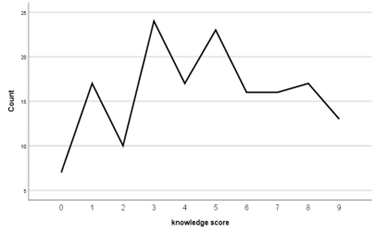
| knowledge score | 160 | 0 | 9 | 4.71 | 2.603 |
| Valid N (listwise) | 160 | ||||
The mean knowledge score of 4.7, which exceeds 50% of the total possible score, indicates an adequate level of genetic knowledge among doctors and nurses.
| Descriptive Statistics | |||||
| N | Minimum | Maximum | Mean | Std. Deviation | |
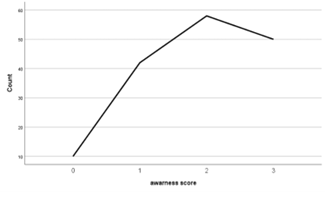
| Awareness score | 160 | 0 | 3 | 1.93 | .908 |
| Valid N (listwise) | 160 | ||||
The mean awareness score was approximately 2, exceeding 50% of the total possible score. This reflects a commendable level of awareness among doctors and nurses regarding genetic services and counseling.
| Chi-Square Tests | |||
| Value | df | Asymptotic Significance (2-sided) | |
| Pearson Chi-Square | 63.704a | 27 | .000 |
| Likelihood Ratio | 50.740 | 27 | .004 |
| Linear-by-Linear Association | 18.010 | 1 | .000 |
| N of Valid Cases | 160 | ||
| a. 24 cells (60.0%) have expected count less than 5. The minimum expected count is .44. | |||
A strong association was observed between knowledge and awareness, with a p-value of less than 0.01 indicating statistical significance. This relationship suggests that as knowledge increases, awareness also improves.
| Chi-Square Tests | |||
| Value | df | Asymptotic Significance (2-sided) | |
| Pearson Chi-Square | 48.847a | 45 | .321 |
| Likelihood Ratio | 47.547 | 45 | .369 |
| Linear-by-Linear Association | .051 | 1 | .821 |
| N of Valid Cases | 149 | ||
| a. 48 cells (80.0%) have expected count less than 5. The minimum expected count is .09. | |||
No association was observed between age groups and knowledge, as evidenced by a p-value of 0.321, indicating a lack of statistical significance.
| Chi-Square Tests | |||
| Value | df | Asymptotic Significance (2-sided) | |
| Pearson Chi-Square | 20.115a | 27 | .826 |
| Likelihood Ratio | 21.882 | 27 | .743 |
| Linear-by-Linear Association | 1.347 | 1 | .246 |
| N of Valid Cases | 154 | ||
| a. 28 cells (70.0%) have expected count less than 5. The minimum expected count is .45. | |||
No statistical association was observed between years of experience and knowledge, as indicated by a p-value of 0.826, showing no significant relationship. This result may be attributed to the uneven distribution of participants, with a smaller proportion having extensive years of experience compared to the majority with fewer years of experience.
| Chi-Square Tests | |||
| Value | df | Asymptotic Significance (2-sided) | |
| Pearson Chi-Square | 113.841a | 81 | .009 |
| Likelihood Ratio | 115.955 | 81 | .007 |
| Linear-by-Linear Association | 2.824 | 1 | .093 |
| N of Valid Cases | 152 | ||
| a. 96 cells (96.0%) have expected count less than 5. The minimum expected count is .08. | |||
A strong association was identified between the participants' department and their level of knowledge, with a statistically significant p-value of 0.009 (less than 0.01). Previous studies suggest that healthcare professionals in pediatric departments, including both doctors and nurses, tend to possess greater knowledge of genetic diseases due to their frequent exposure to children affected by these conditions.
| Chi-Square Tests | |||
| Value | df | Asymptotic Significance (2-sided) | |
| Pearson Chi-Square | 48.847a | 45 | .321 |
| Likelihood Ratio | 47.547 | 45 | .369 |
| Linear-by-Linear Association | .051 | 1 | .821 |
| N of Valid Cases | 149 | ||
| a. 48 cells (80.0%) have expected count less than 5. The minimum expected count is .09. | |||
No statistically significant relationship was observed between the sources of knowledge and the level of knowledge, as evidenced by a non-significant p-value of 0.321.
| Chi-Square Tests | |||
| Value | df | Asymptotic Significance (2-sided) | |
| Pearson Chi-Square | 9.949a | 9 | .355 |
| Likelihood Ratio | 10.900 | 9 | .283 |
| Linear-by-Linear Association | .372 | 1 | .542 |
| N of Valid Cases | 151 | ||
| a. 9 cells (45.0%) have expected count less than 5. The minimum expected count is 1.71. | |||
No statistically significant difference was observed between knowledge and exposure to genetic counseling, as indicated by a p-value of 0.355.
| Chi-Square Tests | |||
| Value | Df | Asymptotic Significance (2-sided) | |
| Pearson Chi-Square | 10.602a | 3 | .014 |
| Likelihood Ratio | 12.901 | 3 | .005 |
| Linear-by-Linear Association | 8.928 | 1 | .003 |
| N of Valid Cases | 151 | ||
| a. 1 cells (12.5%) have expected count less than 5. The minimum expected count is 2.85. | |||
A significant association was observed between exposure to genetic counseling and awareness of genetic counseling and services, highlighting the impactful role of direct exposure in enhancing awareness.
Discussion
This study aimed to evaluate two key dimensions: genetic knowledge and awareness of genetic counseling and genetic services among doctors and nurses in Oman. Conducted in North Al Sharqiya, the study involved a total of 160 participants. The mean knowledge score was 4.7, slightly exceeding 50% of the total score, reflecting an adequate level of genetic knowledge among doctors and nurses. This result contrasts with findings from previous studies (7, 8). The mean awareness score was approximately 2, surpassing 50% of the total score, indicating a good level of awareness regarding genetic services and counseling. A statistically significant association (p-value <0>
Conclusion
This study explores the state of genetic knowledge and awareness of genetic counseling among doctors and nurses in Oman, addressing a subject that has not been previously investigated within the country. It offers valuable insight into the current status of genetic knowledge and awareness, underscoring their importance and the need for enhancement. The study also aims to foster improvement in genetic knowledge and awareness of genetic counseling and services. By utilizing a questionnaire as a key tool, the research stimulates inquiry and contributes to advancing both knowledge and clinical counseling awareness. Compared to findings from previous studies, this research demonstrates an improvement in genetic knowledge and awareness of genetic services and counseling. However, continued efforts are necessary to elevate these aspects to a higher standard. Post-study initiatives include distributing an informative paper on genetic knowledge and counseling to further enhance awareness. Additionally, lectures are planned to engage healthcare professionals and strengthen understanding of this critical topic. The research highlights the pivotal role of genetic counseling and calls for increased awareness through media campaigns. Moreover, it emphasizes the importance of integrating this subject into training programs for doctors and nurses to ensure comprehensive education on genetic counseling. Expanding awareness of the services provided by genetic programs, such as premarital counseling and the availability of relevant tests at local health centers, remains a key priority identified in this study.
References
- Kabbash, I. A., Attalla, A. O., Atlam, S. A. E. (2019). Perception of Importance of Premarital Counseling Among Medical Students of Tanta University, Egypt. Egyptian Journal of Community Medicine, 37(2):66-75.
Publisher | Google Scholor - Smerecnik, C. M., Mesters, I., de Vries, N. K., de Vries, H. (2008). Educating The General Public About Multifactorial Genetic Disease: Applying A Theory-Based Framework to Understand Current Public Knowledge. Genetics in Medicine, 10(4):251-258.
Publisher | Google Scholor - Ormond, K. E., Laurino, M. Y., Barlow-Stewart, K., Wessels, T. M., Macaulay, S., et al. (2018). Genetic Counseling Globally: Where Are We Now? In American Journal of Medical Genetics Part C: Seminars in Medical Genetics. 178(1):98-107.
Publisher | Google Scholor - Gerard, A., Noblin, S., Hashmi, S. S., Bean, A. J., Bergstrom, K., et al. (2019). Undergraduate Student Perceptions and Awareness of Genetic Counseling. Journal of Genetic Counseling, 28(1):27-39.
Publisher | Google Scholor - Biesecker, B. B. (2001). Goals of Genetic Counseling. Clinical Genetics, 60(5):323-330.
Publisher | Google Scholor - Resta, R., Biesecker, B. B., Bennett, R. L., Blum, S., Estabrooks Hahn, S., et al. (2006). A New Definition of Genetic Counseling: National Society of Genetic Counselors’ Task Force Report. Journal of Genetic Counseling, 15:77-83.
Publisher | Google Scholor - Tomatir, A. G., Sorkun, H. Ç., Demirhan, H., Akdag, B. (2006). Nurses' Professed Knowledge of Genetics and Genetic Counseling. The Tohoku Journal of Experimental Medicine, 210(4):321-332.
Publisher | Google Scholor - Baars, M. J., Henneman, L., Ten Kate, L. P. (2005). Deficiency of Knowledge of Genetics and Genetic Tests Among General Practitioners, Gynecologists, And Pediatricians: A Global Problem. Genetics in Medicine, 7(9):605-610.
Publisher | Google Scholor - Kıray Vural, B., Tomatır, A. G., Kuzu Kurban, N., Taşpınar, A. (2009). Nursing Students’ Self-Reported Knowledge of Genetics and Genetic Education. Public Health Genomics, 12(4):225-232.
Publisher | Google Scholor - Delikurt, T., Williamson, G. R., Anastasiadou, V., Skirton, H. (2015). A Systematic Review of Factors That Act as Barriers to Patient Referral to Genetic Services. European Journal of Human Genetics, 23(6):739-745.
Publisher | Google Scholor - Mai, P. L., Vadaparampil, S. T., Breen, N., McNeel, T. S., Wideroff, L., et al. (2014). Awareness of Cancer Susceptibility Genetic Testing: The 2000, 2005, And 2010 National Health Interview Surveys. American Journal of Preventive Medicine, 46(5):440-448.
Publisher | Google Scholor - Sussner, K. M., Jandorf, L., Thompson, H. S., Valdimarsdottir, H. B. (2010). Interest and Beliefs About BRCA Genetic Counseling Among At-Risk Latinas In New York City. Journal of Genetic Counseling, 19(3):255-268.
Publisher | Google Scholor - Long, K. A., Thomas, S. B., Grubs, R. E., Gettig, E. A., Krishnamurti, L. (2011). Attitudes and Beliefs of African-Americans Toward Genetics, Genetic Testing, And Sickle Cell Disease Education and Awareness. Journal Of Genetic Counseling, 20:572-592.
Publisher | Google Scholor - Rolnick, S. J., Rahm, A. K., Jackson, J. M., Nekhlyudov, L., Goddard, K. A., et al. (2011). Barriers in Identification and Referral to Genetic Counseling for Familial Cancer Risk: The Perspective of Genetic Service Providers. Journal of Genetic Counseling, 20:314-322.
Publisher | Google Scholor - Aalfs, C. M., Smets, E. M., de Haes, H. C., Leschot, N. J. (2003). Referral for Genetic Counselling During Pregnancy: Limited Alertness and Awareness About Genetic Risk Factors Among GPs. Family Practice, 20(2):135-141.
Publisher | Google Scholor - Hann, K. E., Freeman, M., Fraser, L., Waller, J., Sanderson, S. C., et al. (2017). Awareness, Knowledge, Perceptions, And Attitudes Towards Genetic Testing for Cancer Risk Among Ethnic Minority Groups: A Systematic Review. BMC Public Health, 17:1-30.
Publisher | Google Scholor - Al-Qattan, H. M., Amlih, D. F., Sirajuddin, F. S., Alhuzaimi, D. I., Alageel, M. S., et al. (2019). Quantifying The Levels of Knowledge, Attitude, And Practice Associated with Sickle Cell Disease and Premarital Genetic Counseling in 350 Saudi Adults. Advances in Hematology, 2019(1):3961201.
Publisher | Google Scholor - Carroll, J. C., Rideout, A. L., Wilson, B. J., Allanson, J. M., Blaine, S. M., et al. (2009). Genetic Education for Primary Care Providers: Improving Attitudes, Knowledge, And Confidence. Canadian Family Physician, 55(12):e92-e99.
Publisher | Google Scholor