
Research Article
Investigating the Impact of Sound Frequencies and Light Exposure on Pepper Plant Growth
- Mariam Islam *
- Malak Hamamah
- Omar Tarek
- Mostafa Gaafar
STEM Ghrbiya high school, Almahalla official language school, Alsalam University in Egypt.
*Corresponding Author: Mariam Islam, STEM Ghrbiya high school, Almahalla official language school, Alsalam University in Egypt.
Citation: Islam M., Hamamah M., Tarek O, Gaafar M. (2026). Investigating the Impact of Sound Frequencies and Light Exposure on Pepper Plant Growth. Scientific Research and Reports, BioRes Scientia Publishers. 4(1):1-4. DOI: 10.59657/2996-8550.brs.26.041
Copyright: © 2026 Mariam Islam, this is an open-access article distributed under the terms of the Creative Commons Attribution License, which permits unrestricted use, distribution, and reproduction in any medium, provided the original author and source are credited.
Received: January 16, 2026 | Accepted: August 17, 2026 | Published: September 02, 2026
Abstract
Studies have indicated that acoustic waves and light wavelengths may influence plant development by improving enzymatic function, and hormonal regulation. This can lead to a decrease in reliance on fertilizers, which cause a significant number of deaths annually. Consequently, the primary objective of our experimental study is to examine the effects of red-light wavelength and sound frequency on the growth of pepper plants. to prove the effectiveness of light and sound waves on plants four groups of pepper pots were established: one reference group with no influences, one with red light at a 660-nm wavelength, one with an auditory frequency of 500 Hz, and one in the presence of both red light and auditory frequency conditions. To attain the most precise outcome, a controlled environment was instituted for all the groups, the quantity of solar radiation that impinges upon the pots, the volume of irrigation, and the homogeneous soil composition. The data was gathered by taking photos of the growing process throughout three consecutive weeks Results obtained showed that the experimental set exposed to the 500 Hz sound frequency had a higher germination rate compared to other groups. The experimental group with red light showed a slight increase in growth from the control group. Specimens the combined treatment group demonstrated growth patterns more likely to the only sound-exposed group, indicating that the best result from the only sound group which examines that there is a direct relation between the rate of growth of the plant and the frequency of sound waves depending on the type of plant and the hertz value that stimulate its enzymatic process. These results may serve as a significant determinant in optimizing agricultural methodologies.
Keywords: sound wave technology; sustainable agriculture; red light effects; plant physiology; environmental-friendly agriculture; bell pepper growth
Introduction
Agriculture is one of the most important parts in any country, but also does not neglect to overcome this major issue because of the excessive use of Chemical fertilizers (dspace,2024). The past overuse has created major environmental problems in the form of soil erosion, water contamination, and ecosystem disruption (Liu et al., 2018). These are pressing issues; hence, it is a dire need to adopt alternative approaches for ensuring crop health and productivity by keeping the environmental climate safe. That's one rea-son for going back to the age-old methods of organic farming, bio-fertilizers, or precision agriculture; however, these lack the capacity to replace the chemical fertilizers in their entirety and to deliver similar yield performances at scale (El-Hage Scialabba et al., 2024). One solution that has shown great promise as well is the utilization of sound waves and specific lighting to improve plant growth. Research has also found that certain sound frequencies, especially in the range of 500 Hz to 1000 Hz can stimulate
important aspects like root elongation, nutrient uptake, and photo-synthesis function enzymes in plants (Hassanien et al., 2014).
These sound waves act as mechanical stimuli, stimulating the plant cell response by accelerating its division, flexibilizing its membrane permeability, and increasing water absorption, nutrients, and oxygen. The plants then grow healthier and more quick-ly, with some or all the benefits provided by chemical fertilizers, but without any impact on the environment. In the meantime, it is important to remember that light also helps plants grow as well (Mendis et al., 2012). Light quality, blue, and red wavelengths would improve significantly in photosynthesis to promote bio-mass production; ultimately the crop yield is proven by research. These systems add light spectrum and intensity controls, which provide a fine-tuned method for enhancing the effects of plant growth while cutting down on those pesky energy costs we all love to hate. The two eco-friendly alternatives to chemical fertilizers are sound waves and optimized lighting. Here this project works on two different technologies which are sound waves and light to replace the poisonous chemicals fertilizers for agriculture to find the best frequency as we the power of lighting that gives high growth & productivity (Janah et al., 2021). Our goal is to apply these technologies in agricultural systems as one means of reducing fertilizer use, increasing crop productivity, and protecting soil health all critical for ensuring future food security sustainably (FAO, 2023).
Methods
This experiment was designed to investigate the effects of specific environmental factors on the growth of pepper plants (bell pep-per). To reach the most accurate result we used artificial planting for pepper in pots to make sure of the precision of our results. The main study design is experimental as we choose to try the experi-mental strategy with high observation for the results for high ac-curacy.
Utilizing a controlled setup, 4 groups of pepper pots were established, and each one was subjected to varying conditions to test their impact on plant growth. The primary factors examined included red light exposure and sound frequency, as was shown in past papers their effect on plant physiology and development. the controlled variables, such as soil composition, pots size, water supply, and time exposed to the sun were maintained consistently across all groups to ensure reliable comparisons and results. Each treatment group comprised five seeds planted in identical pots with mixed light soil consisting of 50% peat moss, 25% sand, and 25% clay. All of them are watered with 100ml of water day in, and day out.
The treatment groups are classified as the following: Group 1 with no special treatment by exposure to normal sunlight from 7 am to 7 pm. Group 2 (red light exposure) where the pots are exposed to red light from a light bulb with a wavelength (around 660 nm) from 7 pm to 11 pm. Group 3 (500 Hz frequency exposure) in which pots are exposed to 500 Hz sound from a speaker for one hour per day, with the source half a meter away. Group 4 (combined treatment) was exposed to both red light (7 pm to 11 pm) and 500 Hz frequency (one hour per day). The independent varia-bles as red-light exposure (in groups 2 and 4) and Sound frequency exposure (500 Hz in groups 3 and 4). The dependent variable is plant growth which is tested by several leaves during the period of the planting process. The controlled variables for all groups are soil type (light mixed soil), watering schedule, sun-light exposure, and pot size. The temperature during the experiment ranged between 22.7°C (72.8°F) and 29.6°C (85.3°F) with clear skies and relatively low humidity.
After meticulously arranging the light-ing apparatus to ensure that the luminescent source is precisely positioned above the potted plants, the intention is to create a uniform distribution of light that radiates equitably across all surfaces of the pots, as is illustrated in the accompanying figure (1). sound, but it was still in a late stage because it only had two leaves.
The third week was a surprise for everyone, as it was noticeable to see the results and the difference between the samples exposed to sound and the samples that were not exposed. Noting that the width of the leaves in the sample exposed to sound and light was slightly smaller than the sample exposed to sound only. Noting the appearance of many weeds in the sample exposed to light only.
Table 1:
| Control samples (G1) | Plantsex-posed to lightwaves (G2) | Plant exposed to sound waves (G3) | Plants exposed to L and S (G4) | |
| Week 1 | 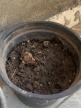 |  |  |  |
| Week 2 | 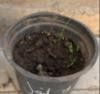 | 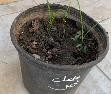 |  |  |
| Week 3 | 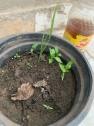 | 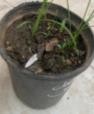 | 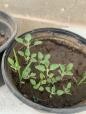 | 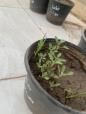 |
The source of sound frequency (500 Hz) was settled half distance from group 3 (the sound expo-sure) and group 4 (the combined group) as it is shown in figure (2). Data collection for the experiment was con-ducted through daily.

Figure 1: plants exposed to red light
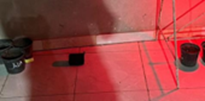
Figure 2: on the left the plants exposed to sound waves only while the others exposed to sound and light waves
Discussion
After conducting an extensive review of previously published studies that elucidate the various factors influencing the growth and development of plants, it became increasingly apparent that there exists a significant gap in the research literature pertaining to the effects of sound frequencies measured in different hertz on plant biology. This gap is particularly notable when considering how these sound frequencies may play a pivotal role in accelerating enzymatic processes and enhancing the absorption of essential nutrients by plants, ultimately influencing their overall health and photographic documentation of each pot. This visual approach allowed for precise monitoring of plant development by capturing changes in growth patterns over time. The images were used to measure the number of leaves on each plant, providing a clear indication of their progress.
Results
In the first week, growth was noticeable for the sample exposed to sound waves, as the young plants began to appear before the others that were not exposed to sound waves. In the second week, all samples started to grow, but the samples that heard the sound waves were in another stage of growth, as they had 4 leaves, unlike the other samples, whose growth was slow and were still in the first stage of growth and had only two leaves. As for the sample that was exposed to both sound and light, it seems that the light affected it at that stage, as the size of the plant was large compared to the sample that was not exposed to light or vitality. In light of these findings, we initiated a comprehensive experimental study aimed at systematically investigating the effects of sound frequency, alongside the influence of different colors of light, on the growth rates of plants, with the intention of gaining deeper insights into how these variables interact to affect plant development. The results derived from this rigorous experimental investigation led us to conclude that the sound frequency specifically set at 500 Hz exerts the most profound impact on the growth and overall development of the plants being studied, subsequently followed by the observed effects of red light on plant physiology and growth patterns. In response to the insights gained from the results of this study, a series of recommendations have been meticulously formulated to address further the original research question posed. These recommendations include, first and foremost, the implementation of elevated sound frequencies across a diverse spectrum that exceeds the previously tested 500 Hz, thereby allowing for a thorough evaluation of their potential impacts on plant growth. Additionally, it is strongly advised to delve into the interactions between red and blue light in innovative experimental designs, contrasting these results with those obtained from each individual wave-length, as it is hypothesized that the combination of these particular light colors may yield enhanced growth outcomes. Further-more, it is highly recommended to create a new experimental group that incorporates the use of fertilizers, thereby enabling a comparative analysis of these findings with those obtained from the sound treatment group; this could potentially reveal strategies for minimizing the reliance on fertilizers and their associated chemical toxins, ultimately fostering improved growth and development in plants.
Conclusion
Our three-week experiment into the effects of red light and sound frequencies on the growth of bell peppers was indeed revealing. Plants under the influence of 500 Hz sound frequency showed the most growth acceleration, with quickened germination and leaf growth compared to other plants in the control group. By the second week, these plants had developed to four leaves, while the plants in other groups were only doing two leaves. This therefore supports the hypothesis that it is sound waves, particularly those at 500 Hz, which are capable of stimulating early plant growth and cellular activity. In comparison, the red light-exposed group at 660 nm alone showed growth improvement; however, much weaker than in the case of the sound wave treatment. During week two, plants in this group were still behind those that had been exposed to sound only, which indicates that red light might not be that effective in inducing early-stage growth as much as sound frequencies. The combined treatment group represented an average development growth with the red light and sound; however, it had shown closer development to the sound wave group. From this result, it was indicated that red light can complement sound waves; it does not necessarily enhance growth any further from what the sound waves would normally do at earlier stages of development. Overall, results here indicate that sound frequency can act more effectively than red light as a potent factor in improving early plant growth. Further research is warranted to examine how these stimuli affect later development stages, including flowering and fruiting, and determine if other frequencies or their combinations may have an even more positive effect on agricultural productivity. This gives reason to assume that the use of chemical fertilizers and pesticides can be reduced, and this could contribute to more sustainable agriculture.
Author Contributions
Mariam Islam: Conducted the experiment, monitored and man-aged the process, developed solutions, analyzed results, and conceptualized the original idea of the study. Malak Hamamah: Wrote the Methods and Abstract section of the paper. Omar Tarek: Contributed by writing the Conclusion. Mostafa Gaafar: Wrote the Introduction.
We did not ask for any support and we were responsible for test-ing it on the personal budget.
Acknowledgement
We would like to express our gratitude to Dr. Asaad Derbala, Dean of the Faculty of Agriculture at Tanta University, for his invaluable support and guidance throughout this research.
Abbreviations
Hz: Hertz (unit of frequency, often used to measure sound frequencies);
°C: Degrees Celsius (temperature measurement);
nm: Nanometer (unit of measurement for wavelength, particularly relevant for light studies);
R: Red light (often used to refer specifically to light in the 620-750 nm range).
References
- Food and Agriculture Organization of the United Nations. (2024). [Title not provided]. FAO.
Publisher | Google Scholor - Hassanien, R. E. H., Hou, T.-Z., Li, Y.-F., & Li, B.-M. (2014). Advances in effects of sound waves on plants. Journal of Integrative Agriculture, 13(2):335–348.
Publisher | Google Scholor - Janah, I., Elhasnaoui, A., Issa Ali, O., Lamnai, K., Aissam, S., & Loutfi, K. (2021). Physiochemical responses of Stevia rebaudiana Bertoni subjected to sodium chloride (NaCl) salinity and exogenous salicylic acid application. Gesunde Pflanzen, 73(4):509–520.
Publisher | Google Scholor - Liu, Q., Buyantuev, A., Wu, J., Niu, J., Yu, D., & Zhang, Q. (2018). Intensive land-use drives regional-scale homogenization of plant communities. Science of the Total Environment, 644:806–814.
Publisher | Google Scholor - Mendis, B., Simpson, E., MacDonald, I., & Mansell, P. (2012). Investigation of the haemodynamic effects of exenatide in healthy male subjects. British Journal of Clinical Pharmacology, 74(3):437–444.
Publisher | Google Scholor - El-Hage Scialabba, N., Grandi, C., & Henatsch, C. (2024). Organic agriculture and genetic resources for food and agriculture (ac784e00). Food and Agriculture Organization of the United Nations.
Publisher | Google Scholor - Food and Agriculture Organization of the United Nations. (2023). Sustainable food and agriculture.
Publisher | Google Scholor