

Research Article
Impact of Nutritious Diet on Mental Health and Well Being on Adult Patients in Community Health Centre Vijayapura
1Master Trainer, Educator, Simulation and Skills Lab, District Hospital Navanagar, Bagalkot, Karnataka, India.
2Principal, HOD of Child Health Nursing, Shraddha Institute of Nursing Sciences, Vijayapura, Karnataka. India.
*Corresponding Author: Rudresh Hunasikkatti, Master Trainer, Educator, Simulation and Skills Lab, District Hospital Navanagar, Bagalkot, Karnataka, India.
Citation: Hunasikkatti R, Pasodi G. (2026). Impact of Nutritious Diet on Mental Health and Well Being on Adult Patients in Community Health Centre Vijayapura, International Journal of Biomedical and Clinical Research, BioRes Scientia Publishers. 6(1):1-7. DOI: 10.59657/2997-6103.brs.26.108
Copyright: © 2026 Rudresh Hunasikkatti, this is an open-access article distributed under the terms of the Creative Commons Attribution License, which permits unrestricted use, distribution, and reproduction in any medium, provided the original author and source are credited.
Received: November 17, 2025 | Accepted: December 26, 2025 | Published: January 05, 2026
Abstract
Introduction: Nutrition is closely linked to mental health, influencing mood, cognition, and overall well-being. This study examined the effect of a nutritious diet on the mental health of adult patients at PHC Horti, Vijayapura.
Methods: An experimental research design with purposive sampling was applied to 40 adults aged 30-50 years. Nutritional status was assessed using IAP and Gomez classifications, while quality of life, depression, and anxiety were measured through standardized tools.
Results: Findings revealed that 45% of participants had normal nutritional status, while the remainder showed mild to severe malnutrition. Mental health outcomes indicated 40% had a very good quality of life, 45% showed no depression, and 40% reported no anxiety, whereas others experienced mild to severe symptoms.
Conclusion: The results confirm that a balanced and nutritious diet significantly contributes to better mental health and well-being. Nutritional interventions should be integrated into community health strategies for the prevention and management of mental disorders.
Keywords: nutritious diet; mental health; adult patients
Introduction
In the past ten years, mental health disorders have been the primary causes of years of life lost to disability in developed nations, while concerning patterns have also been observed in developing countries. Recent statistics indicate that the worldwide population experiencing depression exceeds 300 million individuals, while anxiety disorders impact over 260 million individuals (4.4% and 3.6% of the global population, respectively). Mental illnesses represent 14% of global Years Lived with Disability (YLD), with depressive disorders causing more than 50 million YLD and anxiety disorders contributing to 24.6 million YLD in 2015. Additionally, it is significant that depression and anxiety are frequently linked, if not precursors, to various other mental disorders and are related to other non-communicable illnesses, including cardiovascular disease, dementia, and cancer. Alongside the previously mentioned disorders, sleep disorders have garnered attention as emerging conditions, primarily because of their potential connection to other health issues. Identifying early signs of mental health issues, pinpointing possible risk elements, and taking action to reduce long-term exposure to these factors is crucial to avert the onset of severe conditions expected to increasingly affect the general population and future generations.
Objectives
- To see the nutritious diet on mental health of Adults Patients.
- To assess the nutritional status of PHCHorti, Vijayapur District adults using IAP & GOMEZ classification.
- To study the nutritious diet on mental health and wellbeing on adult patients.
Methodology
Sample Technique: Purposive sampling technique.
Research Design: Research experimental study design.
Study Population: Total 40 random sample selecting from PHC Horti, Vijayapur District.
Inclusion Criteria
- The sample will only include subjects who are 30 to 50 years old.
- Minimum education criteria of subjects will be at least graduation.
- All subject belonging to middle socio-economic status.
Exclusion Criteria
- All subjects under the age of 30 will be eliminated.
- Subject suffering from other psychiatric illnesses will be excluded with the help of a psychiatric consultant.
Study Area: PHC Horti, Vijayapur District.
Statistics: Appropriate statistical methods include the Mean, median and mode. Independent 't' test and the Che-quare.
Ethical Consideration: To conduct the research project in PHC Horti, Vijayapura District, Permission will be sought from the CHC, Horti.
Study Protocol
- It is feasible to assess the impact of a nutritious diet on the mental health of adult patients, in addition to their general health and wellness.
- By understanding how crucial a healthy diet is to general well-being.
Results
The results' description is the permanence of a research project that allows the researcher to condense, summarize, arrange, assess, interpret, and convey information. Polit (1999) asserts that statistical analysis is a technique for transforming quantitative information into a meaningful and understandable representation of research data. This chapter focuses on analyzing and interpreting the results from the data gathered from 40 adult patients at PHC Horti, Vijayapura Dist. Considering the study's goals, both descriptive and inferential statistics were employed to examine and interpret the gathered data. The data analysis was presented under these headings.
- To see the nutritious diet on mental health of Adults Patients.
- To assess the nutritional status of PHC Horti, Vijayapura District adults using IAP & GOMEZ classification.
- To study the nutritious diet on mental health and wellbeing on adult patients.
Data Organization and Presentation
The collected data were processed, organized, analyzed, interpreted, and the results were displayed in tables and diagrams shown in the sections below.
Section I: Demographic factors of Adult Patients from chosen Horti PHC
Section II: Assessment nutritional diet of the adults’ patients selected Horti PHC.
Section III: To study the nutritious diet on mental health and wellbeing on adult patients.
Demographic Variables of Adult Patients of Selected PHC Horti, Vijayapur
Table 1: Demographic variables of Adult Patients (N=40).
| No | Demographic Variables | Frequency f | Percentage % |
| 1. | Residence Area | ||
| Urban | 21 | 52.5 | |
| Rural | 19 | 47.5 | |
| 2 | Type of Family | ||
| Nuclear | 28 | 70 | |
| Joint | 12 | 30 | |
| 3 | Religion | ||
| Hindu | 29 | 72.5 | |
| Muslim | 05 | 12.5 | |
| Christian | 06 | 15 | |
| 4 | Mothers’ Education Level | ||
| No Formal education | 12 | 30 | |
| Primary | 11 | 27.5 | |
| Secondary | 15 | 37.5 | |
| Graduation | 03 | 7.5 | |
| 5 | Fathers’ Education Level | ||
| No Formal education | 11 | 27.5 | |
| Primary | 18 | 45 | |
| Secondary | 11 | 27.5 | |
| Graduation | 00 | 00 | |
| 6 | Family Monthly Income in Rupees | ||
| Below 5000 | 00 | 00 | |
| Rs.5001 – 10000 | 13 | 32.5 | |
| Rs.10000 and above | 27 | 67.5 | |
| 7 | Diet Pattern | ||
| Vegetarian | 14 | 35 | |
| Non- Vegetarian | 07 | 17.5 | |
| Both Veg and Non-Veg | 09 | 47.5 | |
| 8 | Smoking | ||
| Never | 14 | 35 | |
| Smoke less | 07 | 17.5 | |
| Smoke more | 09 | 47.5 | |
| 9 | Alcohol | ||
| Never | 14 | 35 | |
| Drink less | 07 | 17.5 | |
| Drink More | 09 | 47.5 | |
| 10 | Physical Activity | ||
| Never | 14 | 35 | |
| Excise less | 07 | 17.5 | |
| Excise more | 09 | 47.5 | |
| 11 | Stressful Events | ||
| No | 14 | 35 | |
| Average | 07 | 17.5 | |
| More than average | 09 | 47.5 | |
Above table 1 shows the distribution of Socio Demographic Variables of Adults patients attending selected PHC Horti With regard to area of residence, reveals most of them 21(52.5%) were from urban area, and 19 (47.5%) were from rural area (Figure 1). With regard to type of family, majority 28 (70%) of the adults’ patients were from nuclear family and 12(30) were from joint family (Figure 2).
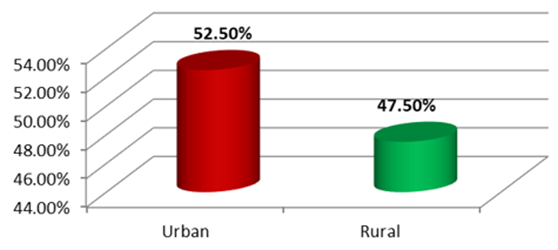
Figure 1: Area of residence of adult’s patients.
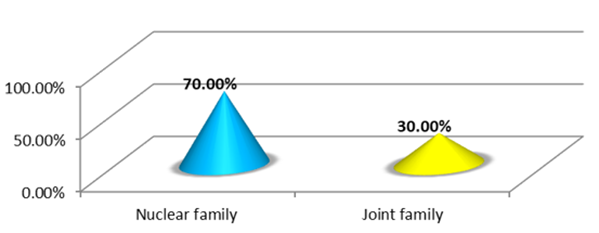
Figure 2: Type of Family of Adults patients.
Regarding the religion of the samples, 29(72.5% of the total) were Hindu, 5(12.5%) were Muslim, and 6(15%) were Christian. (Figure 3). Distribution of samples with reference to their mother educational status reveals that the highest percentage 15(37.5%) of respondents had completed their secondary education, 12(30%) were uneducated, 11(27.5%) had primary education and 3(7.55%) did their graduation (Figure 4).
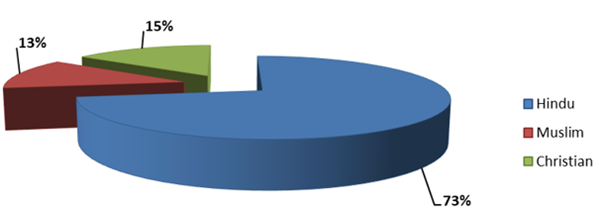
Figure 3: Religion of Adults patients.
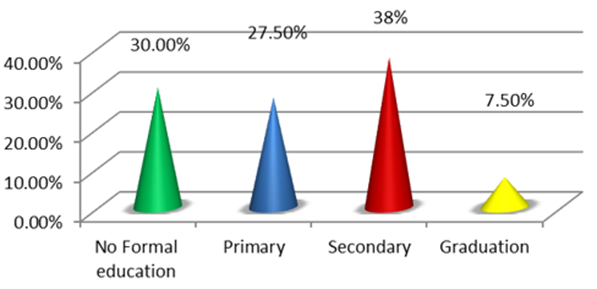
Figure 4: Mothers Education status of adult’s patients.
With reference to their father educational status reveals that the highest percentage 18(45%) of respondents had completed their primary education, 11(27.5%) completed secondary education and 11(27.5%) had not got any formal education (Figure 5). In terms of diet, 19 (47.5%) of the samples were mixed veg and non veg, 14(35%) were veg, and 7(17.5) were non veg.
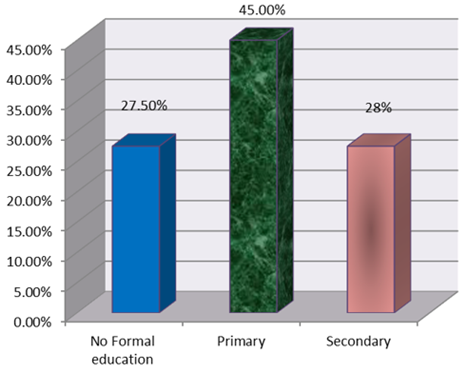
Figure 5: Fathers Education status of adult’s patients.
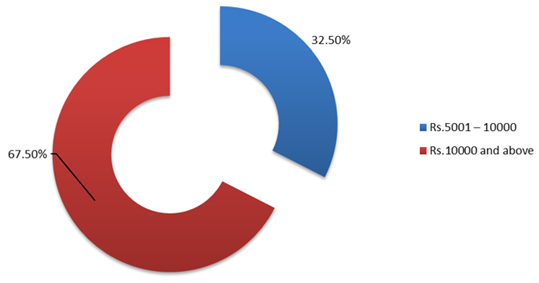
Figure 6: Family Monthly Income in Rupees.
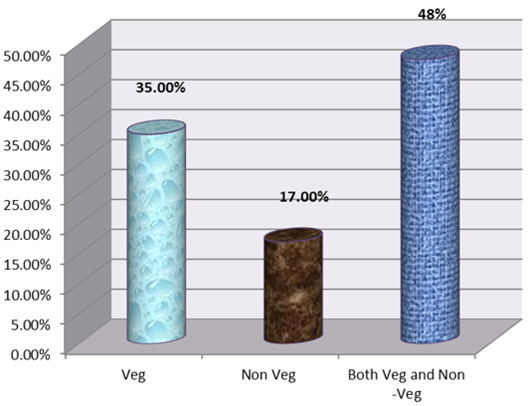
Figure 7: Diet pattern of adult’s patients.
Section II: Assessment of nutritional status of adult patients at PHC Horti, Vijayapur District adults using IAP & GOMEZ classification.
Table 2: Assessment of nutritional status of adult patients (N=40).
| Nutritional Status | Frequency | Percentage | |
| Gomez Classification | Normal Nutritional Status | 18 | 45 |
| Mild Nutritional Status | 12 | 30 | |
| Moderate Nutritional Status | 6 | 15 | |
| sever Nutritional Status | 4 | 10 | |
| Mid Arm Circumference | Satisfactory Nutritional Status | 25 | 62.5 |
| Mild Moderate Nutritional Status | 9 | 22.5 | |
| Mild Moderate Nutritional Status | 6 | 15 | |
Note: Prevalence of nutritional status according to Gomez classification and MUAC (n=40).
The nutritional status of adult Patients is shown in Table 2. The majority of samples 18(45%) normal, 12(30%) were mild nutritional status, 6(15%) were Moderate nutritional status, and 4(10%) were sever nutritional status. The mid arm circumferences, the majority of sample 25(62.5) were Satisfactory nutritional status. 9(22.5) were Mild Moderate nutritional status and 6(15) were Mild Moderate nutritional status.
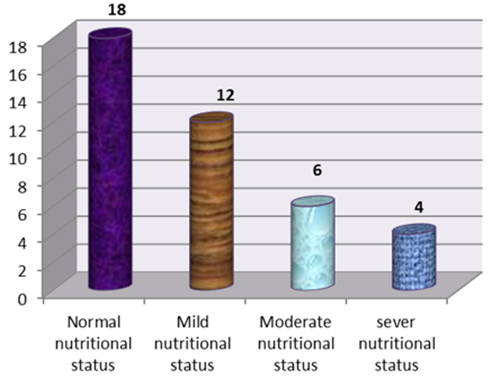
Figure 8: Nutritional status of the adult patients.
Section-III: To study the nutritious diet on mental health and wellbeing on adult patients.
Table 3: To study the nutritious diet on mental health and wellbeing on adult patients (N=40).
| No | Mental Health Item | Item Categories | N | F (%) |
| 01 | Quality of Life (QOL) Continuous (0 to 5) 2.6 1.0 | |||
| QOL Ordinal | Poor | 3 | 7.5 | |
| Fair | 2 | 5 | ||
| Good | 13 | 32.5 | ||
| Very good | 16 | 40 | ||
| Excellent | 6 | 15 | ||
| 2 | Depression Score (0 to 27) | |||
| Depression Severity | No Depression | 18 | 45 | |
| Mild Depression | 6 | 15 | ||
| Moderate Depression | 7 | 17.5 | ||
| Moderate Severe Depression | 4 | 10 | ||
| Severe Depression | 5 | 12.5 | ||
| 3 | Anxiety score (0 to 21) | |||
| Anxiety Severity | No Anxiety | 16 | 40 | |
| Mild Anxiety | 11 | 27.5 | ||
| Moderate Anxiety | 5 | 12.5 | ||
| Severe Anxiety | 8 | 20 | ||
Table 3 depicts the Nutritional status and mental health and wellbeing, The majority of samples (16 (40%) followed a very good QOL. were QOL 12(30%) nutritional status and good mental health and wellbeing, poor, fair and excellent respectively. Table 3 depicts the Nutritional status and mental health and wellbeing, majority of sample were 18(45%) no depression,6(15%) was mild depression, 7(17.5%) was moderate depression,4(10%) was moderate and 5(12.5%) were severe depression respectively. Table 3 depicts the Nutritional status and mental health and wellbeing, majority of sample were 16(40%) no Anxiety, 11(27.5%) was mild anxiety, 5(12.5%) was moderate anxiety, and 8(20%) were sever anxiety respectively.
Discussion
In general, it can be guaranteed that nutrition and physical activity significantly influence mental health. Diet and consistent physical activity are important factors in preserving a balanced, stable mindset. Nutritional components like fatty acids, amino acids, minerals, vitamins, etc., influence mental health in various ways. Moreover, these vital dietary nutrients aid in regulating neurotransmission and maintaining brain chemistry, proving to be significant factors in managing and addressing mental illness. Numerous studies have found the Mediterranean diet to be particularly successful in preventing and alleviating mental health issues, while the standard American diet includes detrimental additives known to trigger symptoms in individuals with mental illness.
Physical activity can also enhance mental well-being. Numerous studies have indicated that physical activity can help alleviate symptoms related to anxiety, depression, bipolar disorder, and schizophrenia. Aerobic exercise demonstrated the greatest impact on alleviating symptoms of depression and schizophrenia. Nutrition and physical activity provide numerous treatment alternatives for mental health conditions; nonetheless, many potential nutritional supports remain unutilized due to the significant impact of the typical American diet.
Conclusion
In recent years, the connection between nutrition and patients' mental health has been undervalued, as shown by the insufficient research carried out before the 21st century in this field of study - referenced in this review. In recent years, this trend has changed, as studies in psycho dietetics and nutria psychiatry have become more popular. Amid ongoing transformations, urban development, globalization-particularly within the food sector-and shifts in individuals' lifestyles and dietary patterns, the relationships between these trends and their effects on mental well-being are gaining significance. Investigating these associations opens up possibilities for introducing innovative dietary, medicinal, therapeutic, and, most importantly, preventive measures.
Recommendations
Recommendations can be offered based on the study to enhance the impact of a nutritious diet on the mental health and well-being of adult patients at community health center PHC Horti, Vijayapur:
- Adults are advised to avoid skipping meals and to increase the number of meals they consume to fulfill their energy and nutrient needs for healthier weight gain.
- Federal and state governments can perform similar studies in other localities in order to determine overall national and state wise nutritional status and dietary behaviour of adults.
Recommendations for Future Researches
- Similar research can be conducted in other geographical area of the country.
- Detailed study of adult patients, dietary factors, physical activity level, nutrient intake and nutritional status and their association each other can be done.
- Researches on nutritional status during, nutritional status of married and non-school going adults s can be performed.
- Fiber and other micronutrient intake can also be studied.
References
- Marx, W., Moseley, G., Berk, M., Jacka, F. (2017). Nutritional psychiatry: the present state of the evidence. Proceedings of the Nutrition Society, 76(4):427-436.
Publisher | Google Scholor - Adan, R. A., van der Beek, E. M., Buitelaar, J. K., Cryan, J. F., Hebebrand, J., et al. (2019). Nutritional psychiatry: Towards improving mental health by what you eat. European Neuropsychopharmacology, 29(12):1321-1332.
Publisher | Google Scholor - Polavarapu, A., Hasbani, D. (2017, February). Neurological complications of nutritional disease. In Seminars in Pediatric Neurology. WB Saunders. 24(1):70-80.
Publisher | Google Scholor - Leahy, L. G. (2017). Vitamin B Supplementation: What's the right choice for your patients? Journal of Psychosocial Nursing and Mental Health Services, 55(7):7-11.
Publisher | Google Scholor - Elsherbiny, N. M., Sharma, I., Kira, D., Alhusban, S., Samra, Y. A., et al. (2020). Homocysteine induces inflammation in retina and brain. Biomolecules, 10(3):393.
Publisher | Google Scholor - Nielsen, F. H. (2018). Magnesium deficiency and increased inflammation: current perspectives. Journal of Inflammation Research, 25-34.
Publisher | Google Scholor - Bremner, J. D., Moazzami, K., Wittbrodt, M. T., Nye, J. A., Lima, B. B., et al. (2020). Diet, stress and mental health. Nutrients, 12(8):2428.
Publisher | Google Scholor - Kiecolt-Glaser, J. K. (2010). Stress, food, and inflammation: psychoneuroimmunology and nutrition at the cutting edge. Psychosomatic Medicine, 72(4):365-369.
Publisher | Google Scholor - Molfino, A., Amabile, M. I., Monti, M., Muscaritoli, M. (2017). Omega‐3 Polyunsaturated Fatty Acids in Critical Illness: Anti‐Inflammatory, Proresolving, or Both? Oxidative Medicine and Cellular Longevity, 1:5987082.
Publisher | Google Scholor - Molfino, A., Gioia, G., Fanelli, F. R., Muscaritoli, M. (2014). The role for dietary omega-3 fatty acids supplementation in older adults. Nutrients, 6(10):4058-4072.
Publisher | Google Scholor - Botturi, A., Ciappolino, V., Delvecchio, G., Boscutti, A., Viscardi, B., et al. (2020). The role and the effect of magnesium in mental disorders: a systematic review. Nutrients, 12(6):1661.
Publisher | Google Scholor - Boyle, N. B., Lawton, C., Dye, L. (2017). The effects of magnesium supplementation on subjective anxiety and stress-a systematic review. Nutrients, 9(5):429.
Publisher | Google Scholor - Desrumaux, C. M., Mansuy, M., Lemaire, S., Przybilski, J., Le Guern, N., et al. (2018). Brain vitamin E deficiency during development is associated with increased glutamate levels and anxiety in adult mice. Frontiers in Behavioral Neuroscience, 12:310.
Publisher | Google Scholor - Tanaka, E., Yatsuya, H., Uemura, M., Murata, C., Otsuka, R., et al. (2013). Associations of protein, fat, and carbohydrate intakes with insomnia symptoms among middle-aged Japanese workers. Journal of Epidemiology, 23(2):132-138.
Publisher | Google Scholor - Decoeur, F., Benmamar-Badel, A., Leyrolle, Q., Persillet, M., Layé, S., et al. (2020). Dietary N-3 PUFA deficiency affects sleep-wake activity in basal condition and in response to an inflammatory challenge in mice. Brain, Behavior, and Immunity, 85:162-169.
Publisher | Google Scholor - Hidaka, B. H. (2012). Depression as a disease of modernity: explanations for increasing prevalence. Journal of Affective Disorders, 140(3):205-214.
Publisher | Google Scholor - Whiteford, H. A., Degenhardt, L., Rehm, J., Baxter, A. J., Ferrari, A. J., et al. (2013). Global burden of disease attributable to mental and substance use disorders: findings from the Global Burden of Disease Study 2010. The lancet, 382(9904):1575-1586.
Publisher | Google Scholor