

Research Article
Hygienic Handling Practices and Listeria Monocytogenes Contamination Level in Raw Fish Harvested from Lakes of Maya City, Eastern Ethiopia
1Department of Veterinary Public Health, College of Veterinary Medicine, Haramaya University, Ethiopia.
2Assistant Professor, Department of Veterinary Microbiology, College of Veterinary Medicine, Haramaya University, Ethiopia.
3Department of Veterinary Epidemiology, College of Veterinary Medicine, Haramaya University, Ethiopia.
*Corresponding Author: Daniel Tamirat Weldemariam, Department of Veterinary Public Health, College of Veterinary Medicine, Haramaya University, Ethiopia.
Citation: Weldemariam DT, Kemal J, Aman HS. (2026). Hygienic Handling Practices and Listeria Monocytogenes Contamination Level in Raw Fish Harvested from Lakes of Maya City, Eastern Ethiopia, International Journal of Biomedical and Clinical Research, BioRes Scientia Publishers. 7(5):1-32. DOI: 10.59657/2997-6103.brs.26.161
Copyright: © 2026 Daniel Tamirat Weldemariam, this is an open-access article distributed under the terms of the Creative Commons Attribution License, which permits unrestricted use, distribution, and reproduction in any medium, provided the original author and source are credited.
Received: September 14, 2026 | Accepted: October 05, 2026 | Published: October 15, 2026
Abstract
Foodborne pathogens remain a major public health concern worldwide, particularly in developing countries where hygiene and food safety standards are often insufficient. This study investigated the contamination levels of Listeria monocytogenes and other Listeria species in raw fish meat, fish contact surfaces, and water samples collected from three freshwater lakes Haramaya, Adele, and Tinike in Eastern Ethiopia. The study also evaluated personal hygiene and food-handling practices among key actors along the fish line, including fishermen, processors, and consumers. A total of 238 samples were analyzed using standard microbiological methods, including ISO-based protocols, CAMP testing, Gram staining, and biochemical test such as catalase, oxidase, motility, and sugar fermentation tests. Structured questionnaires were administered to assess hygiene and food safety practices. Overall, Listeria species were isolated in 47 (19.75%) of the samples, with L. monocytogenes accounting for 4.2%. L. innocua was the most frequently isolated species (6.3%), followed by L. welshimeri (3.36%), L. ivanovii (2.5%), L. grayi (1.68%), and L. seeligeri (1.68%). The highest contamination level of L. monocytogenes was found on fish contact surfaces and in water samples, especially from hand swabs (9.1%), lake water (8.3%), and washing water (8.3%), compared to raw fish tissue. Among fish body parts, skin tissues showed the highest contamination (6.7%). Contamination was more prevalent in Nile Tilapia (70%) than in African Catfish (30%). Lake Adele had the highest overall L. monocytogenes prevalence (8.1%) and the highest contamination in raw fish samples (6%). Findings revealed poor hygiene practices, inadequate food handling, and limited sanitation infrastructure, especially among fishermen. To enhance the safety of fish products and safeguard public health, the study recommends targeted interventions such as hygiene training, implementation of standardized handling protocols, infrastructure improvements, routine microbial surveillance, and public education initiatives.
Keywords: Haramaya; lakes; L. monocytogenes; fish; hygiene; contamination
Introduction
Fish is an essential part of the human diet, providing high-quality protein, essential fatty acids, vitamins, and minerals (Zhang et al., 2019). It plays a critical role in addressing food insecurity and malnutrition, particularly in developing countries (FAO, 2024). In Ethiopia, aquaculture and inland fisheries are becoming increasingly important due to rising demand and growing awareness of the nutritional benefits of fish (Alemayehu et al., 2019). The lakes in the Haramaya district serve as significant sources of fish for local communities. However, raw fish is highly perishable and susceptible to microbial contamination, especially under poor hygienic conditions (Wendwesen et al., 2017). Consumption of raw or undercooked fish products has been associated with outbreaks caused by bacterial pathogens, bio toxins, histamine, viruses, and parasites. Fish can act as reservoirs for several bacterial pathogens harmful to humans, including Listeria monocytogenes, Clostridium botulinum, and Campylobacter jejuni (Sheng and Wang, 2021; Mohammed et al., 2023).
Among these, L. monocytogenes is particularly concerning. It causes listeriosis, a severe foodborne infection that disproportionately affects pregnant women, newborns, the elderly and immunocompromised individuals (FDA, 2023). L. monocytogenes is a ubiquitous, microscopic, single-celled organism commonly found in the environment. While the flesh of live fish is sterile, bacteria are frequently present on their skin, gills, and in their intestines (FAO, 2023). These microorganisms are widespread in air, water, soil, and living organisms. While spoilage bacteria cause deterioration of fish, pathogenic bacteria such as L. monocytogenes can lead to illness. Proper icing can slow the growth of both spoilage and pathogenic bacteria (Ajayeoba et al., 2023). Bacteria thrive in dirty, moist environments. When fish are exposed to such conditions, bacterial growth increases, heightening the risk of spoilage and foodborne illness (Gupta et al., 2022). Studies have detected Listeria species, including L. monocytogenes, in catfish processing plants on equipment, surfaces, and fillets (FSPCA, 2016). Some species of Listeria, which have been found in fish, were L. monocytogenes, L. innocua, L. ivanovii, L. seeligeri, L. welshimeri, and L. grayi, but only L. monocytogenes and L. ivanovii are considered pathogenic (Orsi and Wiedmann, 2016).
Listeria monocytogenes is a Gram-positive bacterium responsible for listeriosis, a serious illness in both humans and animals (CDC, 2023). In humans, symptoms may include fever, headache, vomiting, diarrhea, and meningitis. In animals, the disease may cause abortion, encephalitis, and septicemia (Nayak et al., 2015). Contamination can occur when raw fish meat encounters polluted water, soil, or feces (Liu et al., 2020). L. monocytogenes is especially difficult to eliminate due to its ability to survive and grow in harsh environmental conditions. Raw fish can introduce L. monocytogenes into processing facilities, where it may spread through cross-contamination (Wieczorek et al., 2020). Contamination during processing can result from unclean hands, contaminated utensils, dirty water, or exposure to sewage (FAO, 2023). The bacterium can also spread through contact with contaminated foods, surfaces, or equipment (EFSA and ECDC, 2021). It often contaminates chilled, ready-to-eat foods such as smoked fish and soft cheeses, posing a serious risk to vulnerable populations (FDA, 2021; FSA, 2021). This pathogen remains a threat to the food system by contaminating and persisting in food production facilities, leading to numerous outbreaks worldwide (Quereda et al., 2021). Notable outbreaks include those in ready-to-eat deli meats in Canada and South Africa, which resulted in significant fatalities and economic losses (Olanya et al., 2019; Currie et al., 2015). Listeria monocytogenes can grow under nutrient deficiency, heat shock, high osmolality, and low pH conditions (Wiktorczyk-Kapischke et al., 2021).
Fish skin is a common source of L. monocytogenes contamination. A study in the United States found the pathogen in 65.2% of skin samples from fresh and raw frozen salmon, but not in meat samples taken from beneath the skin (Sheng and Wang, 2021). These data suggest that post-harvest practices are major points of L. monocytogenes contamination in fish and fish products. During processing, L. monocytogenes present on fish skin or in the environment can transfer to fillets through handling practices and utensils such as cutting knives, workers' gloves, and washing water (Sheng and Wang, 2021).
To prevent contamination, proper handling, storage, and thorough cooking of raw fish are essential. High-risk individuals should avoid consuming raw fish products (CDC, 2024). Because L. monocytogenes is widespread in the environment and thrives in cold temperatures, it presents a persistent threat throughout the food chain (FSA, 2021). In aquatic environments, contamination is often introduced via runoff and wastewater, and can persist through handling by fish handlers and processors (EFSA, 2020). Further contamination may occur during harvesting, transportation, storage, and market display especially in the absence of proper cold chain management and sanitation (Guta et al., 2022). Maintaining hygienic handling practices is critical to preventing microbial contamination. Unhygienic methods, such as using dirty equipment or contaminated water, increase the risk of L. monocytogenes contamination (Nayak et al., 2015). In rural areas of Ethiopia, traditional fish handling and storage practices, combined with limited knowledge of food safety and a lack of infrastructure, increase these risks (Guta et al., 2022). Addressing these challenges is essential for ensuring consumer safety and protecting public health.
Statement of The Problem
Listeria monocytogenes is a pathogenic bacterium known for causing listeriosis, a serious infection with high morbidity and mortality rates, particularly among vulnerable populations such as pregnant women, newborns, the elderly and immunocompromised individuals. The presence of this bacterium in food products poses significant public health concerns. Raw fish meat is a potential vector for L. monocytogenes, particularly in ready-to-eat (RTE) fish products due to the pathogen's ability to grow during cold storage and the lack of thermal processing before consumption (EFSA, 2021).
In Ethiopia, particularly for communities living around lakes, the consumption of raw or undercooked fish is a common cultural practice (Bedane et al., 2022). One traditional dish, known as asalebleb, is prepared using raw or partially cooked fish meat traditional fish processing and handling practices are commonly conducted under unsanitary and unhygienic conditions, which facilitate contamination with food-borne pathogens (Bedane et al., 2022). Most fish products were sold through informal channels such as open markets and landing sites, where monitoring and enforcement of food safety standards are limited. However, the practices involved in catching, slaughtering, and storing fish are often inadequate, creating favorable conditions for meat contamination and the transmission of food-borne pathogens (Wondwossen and Firdu, 2019). Although a few studies have reported the presence of L. monocytogenes in fish products from different open markets and landing sites in Ethiopia (Bayileyegn et al., 2004; Legesse et al., 2015; Sintayehu, 2017).
Objectives of The Study
General Objective
- The general objective of this study was to isolate and identify Listeria species and raw fish handling practices at lakes of Haramaya district.
Specific Objectives
- Determine the prevalence of Listeria monocytogenes in raw fish meat from the lakes of Haramaya district.
- To isolate and identify other Listeria species from raw fish, water and fish contact surfaces at lakes of Haramaya district.
- To assess the personal hygiene and hygienic handling practices related to raw fish among fishermen, processors, and consumers.
Literature Review
General Characteristics of Listeria Monocytogenes
Listeria monocytogenes, a Gram-positive, facultative anaerobic bacterium, is recognized for its pathogenicity and adaptability in various environments (Wiktorczyk-Kapischke et al., 2021). It exhibits distinctive characteristics that contribute to its survival and virulence. L. monocytogenes possesses flagella, enabling motility even at low temperatures, which aids in its dissemination within food processing facilities and host organisms (Alía et al., 2024; Quereda et al., 2021). Additionally, it demonstrates resilience against adverse conditions, including refrigeration, acidic pH levels, and high salt concentrations, enhancing its ability to persist in food matrices and food processing environments (Byun et al., 2024).
A key aspect of L. monocytogenes is its capacity to cause listeriosis, a serious foodborne illness characterized by symptoms ranging from mild gastroenteritis to severe invasive infections, particularly in susceptible populations such as pregnant women, the elderly, and immunocompromised individuals (Valenti et al., 2021). This pathogenicity stems from its ability to invade and replicate within host cells, enabling systemic spread and potentially life-threatening complications such as meningitis and septicemia (Osek and Wieczorek, 2022). Transmission of L. monocytogenes primarily occurs through the consumption of contaminated food products, particularly those with extended shelf lives or subjected to minimal processing, such as deli meats, soft cheeses, and unpasteurized dairy items (Mohamed et al., 2024; Townsend et al., 2021). The bacterium can also be transmitted vertically from mother to fetus during pregnancy, posing risks to both maternal and fetal health (Alia et al., 2024).
Listeria monocytogenes is known for its ability to form biofilms on various surfaces, which allows it to survive in food processing environments for long periods. This makes eliminating the bacteria particularly difficult (Liu et al., 2020). On top of that, the wide genetic diversity among L. monocytogenes strains adds another layer of complexity to controlling the bacteria, since different strains can vary in how harmful they are and how they respond to antimicrobial treatments (Rohilla et al., 2024).
The Listeria genus currently includes about 20 recognized species. These are grouped into two categories: Listeria sensu stricto, which includes the more well-known species such as L. monocytogenes, L. innocua, L. welshimeri, L. seeligeri, L. ivanovii, and L. marthii; and Listeria sensu lato, which consists of species like L. grayi, L. rocourtiae, L. fleischmannii, L. weihenstephanensis, L. floridensis, L. aquatica, L. cornellensis, L. riparia, L. grandensis, L. booriae, L. newyorkensis, L. costaricensis, L. goaensis, and L. thailandensis (Orsi and Wiedmann, 2016).Many of the newer or less common species such as L. rocourtiae, L. marthii, L. weihenstephanensis, and L. fleischmannii (including its subspecies fleischmannii and coloradensis), as well as L. newyorkensis are usually found in environmental sources and also rarely isolated in food. However, L. fleischmannii has occasionally been found in farm environments, including soil, plants, and cellars (Jadhav et al., 2012)
Occurrence and Distribution of Listeria Monocytogenes in Fish and Fish Products
The occurrence of L. monocytogenes in fish and fish products varies among countries and is influenced by factors such as fish species, geographic locations, sampling stages, sampling parts, product types, and sample origins (Sheng and Wang, 2021). Incidences of L. monocytogenes in fish and fish products range from 1.4% to 78.7%, depending on the study and context. For example, Zarei, Maktabi, and Ghorbanpour (2012) reported an incidence of 1.4%, while Eklund et al. (1995) found a prevalence of 78.7%. Liu et al. (2019) reported that the overall incidence of L. monocytogenes in freshwater fish across China was 2.6%. Several findings have highlighted the prevalence of L. monocytogenes in various fish species and processed fish products. For instance, research by Jalali et al. (2018) identified L. monocytogenes in 12.5% of fish samples collected from retail markets in Iran, emphasizing the need for stringent hygiene measures throughout the fish supply chain. Similarly, research conducted by Hoel et al. (2019) detected L. monocytogenes in smoked salmon products, indicating the persistence of this pathogen even after processing. In Ethiopia, some studies have reported the presence and distribution of L. monocytogenes in fish and fish products in Addis Ababa, with a prevalence of 2.3% (Bayileyegn et al., 2004), and 6% in fish meat from Gonder (Legesse et al., 2015).
Listeria monocytogenes is ubiquitous in the environment and can be found in a variety of sources, including fish and fishery products, ice cream, vegetables, and other ready-to-eat foods (Jamali et al., 2015; Rodriguez-Lopez et al., 2020). It can also be found in seafood, water, faeces, silage, effluent foods, and sewage. The pathogen’s ability to form biofilms enhances its ability to colonize food-processing facilities, making it resistant to many of the stresses imposed during food processing, such as high salt concentrations (up to 10%), low temperatures (refrigeration), and various detergents. This resilience allows L. monocytogenes to survive and persist in food processing environments for many years, as documented in both large-scale and small artisan facilities across different production sectors (Rohilla et al., 2024).
Contamination by L. monocytogenes can occur in a wide range of foods, including fish, mammals, crustaceans, poultry, meat, soft cheeses, and ready-to-eat products. These contaminations often happen in cooked foods due to post-processing contamination and the pathogen is frequently found in food processing environments, such as smoked fish products, processing facilities, and ready-to-eat food production facilities (Rodriguez-Lopez et al., 2020). Geographical variability in L. monocytogenes prevalence has been observed, influenced by specific risk factors in different regions. For instance, a study by Townsend et al. (2021) found locations, attributable to local risk factors. In Ethiopia, studies in Addis Ababa have shown the distribution of L. monocytogenes in foods of animal origin (Simon et al., 2011; Firehiwot et al., 2013).
Listeria monocytogenes can also be isolated from surface and underground waters, improperly fermented silage, sewage sludge, slaughter wastes, animal and human faces, and food industry plants (Kayode et al., 2021; Rodriguez et al., 2021). The occurrence in surface waters is often related to direct upstream land use, particularly cropland and proximity to dairy farms (Gartley et al., 2022). Silage, a common feed that harbors L. monocytogenes, varies in pathogen presence based on its chemical quality, such as pH and aerobic deterioration (Rodriguez et al., 2021). The pathogen is commonly found in poor quality silage and is most abundantly present in humid areas, including stable water sources like drains, coolers, washing areas, and floors (Eyasu et al., 2015; Hussein et al., 2022).
Furthermore, the distribution of L. monocytogenes in fish and fish products extends beyond local contexts, as demonstrated by global surveillance efforts. The European Food Safety Authority (EFSA) reports L. monocytogenes as one of the most frequently detected foodborne pathogens in seafood across Europe, with notable incidents of contamination in smoked fish, sushi, and seafood salads (EFSA, 2020). Similarly, the Food and Drug Administration (FDA) in the United States regularly monitors Listeria monocytogenes in seafood imports, underscoring the international significance of this issue (FDA, 2020). The occurrence and distribution of L. monocytogenes in fish and fish products necessitate continuous vigilance and implementation of stringent control measures to ensure food safety and protect public health. Efforts to mitigate contamination risks should encompass all stages of the fish supply chain, from harvesting to consumption, guided by evidence-based strategies informed by ongoing research and surveillance (EFSA and ECDC, 2021).
Pathogenicity and its Mechanisms of Action
Entry into The Host: Listeria monocytogenes primarily enters the host through the ingestion of contaminated food, especially unpasteurized dairy products, raw vegetables, raw seafood, and processed meats. Once ingested, the bacterium must survive the acidic environment of the stomach and pass into the small intestine, where it can invade the intestinal epithelial cells (Ravindhiran et al., 2023).
Invasion of Host Cells: Listeria monocytogenes is highly adapted to invade and replicate within host cells. It employs several virulence factors, including internalins and listeriolysin O (LLO), to facilitate invasion. Internalins mediate the binding of the bacterium to host cell receptors, while LLO facilitates escape from the phagosome once the bacterium is engulfed by the host cell (Borreby et al., 2025).
Intracellular Replication: Following invasion, L. monocytogenes replicates within the host cell cytoplasm. It utilizes a sophisticated mechanism to move within and between host cells, utilizing actin polymerization to propel itself within the cytoplasm and to spread from one cell to another, thereby avoiding exposure to host immune defenses (Pizarro-Cerda and Cossart, 2018).
Immune Evasion: Listeria monocytogenes has evolved mechanisms to evade host immune responses. It can modulate host cell signaling pathways to inhibit the production of pro-inflammatory cytokines, thus dampening the host's immune response. Additionally, its ability to escape from host cell phagosomes prevents recognition by intracellular immune surveillance mechanisms (Osek and Wieczorek, 2022).
Spread to other Tissues: In susceptible individuals, L. monocytogenes can disseminate from the initial site of infection to other organs, including the central nervous system and placenta. This dissemination can lead to severe manifestations of listeriosis, such as meningitis in adults and fetal infection in pregnant women (Lencho et al, .2021).
Clinical Manifestations: The clinical manifestations of listeriosis vary depending on the host's immune status and the site of infection. In pregnant women, listeriosis can cause miscarriage, stillbirth, or neonatal sepsis. In immunocompromised individuals, it can lead to severe systemic infection, including septicemia and meningitis (Schlech, 2019)
Host Factors: Host factors play a significant role in determining susceptibility to listeriosis. Individuals with weakened immune systems, such as those with HIV/AIDS, cancer, diabetes, or undergoing immunosuppressive therapy, are at increased risk of severe infection. Pregnant women are also more susceptible due to hormonal and immunological changes that occur during pregnancy. Understanding the pathogenesis of L. monocytogenes is essential for the development of preventive measures, such as proper food handling and hygiene practices, as well as for the development of therapeutic interventions, including antibiotics targeting specific virulence factors (Lencho et al, 2021).
Source of Contamination for Listeria Monocytogenes
Listeria is widely present in the environment, and there are many potential pathways by which food may be contaminated. The main factors to be considered in food contamination are; the initial source of the bacteria, the ability of the food to support the bacteria and post-processing contamination of food. The most common sources of L. monocytogenes include raw and processed meat, dairy products, vegetables, and seafood products. In addition, food production facilities and storage environments have importance as sources. Refrigerated foods that may be consumed without prior cooking are of special concern because of the ability of L. monocytogenes to grow at refrigeration temperatures (Lennox et al., 2017). Microbial contaminant is rather common than any other form of contaminant as food animal itself harbors them. Microbial status of fresh meat depends on animal rearing, transportation, slaughtering and cutting and packing, besides hygiene and processing conditions of the slaughter area (Hazards et al., 2020).
The natural surface flora of fish flesh is often obtained from the aquatic bodies in which they were grown as well as the food items provided to them. The same germs can be discovered in their intestines and lungs. Bacteria found in muscle fibers and other sections might be the result of slaughtering methods or infection of the fish or mammal prior to slaughter (FAO, 2023). Listeria is widely present in the environment, and there are many potential pathways by which fish may be contaminated (Sheng and Wang, 2021). One of the most common sources of contamination is fish skin. In research conducted in the United States, L. monocytogenes was found in 65.2% of skin samples from raw frozen salmon, but not in meat samples taken from under the skin (Cripe and Losikoff, 2021). According to these findings, post-harvest techniques are a major source of L. monocytogenes contamination in fish and fish products. During fish processing, L. monocytogenes existing on fish skin or in the environment has several opportunities to be transmitted onto fillets via various handling procedures and utensils or media such as cutting knives, worker gloves, and brine solutions (Sheng and Wang, 2021).
Vacuum-packaged cold-salted and cold-smoked fish products are considered typical vehicles for L. monocytogenes, the causative agent of the food-borne disease listeriosis, which is increasingly prevalent in the European Union (Aalto-Araneda et al., 2019). L. monocytogenes is commonly isolated from food production plants, including fish slaughterhouses and fish smokehouses where some subtypes may be able to persist for months or many years (Tesfaye et al., 2020). In most studies, the processing equipment has been the primary source of product contamination (Sheng and Wang, 2021, Mellou et al., 2019). Fish is an essential part of the human diet, and there has been a rise in fish intake per capita in Europe. Yet, excessive industrial and agricultural expansion may produce pollution of natural and man-made aquatic ecosystems, affect not just the health of fish but also raise safety concerns about fish used for human consumption and it is widely known that fish and fish products are frequently linked to human diseases. Thus, it is necessary to study the prevalence of pathogens in fish to ensure the safety of fish products and environments (Estrada et al., 2020).
Microbial assessment of fish also gives additional information about the hygienic status of environments, including lakes, rivers, ponds, and fish farms (Bedane et al., 2022). Identification of harmful microorganisms or alterations in native micro flora in the water environment might be a crucial signal of probable pollution. The major issues to consider in fish contamination are contaminated soil or water, which might transfer Listeria into the field. Food-producing animals can carry Listeria, frequently without symptoms, and their faces can contaminate fish and water. Human feces, animal feces, aborted fetus, dirt, both farm and surface water troughs, animals feed mud, silage, and host, management, and pathogenic risk factors are the most prevalent sources of infection (Sagni ,2020).
Biofilms containing Listeria in food production and processing facilities may constitute a persistent, ongoing, sometimes sporadic source of bacteria (Osman et al., 2020). The initial source of the bacteria, the ability of the fish meat to support the bacteria and post-processing contamination of fish (Chen et al., 2017). Raw and processed meat, dairy products, vegetables, and marine items are the most prevalent sources of L. monocytogenes. As sources, food production and storage facilities are very important. Refrigerated foods that can be ingested without previous cooking are of particular concern because to L. monocytogenes' ability to grow at refrigeration temperatures (Adem et al., 2019). Employees handling food may also spread Listeria and facilitate cross-contamination in production facilities and food preparation areas (Pegu et al., 2018). The most likely sources of contamination were thought to be an asymptomatic cow shedding L. monocytogenes or some place within the milking mechanism where L. monocytogenes might live and develop (Saleh et al., 2024). Contamination may occur because of slaughtering sick animals, butchers using unclean water to wash meat, fly contamination while processing in unsanitary conditions, transporting meat in rickety trucks, and using infected equipment such as knives. Meat is perishable due to the high nutritional content, which promotes microbial growth (Abdallah-Ruiz et al., 2022).
Contaminated soil or water may introduce Listeria to produce in the field. Food-producing animals may carry Listeria, often without symptoms, and be a source of contamination for milk and meat. Biofilms containing Listeria in food production and processing facilities may constitute a persistent, ongoing, sometimes sporadic source of bacteria (Stea et al., 2015). Employees handling food may also spread Listeria and facilitate cross-contamination in production facilities and food preparation areas (Ravindhiran et al., 2023). It appeared that there was a common source of contamination and the most likely sources were believed to be an asymptomatic cow shedding L. monocytogenes or some site within the milking machine where L. monocytogenes could survive and grow (Bizunesh et al., 2022).
Possible source of contamination is through slaughtering of unhealthy animals, butchers using dirty water to wash meat, flies’ contamination as processing is done in an unhygienic environment, transport of meat through rickety vehicles, and using equipment such as knife that are contaminated. The perishable nature of fish is due to the sufficient nutrient it contains that support microbial growth (Adzitey et al., 2013). The contamination pathway of L. monocytogenes is complex, involving multiple environmental and biological reservoirs. As depicted in Figure 1, the pathogen originates from infected animals or the environment and spreads through various routes, including aerial contamination, direct environmental contact (soil, water, equipment), and sludge from rivers or lakes. These contaminated sources can directly affect aquatic life, leading to the colonization of raw fish. Subsequently, consumption of such contaminated fish poses a serious infection risk to humans (WHO, 2017). Moreover, cross-contamination in seafood markets and inadequate handling or cooking of raw fish further increases the contamination risk (EFSA, 2018).
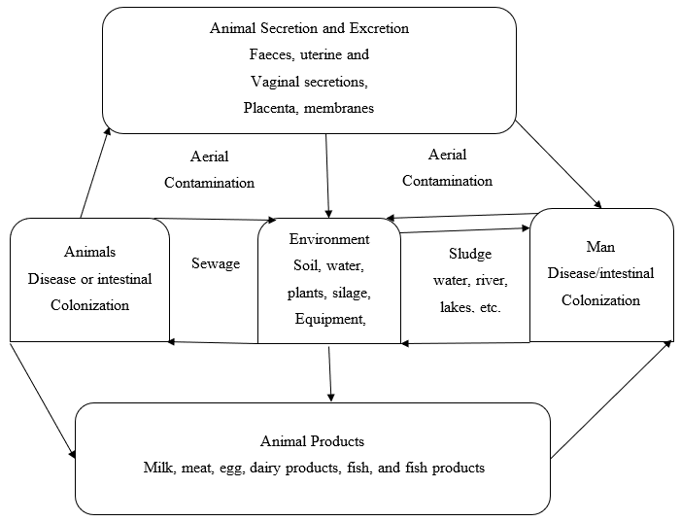
Figure 1: Different sources of L. monocytogenes contamination during production. (Sources: Zhu et al., 2017; Adzitey et al., 2013).
Transmission of Listeria Monocytogenes
Listeria monocytogenes is a bacterium responsible for causing listeriosis, a serious foodborne illness that can lead to severe complications, particularly in vulnerable populations such as pregnant women, newborns, the elderly, and individuals with weakened immune systems. The transmission of L. monocytogenes typically occurs through the consumption of contaminated food (Endrias et al., 2021).
Contaminated Food: The primary route of transmission for L. monocytogenes is through the ingestion of contaminated food. This bacterium is commonly found in soil, water, and various environments, including food processing plants and equipment (Datta and Burall, 2024). Foods commonly associated with Listeria contamination include unpasteurized dairy products, soft cheeses, deli meats, smoked seafood, and pre-prepared salads. L. monocytogenes can survive and even grow under refrigeration temperatures, making refrigerated ready-to-eat foods particularly susceptible to contamination (van der Vossen-Wijmenga et al., 2024).
Cross-Contamination: Cross-contamination is another significant factor in the transmission of L. monocytogenes. This can occur when contaminated food encounters other foods, utensils, or food preparation surfaces. For example, if a cutting board used to prepare deli meats is not properly cleaned before being used to chop vegetables, the bacteria can be transferred to the vegetables, leading to potential infection if consumed raw (Abdollahzadeh et al., 2016).
Food Processing Environments: Listeria monocytogenes can persist in food processing environments, especially in areas where sanitation practices are inadequate. Contaminated processing equipment, surfaces, and storage areas can serve as reservoirs for the bacteria, leading to the contamination of food products during processing and packaging (Chowdhury and Anand, 2023).
Raw Ingredients: Raw ingredients, particularly those of animal origin, can harbor L. monocytogenes and introduce the bacteria into the food supply chain. This can include raw meat, poultry, and seafood, as well as unpasteurized milk and dairy products. Proper cooking and pasteurization can effectively kill L. monocytogenes and reduce the risk of transmission (Wartha et al., 2023).
Environmental Reservoirs: Listeria monocytogenes can also be present in various environmental reservoirs, such as soil, water, and vegetation. Contamination of agricultural fields with animal feces or contaminated irrigation water can lead to the contamination of fresh produce, further contributing to the transmission of the bacterium through the food supply chain (Datta and Burall, 2024).
General Overview of Fish Handling Practices at The Lakes
Fish handling practices at the study lakes Haramaya, Adelle, and Tinike were predominantly traditional, with limited adherence to modern hygiene and safety standards (Fig2). Fishing was typically performed using wooden boats and gill nets, which were frequently reused without adequate cleaning or disinfection, thereby increasing the risk of cross-contamination (Zinabu et al., 2023). After harvest, fish were often stored in open containers or jute sacks, without refrigeration or ice, creating favorable conditions for microbial growth (FAO, 2024). Processing was commonly done at the landing sites using makeshift platforms such as wooden planks or metal tables, many of which were visibly unclean and lacked routine sanitation. Studies have shown that improper handling and unsanitary processing environments significantly contribute to the contamination of fish with foodborne pathogens, including L. monocytogenes (Merga et al., 2020; Zinabu et al., 2023).
The water used for washing fish, equipment, and hands was usually drawn directly from the lakes or shared water sources, without any form of treatment or chlorination. This poses a high risk of pathogen transmission, as lake water may contain fecal contaminants and environmental Listeria species (WHO, 2020). Fish handlers were typically observed working without protective clothing such as gloves, aprons, or hairnets. Personal hygiene practices were minimal, and handwashing, when conducted, was often performed using untreated lake water. This aligns with findings from similar low-resource fishing communities, where limited awareness and infrastructure hinder the implementation of basic food safety measures (Zhang et al., 2024; Assefa et al., 2024).
There was also a lack of segregation between raw and ready-to-eat fish products, increasing the risk of cross-contamination. Tools used for evisceration and filleting were frequently shared without cleaning between uses. Moreover, waste disposal practices around landing and processing sites were unsanitary, with discarded fish parts and wastewater often left in open areas, attracting pests and contributing to further environmental contamination (WHO, 2018). Overall, the fish handling chain at the study sites was characterized by poor hygiene, lack of infrastructure, and inadequate food safety awareness all of which can contribute to the proliferation of foodborne pathogens such as Listeria spp., thereby posing a significant public health concern (WHO, 2020).
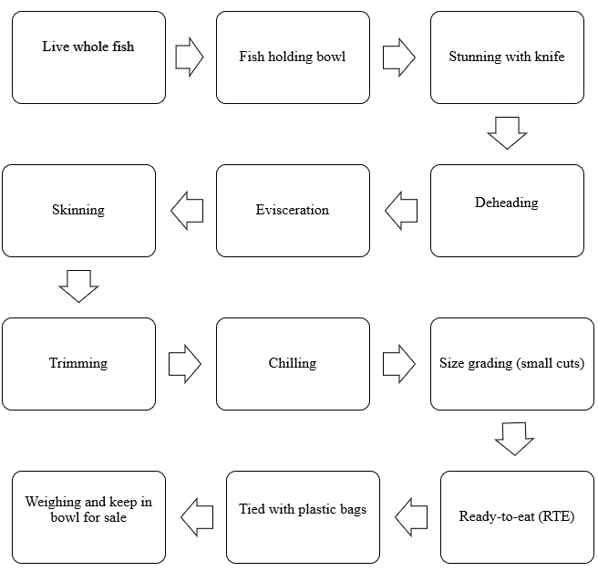
Figure 2: Flow Diagram of Traditional Fish Processing Operations in the Study Area.
Factors for Listeria Monocytogenes Contamination
The Type and Quality of The Lake Water: Lakes that are polluted by agricultural runoff, sewage, or industrial waste may have higher levels of L. monocytogenes and other pathogens. Lakes that are located near farms or animal habitats may also have an increased risk of contamination by animal feces or carcasses (Gartley et al., 2022).
The Season and Temperature of The Lake Water: Listeria monocytogenes can grow and multiply in cold temperatures, so lakes that are frozen or partially frozen in winter may have higher concentrations of the bacterium. Additionally, lakes that experience seasonal changes in water level or flow may have more sediment and organic matter that can harbor Listeria monocytogenes (Bell et al., 2021).
The Handling and Storage of The Raw Fish Meat: Raw fish meat from lakes should be kept refrigerated at 4°C or below and consumed within two days of purchase or catch. Raw fish meat should be washed thoroughly before preparation and cooked to an internal temperature of at least 74°C. Raw fish meat should not be cross-contaminated with other foods, utensils, or surfaces that may have Listeria monocytogenes or other bacteria (Fasika, 2019).
The Personal Health Status and Dietary Habits of The Consumer: People who are more susceptible to listeriosis, such as those with weakened immune systems, pregnant women, newborns, and older adults, should avoid eating raw fish meat from lakes altogether or consult their health care provider before doing so (CDC,2023). People who eat raw fish meat from lakes should monitor their symptoms and seek medical attention if they develop fever, muscle aches, headache, stiff neck, confusion, loss of balance, or convulsions (USDA’s -FSIS, 2024). The Centers for Disease Control and Prevention (CDC) offers information on the signs and symptoms of listeriosis and how to prevent it. By being aware of these risk factors and taking preventive measures, consumers can reduce their chances of getting listeriosis from raw fish meat at lakes and enjoy the benefits of eating fish as part of a healthy diet (CDC,2024)
Poor Food Safety Practices: Engaging in poor food handling, preparation, and storage practices can increase the risk of exposure to L. monocytogenes. Cross-contamination between raw and ready-to-eat foods, inadequate cooking, or reheating of foods, and failure to refrigerate perishable foods properly can all contribute to the transmission of L. monocytogenes (CDC, 2024; FSA, 2021).
Clinical Signs and Symptoms
When Listeria monocytogenes has spread past the human gut, it is invasive. The onset of symptoms has been reported as the same day in as little as 3 hours and as long as 70 days past exposure. Sometimes making the incubation period variable or a very long duration of time, potentially further complicating a food bore illness investigation (Wiktorczyk-Kapischke et al., 2023). Symptoms of the Disease Pregnant women are the most at-risk population for contracting a L. monocytogenes infection, and they are about 20 times more likely than other healthy adults to become ill with listeriosis (Wang et al., 2021). If pregnant women acquire listeriosis, the fetus is most heavily infected, leading to spontaneous abortion, stillbirths, or sepsis in infancy (CDC, 2024). About one-third of Listeria cases represent pregnancy-associated cases. In most cases, the fetus or newborn is more likely than the mother to be affected by listeriosis associated with pregnancy the perinatal and neonatal mortality rate is 80 percent (EFSA and ECDC, 2021).
The Mayo Clinic found the following symptoms of listeriosis to be common in infants who contract this disease: loss of appetite, lethargy, jaundice, vomiting, skin rash, and/or breathing difficulties (Eyob, 2024). Listeriosis can develop as two different forms of disease, a non-invasive form known as listerial gastroenteritis, or a severe invasive form of disease that often is accompanied by severe clinical manifestations. The non-invasive form of listeriosis results in a wide variety of symptoms ranging from fever, muscle aches, and gastrointestinal symptoms such as nausea or diarrhea. Five days to three weeks after ingestion of the bacterium, Listeria can infect deeper tissues leading to an invasive form of listeriosis causing a systemic infection (Quereda et al., 2021).
Public Health Importance of Listeria Monocytogenes
Listeria monocytogenes is a significant foodborne pathogen responsible for listeriosis, a serious illness primarily transmitted through contaminated food products such as unpasteurized dairy, raw vegetables, ready-to-eat meats, and seafood (CDC, 2024). Unlike many other foodborne bacteria, it can survive and multiply at refrigeration temperatures, increasing its risk in chilled foods (WHO, 2018). Listeriosis symptoms range from mild gastrointestinal discomfort to severe complications like meningitis, septicemia, and miscarriage. Vulnerable groups, including pregnant women, newborns, the elderly, and immunocompromised individuals, are at elevated risk for severe disease outcomes (EFSA, 2021). Pregnant women are approximately ten times more likely to contract listeriosis, which may lead to adverse pregnancy outcomes such as miscarriage or stillbirth (Rohilla et al., 2024). Individuals with weakened immune systems due to conditions like cancer, HIV/AIDS, organ transplants, or chronic diseases also face increased susceptibility (USDA’s -FSIS, 2024). The risk of infection is further amplified by the consumption of high-risk foods and poor food safety practices, such as improper cooking, storage, and cross-contamination (Augustin et al., 2020). Outbreaks of listeriosis, though sporadic, can have serious public health implications, including widespread illness, economic losses, and decreased consumer confidence (Fasika et al., 2023; Zhang et al., 2021). The persistence of L. monocytogenes in food processing environments due to its ability to tolerate cold and high-salt conditions further complicates its control (Datta and Burall, 2024).
Fish and fishery products have increasingly been recognized as significant vehicles for L. monocytogenes transmission, particularly ready-to-eat (RTE) smoked and lightly processed products. In 2013, an outbreak in Austria linked to vacuum-packed smoked trout resulted in multiple listeriosis cases, highlighting the risks posed by cold-smoked fish, which can support Listeria growth during refrigeration (Thomas et al., 2020). Similarly, in Sweden, a long-term outbreak from 2013 to 2019 was associated with gravid (cured) and cold-smoked salmon, leading to over 50 confirmed cases (Lachmann et al., 2022). In Canada, an earlier outbreak in 2008 involving smoked salmon led to several illnesses and prompted significant product recalls (Gilmour et al., 2010).
Listeria monocytogenes is responsible for several significant foodborne disease outbreaks worldwide, often associated with high mortality, particularly among immunocompromised individuals, pregnant women, neonates, and the elderly. One of the most severe outbreaks occurred in South Africa between 2017 and 2018, resulting in over 1,060 confirmed cases and 216 deaths, linked to contaminated ready-to-eat processed meat products (Smith et al., 2019). In Europe, Listeria has consistently ranked among the top causes of foodborne fatalities. According to the European Food Safety Authority (EFSA), 2,183 confirmed cases were reported in the EU in 2021 alone, with a case fatality rate of over 13% (EFSA and ECDC, 2022). In the United States, a notable outbreak in 2011 was traced to contaminated cantaloupes, causing 147 infections and 33 deaths, highlighting the pathogen’s ability to contaminate a wide range of food types (Pereira et al., 2023; CDC, 2024). Other countries, including Australia and Canada, have also reported sporadic outbreaks related to dairy products, smoked fish, and frozen vegetables (Desai et al., 2016). These cases underscore how Listeria’s psychrotrophic nature allows it to proliferate even at low storage temperatures, making RTE fish products particularly high-risk. Additionally, contamination is often traced to processing environments and equipment rather than the raw fish itself, emphasizing the importance of hygiene and cross-contamination control during production (Jami et al., 2014).
Prevention and Control
Prevention and control of L. monocytogenes, a bacterium known for causing the serious infection listeriosis, encompasses a range of strategies aimed at minimizing contamination and transmission risks, particularly among vulnerable populations such as pregnant women, newborns, the elderly and immunocompromised individuals. Fundamental to these efforts are stringent food safety measures, including adherence to Good Manufacturing Practices (GMP) and the implementation of Hazard Analysis and Critical Control Points (HACCP) systems in food processing facilities (FDA, 2021). These practices emphasize proper sanitation, hygiene protocols, and employee training to mitigate the risk of L. monocytogenes contamination during food production and processing. Additionally, ensuring thorough cooking and processing of food items is imperative as proper heat treatment can effectively eliminate L. monocytogenes present in raw ingredients (CDC, 2024).
Environmental monitoring plays a pivotal role in early detection and control of L. monocytogenes contamination within food processing environments. Routine surveillance involves swabbing surfaces, equipment, and utensils for bacterial presence, enabling prompt intervention measures such as deep cleaning and sanitation procedures upon detection (USDA, 2020). Furthermore, refrigeration and storage practices are critical in inhibiting the growth of L. monocytogenes, with strict adherence to proper refrigeration temperatures and storage protocols essential to prevent bacterial proliferation in refrigerated foods (FDA, 2021). Education and training programs targeting food handlers are paramount, emphasizing the importance of hygiene, sanitation, and safe food handling practices to minimize the risk of contamination (CDC, 2024).
Government agencies and regulatory bodies play a pivotal role in overseeing food safety standards and enforcement, conducting regular inspections of food processing facilities to ensure compliance with regulations aimed at preventing L. monocytogenes contamination ((USDA’s -FSIS,2020). Concurrently, consumer awareness initiatives are vital in educating the public about the risks associated with L. monocytogenes, and empowering individuals to adopt appropriate food safety practices at home, including proper storage, handling, and preparation techniques (CDC, 2024). Furthermore, ongoing research into the behavior and characteristics of L. monocytogenes, coupled with innovations in food processing technologies and packaging materials, holds promise for enhancing prevention and control strategies (FDA, 2021).
Diagnosis of Listeria Monocytogenes from Food Samples
The detection and diagnosis of L. monocytogenes in food samples are essential for ensuring food safety and protecting public health, particularly due to the organism’s ability to cause severe illness in humans. The diagnostic process generally follows a stepwise approach involving pre-enrichment, selective enrichment, isolation on selective media, and confirmatory identification. Initially, food samples are subjected to pre-enrichment in non-selective media to aid the recovery of stressed or injured cells. This is followed by selective enrichment in Listeria-specific broths such as Half Fraser Broth and Fraser Broth, which suppress competing microflora while favoring Listeria spp. growth (ISO, 2017). After enrichment, the sample is streaked onto selective agar media, such as Oxford Agar, PALCAM Agar, or Chromogenic Listeria Agar, which allow presumptive identification based on characteristic colony morphology (FDA,2022). For example, colonies of L. monocytogenes on Oxford agar appear as small, grey colonies with black halos due to esculin hydrolysis (FDA, 2022).
Presumptive colonies are subjected to biochemical identification, including catalase test, Gram staining, tumbling motility at 25°C, CAMP test, and sugar fermentation profiles (ISO, 2018). The Voges-Proskauer test and hemolysis on blood agar can also use as part of the confirmatory process. To increase specificity and reduce detection time, molecular methods such as Polymerase Chain Reaction (PCR) are widely used. These techniques target virulence genes such as hlyA, iap, and prfA for species-level identification (USDA’s -FSIS, 2024). Real-Time PCR (qPCR) is especially valued for its rapid detection and quantification abilities in food safety applications (Jadhav et al., 2012). Additionally, ELISA and other immunoassays can be applied as supplementary methods in screening large numbers of samples and by integrating culture-based, biochemical, and molecular techniques, laboratories can achieve accurate detection of L. monocytogenes in a variety of food matrices (FDA, 2017).
Materials and Methods
Description of The Study Area
Maya City is located in the East Hararghe Zone of the Oromia Regional State, in eastern Ethiopia. Geographically, it lies between 9°4′30″ and 9°31′30″ N latitude, and 41°51′0″ and 42°9′0″ E longitude (Figure 1). The city is located approximately 505 kilometers east of the capital city, Addis Ababa, and about 20 kilometers northwest of Harar town. Maya City is strategically positioned along the main highway that connects Addis Ababa to Harar, serving as an important route for trade and transportation (Kbrom et al., 2019). The surrounding area is characterized by a highland climate with elevations ranging between 1,965 and 2,433 meters above sea level. The city encompasses diverse ecosystems, including agricultural land, small hills, and freshwater bodies such as Lakes Haramaya, Tinike, and Adele, which are significant for local fisheries and agriculture. All three lakes are part of a single watershed system that spans approximately 14,010 hectares (Kbrom et al., 2019). This watershed includes around 18 peasant associations, Maya City, and the campus of Haramaya University. Lake Tinike seasonally overflows into Lake Haramaya, while Lake Adele was separated from the other two by approximately 15 km of cultivated land. The lakes are surrounded by small hills and primarily receive water from rainfall and several small streams originating from catchments located to the west and north. Occasional flooding from adjacent watersheds also contributes to their water levels (Kbrom et al., 2019; Adem et al., 2018).
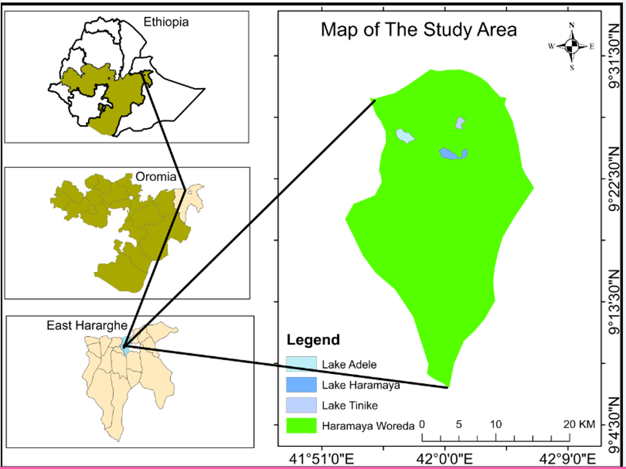
Figure 3: Map of the study area. Source (Zinabu et al., 2023).
Study Design and Period
A cross-sectional study was conducted from September 2024 to April 2025 at the three lakes of Haramaya district, (Lake Haramaya, Lake Tinike, and Lake Adele) on raw fish meat and fish contact surface samples to isolate, hygienic handling practice status, and contamination level of L. monocytogenes at the lakes.
Study Population and Sample Type
The study population represents healthy fish that has caught and slaughtered at Adelle, Tinike, and Haramaya lakes for human consumption. The sample included raw meat, (intestinal, gills, skin,) swabs from (workers' hands, working equipment, fish contact surfaces) and water samples (lake water and washing water).
Sample Size Determination
Sample Size Determination
The sample size required for this study was determined according to Thrusfield (2018). Since there was a previous study in Bishoftu and Addis Ababa by Bayleyegn et al. (2004) from fish meat harvested in Bishoftu lakes, and the prevalence was 18.6%, the sample size was estimated by taking an 18.6% as expected prevalence with a 95% confidence interval and 5 percent desired accuracy level.

Where, N = required sample size; Pexp = expected prevalence; d = desired absolute precision
Accordingly, 233 samples were initially calculated, and an additional 2% was added to account for potential sample loss during transportation and collection, resulting in a total of 238 samples. Out of these 238 samples, 150 were collected from fish, 64 from fish contact surfaces such as knives, cutting boards, storage materials, and hand swabs, and 24 from washing water and lake water samples collected from the three lakes (Table1).
Table 1: Sample Allocation by Type and Study Site.
| Sample Type | Haramaya | Adele | Tinike | Total |
| Raw Fish Meat | 50 | 50 | 50 | 150 |
| Washing Water | 4 | 4 | 4 | 12 |
| Lake Water | 4 | 4 | 4 | 12 |
| Working Equipment Surfaces | 12 | 8 | 10 | 30 |
| Boat and Nate Swabs | 5 | 3 | 4 | 12 |
| Hand Swabs | 10 | 5 | 7 | 22 |
| Total | 85 | 74 | 79 | 238 |
The sample size for the questionnaire and observational survey was determined using Arsham’s (2002) formula, N = 0.25 / SE², where the standard error (SE) was assumed to be 0.05. This calculation resulted in a sample size of 100 respondents. To account for potential non-responses, a total of 103 respondents were selected and interviewed concurrently with the sample collection. These respondents, including fish harvesters, fish handlers (processors), and consumers, were chosen based on their involvement in activities such as harvesting, slaughtering, storing, and consuming fish. The sample size was then proportionally distributed across the three lakes in the Haramaya region, with the distribution based on the lakes' respective fish production and population sizes. Using a list of fish harvesters, processors, and consumers as the sampling frame, individuals were randomly selected from each lake. The final distribution of respondents included 70 individuals from Haramaya Lake, 20 from Tinike Lake, and 13 from Adele Lake.
Sample Distribution and Sampling Method
In this study, a total of 238 samples were proportionally collected from the three lakes: 85 from Lake Haramaya, 74 from Lake Adelle, and 79 from Lake Tinike. Sampling was purposively collected by, focusing on selected fish species, fish contact surfaces, washing water, and lake water. The raw fish meat and water samples were evenly distributed among the lakes. At each study site, swabs were taken from working equipment, workers’ hands, boats, and nets, targeting specific workers and work areas around the lakes. Additionally, samples from skin, gills, GIT, muscle, RTE flesh, washing water, and lake water were purposively collected from each lake in equal numbers from the designated fishing sites (Table 2).
Sample Preparation and Collection
Freshwater Fish Sample Preparation and Collection: This study involved two species of freshwater fish: Nile Tilapia (Oreochromis niloticus, n = 10) and African Catfish (Clarias gariepinus, n = 20). A total of 30 fish were freshly bought from three lakes: Haramaya (Nile Tilapia, n = 5; African Catfish, n = 5), Adelle (African Catfish, n = 10), and Tinike (Nile Tilapia, n = 5; African Catfish, n = 5). Sampling proportions were equally distributed across the lakes. From each lake, raw fish meat samples were collected from five distinct anatomical parts: skin (n = 10), gastrointestinal tract (GIT, n = 10), gills (n = 10), muscle (n = 10), and ready-to-eat (RTE) flesh (n = 10), totaling 50 samples per lake and 150 samples overall. The intestines, gills, muscles, skin, and RTE flesh were aseptically separated and cut into small pieces. Approximately 25 grams were collected from each sampling point using pre-sterilized aluminum coils, scissors, scalpel blades, plastic containers, and universal bottles.
Fish Contact Surface Swab Preparation and Collection: In addition to fish meat samples, a total of 64 swab samples were collected from various fish contact surfaces. These included working equipment (cutting boards, knives, tables, weighing scales, and storage containers) (n = 30), Boats and nets (n = 12), and Workers’ hands (n = 22). Sterile cotton and sponge swabs pre-moistened with buffered peptone water (BPW) were used for sample collection. A sterile 10 cm × 10 cm template was applied to define a standardized 100-cm² area for swabbing. Surfaces were thoroughly swabbed using horizontal, vertical, and diagonal strokes to maximize the recovery of potential Listeria contamination. For hand swab samples, the palms, fingers, spaces between fingers, and areas under fingernails of fish handlers were swabbed using BPW-moistened sterile swabs, applying firm and consistent strokes.
Water Sample Preparation and Collection: A total of 24 water samples were collected, comprising lake water (n = 12) and washing water (n = 12). Samples were aseptically collected using sterile 500 mL plastic bottles, each labeled with the sampling location, date, and sample identification code. For flowing water sources, the bottle was held against the direction of flow at a depth of approximately 20-30 cm below the surface. In stagnant sources, bottles were gently inserted to avoid disturbing the sediment. Bottles were not completely filled to allow for air space, facilitating proper mixing during laboratory analysis (Table 2).
Table 2: Distribution of Sample Types across Study Sites.
| Sample Type | Study Sites | |||
| Haramaya | Adelle | Tinike | Total | |
| RTE Fish | 10 | 10 | 10 | 30 |
| Skin | 10 | 10 | 10 | 30 |
| GIT | 10 | 10 | 10 | 30 |
| Gills | 10 | 10 | 10 | 30 |
| Muscle | 10 | 10 | 10 | 30 |
| Washing water | 4 | 4 | 4 | 12 |
| Lake water | 4 | 4 | 4 | 12 |
| Hand swabs | 10 | 5 | 7 | 22 |
| WES | 12 | 8 | 10 | 30 |
| BANS | 5 | 3 | 4 | 12 |
| Total | 85 | 74 | 79 | 238 |
Abbreviations: RTE=Ready to Eat, WES=working equipment’s swabs, BANS=Boat and Nets swabs, GIT=Gastro intestinal tract
Sample Handling and Transportation
To make sure that samples were taken without being contaminated, inverted plastic bags were used for fish sample collection and all fish contact surface samples were collected in test tube containing 9ml of buffered peptone water. During sample transporting, the plastic bags were sterilized in order to avoid cross-contamination of the inner surface of the plastic bags. All samples were labelled with type, place, and date of sampling and given an identification code then transported to Haramaya University Central Laboratory of Food Microbiology in icebox containing ice packs for microbiological analysis. Upon arrival, the samples were incubating at 37°C then process within 24 hours of collection.
Isolation and Identification of Listeria Monocytogenes
Isolation by Culture on Different Listeria-Selective Agars
Samples (25 g or 25 ml) were mixed with 225 ml of Listeria Enrichment Broth (LEB) supplemented with selective additives (HiMedia, India) in sterile stomacher bags and homogenized using a laboratory blender at 150 rpm for 2 minutes. The homogenates were incubated at 30°C for 24 hours. After primary enrichment, 0.1 ml of the culture was transferred into 10 ml of Modified Fraser Broth (MFB) and incubated at 37°C for 24 hours for secondary enrichment. In the case of water and swab samples, primary enrichment was performed by incubating the samples aerobically at 30°C for 24 hours. For water samples, 1 ml of surface water was added directly to sterile LEB, followed by secondary enrichment as described. After the enrichment phase, 0.01 ml of the secondary culture (for liquids) or a loopfull of the culture (for solids) was streaked onto Oxford Agar (OXA) plates supplemented with selective agents. Plates were incubated at 37°C for 24 to 48 hours. Colonies characteristic of Listeria gray-black with a black halo and sunken center were examined and presumptively identified after 24 hours, consistent with methods recommended by the U.S. Food and Drug Administration (FDA, 2022) and ISO 11290-1:2017) standards.
Presumptive colonies (3-5 per plate) were sub cultured onto pre-dried Trypticase Soya Yeast Extract Agar (TSYEA) and incubated at 37°C for 18 to 24 hours to obtain pure isolates. Colonies with a gray-whitish, convex, and opaque appearance, typically measuring 1-2 mm in diameter, were further suspected to be Listeria spp. (Gasanov et al., 2005). Presumptive isolates underwent confirmatory tests including Gram staining (to verify Gram-positive rods), catalase activity testing, and standard biochemical assays for species identification (Jadhav et al., 2012).
The CAMP test was conducted to differentiate Listeria species. Reference strains of Staphylococcus aureus and Rhodococcus equi (obtained from the Haramaya University Food Microbiology Central Laboratory) were streaked vertically on sheep blood agar plates. Suspected Listeria isolates from TSYEA were streaked horizontally at right angles without touching the reference strains. Plates were incubated at 37°C for 24 hours. L. monocytogenes was identified by its enhanced hemolysis, forming an arrowhead towards the S. aureus streak. L. ivanovii produced distinct hemolysis without the arrowhead, while L. seeligeri showed weak enhancement. In contrast, L. innocua, L. welshimeri, and L. grayi did not exhibit hemolysis and were thus CAMP test-negative (FDA, 2022; Hitchins et al., 2017).
Microscopic Identification by Gram’s Staining Method
Gram staining is a laboratory technique used to differentiate between Gram-positive and Gram-negative bacteria. Gram-positive bacteria, including L. monocytogenes, have a thick cell wall that retains the Gram stain, making them appear purple under the microscope. Gram-negative bacteria, on the other hand, have a thin cell wall that does not retain the Gram stain, making them appear pink or red under the microscope.
Motility Test
The motility test for L. monocytogenes is a crucial diagnostic procedure used to assess the bacterium’s ability to move. Make a hanging drop preparation from a young broth culture from the trypticase soya yeast extract broth) incubated at room temperature for 8-24 h. Stab semi-solid motility agar containing 0.2-0.4% agar (about 1 cm). At 20-28°C, Listeria inoculated into the agar column swarm through the ‘motility medium’ and produced cloudiness. This can easily be observed by the naked eye. About 0.5 cm below the surface of the agar a layer of increased growth was found, like an umbrella.
Biochemical Tests for Listeria Monocytogenes
Catalase Test
The catalase test was performed to detect the presence of the catalase enzyme in Listeria spp., which catalyzes the breakdown of hydrogen peroxide (H₂O₂) into water and oxygen. A drop of 3% hydrogen peroxide solution was placed on a clean glass slide. Using a sterile loop, a loopful of the Listeria suspected colony was transferred onto the drop. The immediate formation of gas bubbles indicated a positive catalase reaction, confirming the presence of the catalase enzyme.
Carbohydrate Utilization Test
Carbohydrate utilization test was performed by taking a loop full of isolated colonies from TSYEA and transferring it into 10 ml of carbohydrate utilization broth containing xylose, Rhamnose and Mannitol (Scharlau, Barcelona, Spain) in each test tube and incubated at 37 °C for up to 24 to 48 hours. Positive reactions were identified by yellow color (acid formation) and when the culture remains purple, it indicates the bacteria did not ferment the carbohydrate and the result is negative.
The carbohydrate utilization test was conducted to assess the fermentative capabilities of Listeria species, which is essential for their identification and differentiation. A loopful of a pure Listeria colony was inoculated into tubes containing 0.5% solutions of individual carbohydrates dextrose, esculin, maltose, rhamnose, mannitol, and xylose prepared in purple broth base with Durham tubes. The inoculated tubes were incubated at 35 ± 2°C and observed daily for up to 7 days. Acid production was indicated by a color change from purple to yellow, while gas formation was monitored via bubble accumulation in the Durham tubes (FDA, 2022). All Listeria species typically ferment dextrose, esculin, and maltose, producing acid without gas. However, fermentation of rhamnose, mannitol, and xylose varies between species and is therefore useful for species-level identification. For L. monocytogenes ferments rhamnose but not xylose or mannitol, while L. ivanovii ferments xylose but not rhamnose (NMKL, 2007; Generon, 2021).
Data Management and Analysis
The collected data were entered into Microsoft Excel spreadsheets (Microsoft Corporation) and analyzed using STATA version 15.0 software (StataCorp, College Station, USA). Descriptive statistics were used to summarize the hygienic handling practices of respondents. The prevalence of L. monocytogenes contamination was calculated as the percentage of positive samples. Associations between handling practices and contamination levels were assessed using Chi-square (χ²) tests and logistic regression analysis. Odds Ratios (OR) and 95% Confidence Intervals (CI) were calculated to evaluate the strength of associations. For categorical variables, the first category (i.e., the one with the lowest percentage) was used as the reference. Results were considered statistically significant at p < 0>
Quality Control
L. monocytogenes ATCC4476, Staphylococcus aureus (ATCC 23925), and Rhodococcus equi (ATCC strain 6939) reference strains were used as quality control.
Ethical Approval
Ethical clearance for the study on animals was obtained from Haramaya University College of veterinary medicine. The aim of the study was explained and permissions were obtained from Maya city agricultural office and fish handlers before collection of samples and questionnaire data. Informed verbal consent was obtained from the study participants at the time of sample collection.
Research Limitations
Lack of Molecular Confirmation: The identification of Listeria species was based on phenotypic and biochemical characteristics. The absence of molecular techniques (e.g., PCR-based confirmation or genetic sequencing) may limit the accuracy of species identification and prevent detection of virulence factors important for public health risk assessment.
Results
Occurrence and Identification of Listeria Species Different Lakes
This study assessed the prevalence of Listeria species in raw fish meat and fish contact surfaces (FCS) from three lakes: Haramaya, Adele, and Tinike. In Haramaya Lake, Listeria was detected in 10% of raw fish meat samples (5/50) and 28.6% of FCS samples (10/35), resulting in an overall positivity level of 17.7%. At Adele Lake, 14% of raw fish meat samples (7/50) and 37.5% of FCS samples (9/24) tested positive for Listeria, yielding a total prevalence of 21.6%. Similarly, in Tinike Lake, 12% of raw fish meat samples (6/50) and 34.5% of FCS samples (10/29) were positive, resulting in an overall prevalence of 20.3%. Across all three lakes, Listeria contamination was consistently higher in fish contact surface samples than in raw fish meat, with this difference being statistically significant (p less than 0.05) (Table 3).
Table 3: The Occurrence of Listeria Species in Raw fish meat and Fish Contact Surface and Water from Haramaya, Adele, and Tinike.
| Lakes | Sample Sources | No. of Examined | No.+ve (%) | 95% CI (Lower - Upper) | χ2(P. Value) | OR (OR 95% CI) | P. Value |
| Haramaya | Raw Fish | 50 | 5(10) | 3.33-21.8 | Ref | ||
| FCSWS | 35 | 10(28.6) | 14.6-46.3 | 4.9(0.027) | 3.6(1.11-11.7) | 0.033 | |
| Sub Total | 85 | 15(17.7) | 10.23-27.4 | ||||
| Adelle | Raw Fish | 50 | 7(14) | 5.8-26.74 | Ref | ||
| FCSWS | 24 | 9(37.5) | 18.8-59.4 | 5.3(0.022) | 3.7(1.2-11.6) | 0.026 | |
| Sub total | 74 | 16(21.6) | 12.9-32.7 | ||||
| Tinike | Raw Fish | 50 | 6(12) | 4.53-24.3 | Ref | ||
| FCSWS | 29 | 10(34.5) | 17.94-54.33 | 5.7(0.017) | 3.9(1.23-12.14) | 0.021 | |
| Sub Total | 79 | 16(20.3) | 12-30.8 |
FCSWS= Fish Contact Surface and Water sample, +ve= positive, No=Number, OR=odd ratio, P. Value= probability value.
Among the raw fish samples, the highest prevalence was observed in Adele (14%), followed by Tinike (12%) and Haramaya (10%). Listeria monocytogenes was most prevalent in samples from Adele Lake (6%) and was not isolated in Tinike samples. Other species L. innocua, L. ivanovii, L. grayi, L. welshimeri, and L. seeligeri showed varied, location-specific distributions. Regarding FCS and water samples, Adele again shows the highest prevalence (37.5%), followed by Tinike (35%) and Haramaya (28.6%). Notably, L. monocytogenes was most frequently isolated in Adele (12.5%) (Table 4). The overall prevalence of Listeria species across all raw fish and FCS samples was 19.75% (47/238). Among these, L. innocua was the most frequently identified species (6.3%), while L. grayi and L. seeligeri were the least prevalent (1.68%). The prevalence of L. monocytogenes, L. welshimeri, and L. ivanovii was 4.2%, 3.36%, and 2.5%, respectively (Table 5).
Table 4: Prevalence of Listeria Species in Raw Fish, Fish Contact Surfaces, and Water Samples across Three Lakes.
| Listeria Species | Raw Fish Meat | Fish Contact Surface and Water | ||||
| Haramaya (n=50) (95% CI) | Adele (n=50) (95% CI) | Tinike (n=50) (95% CI) | Haramaya (n=35) (95% CI) | Adele (n=24) (95% CI) | Tinike (n=29) (95% CI) | |
| L.monocytogenes | 1(2) (0.05-11) | 3(6) (1.3-17) | 0(0) (0-7.1) | 2(5.7) (0.7-19) | 3(12.5) (3-32) | 1(3.5) (0.1-18) |
| L.inocua | 2(4) (0.5-14) | 3(6) (1.3-17) | 1(2) (0.05-11) | 4(11.4) (3.2-27) | 2(8) (1-27) | 3(10) (2-27) |
| L.ivanovii | 0(0) (0-7.11) | 1(2) (0.05-11) | 2(4) (0.5-14) | 1(2.9) (0.1-15) | 1(4) (0.1-21) | 1(3.5) (0.1-18) |
| L.grayi | 1(2) (0.05-11) | 0(0) (0-7.11) | (0) (0.5-11) | 1(2.9) (0.1-15) | 0(0) (1-26) | 2(7) (1-23) |
| L.welshimeri | 1(2) (0.05-11) | 0(0) (0-7.11) | 2(4) (0.5-11) | 1(2.9) (0.1-15) | 2(8) (1-27) | 2(7) (1-23) |
| L.seelgeri | 0(0) (0-7.11) | 0(0) (0-7.11) | 1(2) (0.05-10) | 1(2.9) (0.1-15) | 1(4) (0.1-21) | 1(3.5) (0.1-18) |
| Total | 5(10) (3.3-22) | 7(14) (6-27) | 6(12) (5-24) | 10(28.6) (15-46) | 9(37.5) (19-59) | 10(35) (18-54) |
L =Listeria, n= number, CI =Confidence Interval
Table 5: The types of Listeria species isolated in raw fish, fish contact surfaces, and water samples collected from the three lakes (n=238).
| Listeria Species | Number of Positive (n=47) | % (Occurrence) | 95% CI (Lower-Upper) % |
| Listeria monocytogenes | 10 | 4.2 | 2-7.6 |
| Listeria grayi | 4 | 1.68 | 0.46-4.3 |
| Listeria innocua | 15 | 6.3 | 3.6-10.2 |
| Listeria ivanovii | 6 | 2.5 | 0.93-5.4 |
| Listeria seeligeri | 4 | 1.68 | 0.46-4.3 |
| Listeria welshimeri | 8 | 3.36 | 1.46-6.52 |
| Total | 47 | 19.75 | 14.9-25.4 |
Among the observed Listeria species, L. monocytogenes posed the greatest concern, particularly due to its presence in 8.1% of Adele Lake samples. It was also isolated in Haramaya (3.5%) and Tinike (1.3%). Given its significance as a foodborne pathogen associated with severe human infections, its occurrence in these environments raises serious public health concerns. L. innocua showed relatively high prevalence across all three lakes, with rates of 7.1% in Adele, 6.8% in Haramaya, and 5% in Tinike. Although generally non-pathogenic, its presence was considered as an indicator of poor hygiene or sanitary practices. Other species such as L. grayi and L. ivanovii were moderately prevalent. L. grayi was identified in Haramaya (2.4%), Adele (2.5%), and Tinike (2.7%). Similarly, L. ivanovii was isolated in Adele (3.8%), Haramaya (2.4%), and Tinike (2.7%). While these species are not commonly associated with human illness, their presence reflects environmental contamination and potential food safety risks. L. welshimeri and L. seeligeri were the least frequently isolated. L. welshimeri was found at 1.2% in both Haramaya and Tinike, and slightly higher in Adele (1.4%). L. seeligeri showed minimal presence, with the highest isolation in Adele (2.53%) and lower rates in the other two locations (Figure 4).
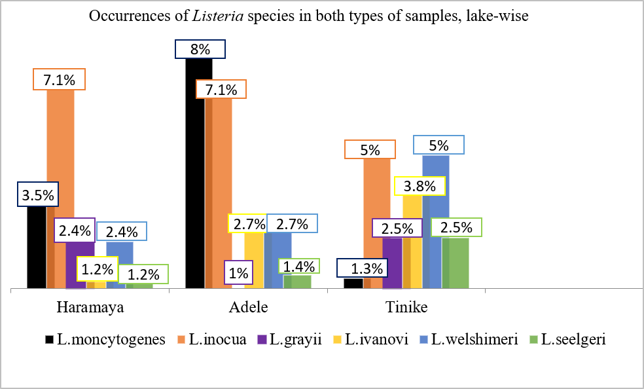
Figure 4: Listeria contamination level for both raw fish and fish contact surfaces of each three lakes.
Listeria Contamination in Fish Level
A total of 30 fish samples, comprising 10 Nile Tilapia (Oreochromis niloticus) and 20 African Catfish (Clarias gariepinus), were examined for the presence of Listeria species. The overall prevalence of Listeria was 43.3% (13/30; 95% CI: 27.4%-60.8%). Among the Nile Tilapia samples, 70% (7/10) tested positive for Listeria (95% CI: 39.7%-89.2%), whereas a lower prevalence of 30% (6/20) was observed in African Catfish (95% CI: 14.5%-51.9%). These results suggest a higher level of Listeria contamination in Nile Tilapia compared to African Catfish in the study area (Table 6).
Table 6: Prevalence of Listeria Species among the Fish Types in the Study Area.
| Fish Species | Examined (n) | Positive (%) | 95% CI (%) |
| Nile Tilapia | 10 | 7 (70%) | 39.7 - 89.2 |
| African Catfish | 20 | 6 (30%) | 14.5 - 51.9 |
| Total | 30 | 13 (43.3%) | 27.4 - 60.8 |
Combined Listeria Contamination in Fish Tissues and Contact Surfaces
Out of a total of 150 fish tissue samples examined, 10 samples (6.7%) were found to be positive for Listeria species. Among these, skin samples showing the highest contamination level at 13.3% (4/30), followed by samples from the gastrointestinal tract (GIT) and gills, each with a 6.7% (2/30) positive. Muscle and ready-to-eat (RTE) samples showed the lowest contamination, each with a single positive sample (3.3%). Notably, combinations of different Listeria species were isolated across these tissue samples. For instance, L. monocytogenes with L. seeligeri (m.s), L. grayi with L. innocua (g.in), and L. ivanovii with L. innocua (iv.in) were identified in skin, GIT, and muscle samples. The highest occurrence of combined species was observed in skin samples, where up to three different combinations were found.
For contact surface samples (n=88), a total of 15 samples (17%) were positive for all over combined Listeria. Among these, lake water samples had the highest contamination level at 33.3% (4/12), followed by washing water and surface contact samples, each at 16.7% (2/12). Working equipment swabs and hand swabs also showed notable contamination level at 13.3% (4/30) and 13.6% (3/22), respectively. Various species combinations were isolated, including L. seeligeri and L. ivanovii (s.iv), L. innocua and L. seeligeri (in.s), and L. welshimeri and L. innocua (w.in). The most frequently identified combinations in contact surfaces included m.s, s.iv, and in.s, each with 3.4% occurrence. These results indicate that Listeria species, including pathogenic combinations, were not only present in fish tissues but also widely distributed across contact surfaces involved in fish handling and processing (Table 7).
Table 7: Combined listeria contamination in Fish Tissues and Contact Surfaces from Three Lake.
| Sample Types | Examined | Positive (%) | No. (%) Positive for Combined Listeria Species | |||||
| (m&s) | (g&in) | (s&iv) | (in&s) | (iv&in) | (w&in) | |||
| RTE | 30 | 1(3.3) | 0(0) | 0(0) | 0(0) | 0(0) | 0(0) | 1(3.3) |
| Skin | 30 | 4(13.3) | 1(3.3) | 1(3.3) | 0(0) | 1(3.3) | 2(6.7) | 1(3.3) |
| GIT | 30 | 2(6.7) | 1(3.3) | 1(3.3) | 1(3.3) | 1(3.3) | 0(0) | 0(0) |
| Gills | 30 | 2(6.7) | (0) | 0(0) | 0(0) | 0(0) | 0(0) | 1(3.3) |
| Muscle | 30 | 1(3.3) | 0(0) | 0(0) | 0(0) | 0(0) | 1(3.3) | 0(0) |
| Overall | 150 | 10(6.7) | 2(1.3) | 2(1.3) | 1(0.7) | 2(1.3) | 3(2) | 3(2) |
| Wa.water | 12 | 2(16.7) | 0(0) | 0(0) | 1(8.3) | 1(8.3) | 0(0) | 0(0) |
| L. water | 12 | 4(33.3) | 1(8.3) | 1(8.3) | 0(0) | 1(8.3) | 0(0) | 1(8.3) |
| H. swabs | 22 | 3(13.6) | 1(4.6) | 0(0) | 1(4.6) | 1(4.6) | 0(0) | 0(0) |
| WES | 30 | 4(13.3) | 1(.3) | 0(0) | 1(3.3) | 0(0) | 1(3.3) | 1(3.3) |
| S.Contact | 12 | 2(16.7) | 0(0) | 1(8.3) | 0(0) | 0(0) | 1(8.3) | 0(0) |
| Overall | 88 | 15(17) | 3(3.4) | 2(2.27) | 3(3.4) | 3(3.4) | 2(2.27) | 2(2.27) |
Abbreviations: Wa: washing, WES: Working Equipment’s Swab L: Lake, +ve: Positive, No.: Number, m = monocytogenes, s= seelgeri, g =grayi in=inocua, iv=ivanovii, and w= welshemeri, RTE=Ready to eat, H=hand, S= surface
Comparison of Listeria Contamination in Raw Fish and Fish Contact Surfaces
This study evaluated the prevalence of Listeria species in raw fish meat and fish contact surfaces (FCS) from three lakes. The highest prevalence of Listeria species (20%; 95% CI: 7.7-38.6) and L. monocytogenes (6.7; 95% CI: 0.82-22.1) was detected in Skin samples of raw fish meat. Similarly, the lowest prevalence of Listeria species (3.3%; 95% CI: 0.084-17.22)) and L. monocytogenes (0; 95% CI: 0-11.57) was found in Muscle samples of raw fish meat. In addition, for fish contact surfaces and water the highest prevalence of Listeria species (33.3%; CI: 9.92-65.11) and L. monocytogenes (9.1%; 95% CI: 1.12-29.16) were found in lake water and hands swabs samples. Similarly, for the lowest prevalence of Listeria species (16.7%; 95% CI: 2.1-48.41) and L. monocytogenes (0; 95% CI: 0-26.47) were detected in washing water and (BANS) or boat and net swabs samples respectively (Table 8).
Table 8: Comparison of prevalence of Listeria monocytogenes and Listeria species from different types of samples.
| Sample Type | No. of Examined | Listeria species | Listeria monocytogenes | ||
| No. of Positive Samples | %Prevalence (95% CI) | No. of Positive Samples | % Prevalence (95% CI) % | ||
| RTE | 30 | 2 | 6.7(0.82-22.1) | 0 | 0(0-11.57) |
| Skin | 30 | 6 | 20(7.7-38.6) | 2 | 6.7(0.82-22.1) |
| GIT | 30 | 3 | 10(2.1-26.53) | 1 | 3.3(0.84-17.22) |
| Gills | 30 | 3 | 10(2.1-.26.53) | 1 | 3.3(0.84-17.22) |
| Muscle | 30 | 1 | 3.3(0.084-17.22) | 0 | 0(0-11.57) |
| Sub total | 150 | 15 | 10(5.7-15.96) | 4 | 2.7(0.73-6.69) |
| Washing Water | 12 | 2 | 16.7(2.1-48.41) | 1 | 8.3(0.21-38.48) |
| Lake water | 12 | 4 | 33.3(9.92-65.11) | 1 | 8.3(0.21-38.48) |
| Hand swabs | 22 | 6 | 27.3(10.73-50.2) | 2 | 9.1(1.12-29.16) |
| WES | 30 | 7 | 23.3(9.93-42.28) | 2 | 6.7(0.82-22.1) |
| BANS | 12 | 3 | 25(5.49-57.19) | 0 | 0(0-26.47) |
| Sub total | 88 | 22 | 25(16.38-35.4) | 6 | 6.8(2.5-14.25) |
| Total | 238 | 37 | 15.6(11.2-20.79) | 10 | 4.2(2-7.59) |
Abbreviations: WES=working equipment swabs, CI=confidence interval, BANS=Boat and Net swabs, RTE=Ready to eat
Demographic Characteristics of Fish Line Participants
The demographic characteristics of respondents in the fish supply chain reveal diversity in gender, age, location, education, and work experience. Among the 103 respondents, 85.4% were male and 14.6% were female. All fishermen were male, while processors and consumers included both genders, with 82.1% and 66.7% male representation, respectively. Regarding age, 24.3% of respondents were below 20, 70% were between 20-40, and 5.8% were above 40, with most fishermen (76%) and processors (61%) falling within the 20-40 range. Consumers followed a similar pattern, with 70% in the same age bracket. Respondents were from three locations: Haramaya (68%), Adele (12.6%), and Tinike (19.4%), with fishermen more evenly distributed across the three, while most processors (71.4%) and all consumers (100%) were from Haramaya. Educational backgrounds varied, with 18.5 percent being illiterate, 21.4% completing elementary education, 28.2% finishing secondary school, 19.4% attending college, and 12.6% reaching university. Fishermen had the highest percentage of secondary education (37.7%), processors were similar (35.7%), while consumers had the highest share of college (36.7%) and university education (43.3%). Work experience showed that 26% had two years or less, 70% had 3-5 years, and only 4% had over five years, with similar patterns among fishermen and processors, while consumers were not categorized under work experience. In terms of occupation, 61.6% of respondents were fishermen and 38.4% were processors. Overall, the respondents were predominantly male, within the 20-40 age range, largely based in Haramaya, and had varying education levels. Most had moderate work experience, highlighting their established roles in the fish supply chain. (Table 9).
Table 9: Demographic characteristics of fish line participants.
| Variable | Category | Respondent No. (%) | Fisherman No. (%) | Processors No. (%) | Consumer No. (%) |
| Sex | Male | 88(85.4) | 45(100) | 23(82.1) | 20(66.7) |
| Female | 15(14.6) | 0 | 5(17.9) | 10(33.3) | |
| Age | Below 20 | 25(24.3) | 11(24.4) | 9(32) | 5(16.7) |
| 20-40 | 72(70) | 34(76) | 17(61) | 21(70) | |
| ˃40 | 6(5.8) | 0 | 2(7) | 4(13.3) | |
| Location | Haramaya | 70(68) | 20(44.4) | 20(71.4) | 30(100) |
| Adele | 13(12.6) | 10(22.2) | 3(10.7) | 0 | |
| Tinike | 20(19.4) | 15(33.3) | 5(18) | 0 | |
| Level of education | Illiterate | 19(18.5) | 10(22.2) | 7(25) | 2(6.7) |
| Elementary | 22(21.4) | 13(29) | 7(25) | 2(6.7) | |
| Secondary | 29(28.2) | 17(37.7) | 10(35.7) | 2(6.7) | |
| Collage | 20(19.4) | 5(11.1) | 4(12.3) | 11(36.7) | |
| University | 13(12.6) | 0 | 0 | 13(43.3) | |
| Work experience | ≤2 | 19(26) | 12(26.7) | 7(25) | NA |
| 3-5 | 51(70) | 31(68.9) | 20(71.4) | ||
| ˃5 | 3(4) | 2(4.4) | 1(3.6) | ||
| Occupation | Fisherman | 45(61.6) | 45(100) | 0 | NA |
| Processors | 28(38.4) | 0 | 28(100) | ||
| Total | 103(100) | 45(44) | 28(27) | 30(29) |
NA: Not Applicable, No= Number, % = percentage, >= greater than
Assessment of Personal Hygiene and Hygienic Handling Practices
Personal hygiene practices among respondents in the fish supply chain across the three lakes show considerable variation. Regarding maintaining personal cleanliness before starting work, only 30% of respondents ensure their body and clothes are clean, while a significant 70% do not follow this practice. Handwashing with soap and water after using the toilet was practiced by 38.8% of respondents, whereas 61.2% neglect this essential hygiene measure. A notable difference is observed among different groups (fish harvesters, processors, and consumers) in this regard. When it comes to washing hands before and after handling fish, 44% of respondents comply with this practice, while 56% do not. A significant difference is also observed among the groups. Additionally, 66% of respondents avoid eating, smoking, and ensure they cover their face when coughing or sneezing, whereas 34% do not adhere to these practices. Regular trimming of fingernails is observed among 48.5% of respondents, while 51.5% neglect this hygiene measure.
All respondents (100%) reported avoiding fish handling when they are sick, yet none (0%) possess a medical certificate. Jewelry is avoided during food handling by 60% of respondents, while 40% still wear it, with a significant difference among the groups. Furthermore, 42.5% of respondents touch their mouth, tongue, or nose while handling food, whereas 57.5% refrain from doing so. Lastly, none of the respondent has received any training related to personal hygiene practices, highlighting a significant gap in training and education within the fish supply chain (Table 10). The study revealed significant differences in food safety and hygiene practices among fishermen, processors, and consumers in the Haramaya district, with statistical evidence supporting these disparities. Fishermen consistently showed the lowest compliance. Only 22.2% of them practiced regular handwashing before and after handling food, compared to 39% of processors and 60% of consumers. Similarly, proper waste disposal was poorest among fishermen, with just 20% refraining from discarding waste in lakes, while 60.7% of processors and 40% of consumers followed this practice. Alarmingly, 55.6% of fishermen reported frequently disposing of waste in the lake. Cleaning of storage equipment also varied significantly, as only 17.8% of fishermen consistently cleaned equipment before and after use, compared to 46.4% of processors and 57% of consumers.
Table 10: Personal hygiene practices of respondents along the fish line of the three lakes.
| Questions | Response | Frequency No. (%) | Harvesters No. (%) | Processors No. (%) | Consumers (%) |
| 1. Are your body and clothes clean before work? | Yes | 51(70) | 31(69) | 20(71.4) | NA |
| No | 22(30) | 14(31) | 8(28.6) | ||
| 2. Wash hands with soap after toilet? | Yes | 40(38.8) | 27(60) | 19(68) | 20(66.7) |
| No | 63(61.2) | 18(40) | 9(32) | 10(33.3) | |
| 3. Do you avoid jewelry during food handling? | Yes | 45(44) | 15(33.3) | 11(39.3) | 19(63.3) |
| No | 58(56) | 30(66.7) | 17(60.7) | 11(36.7) | |
| 4. Do you avoid eating, smoking, and cover your mouth when coughing/sneezing? | Yes | 68(66) | 31(69) | 18(64.3) | 19(63.3) |
| No | 35(34) | 14(31) | 10(35.7) | 11(36.7) | |
| 5. Do you trim your fingernails regularly? | Yes | 50(48.5) | 17(37.8) | 12(43) | 17(56.7) |
| No | 53(51.5) | 28(62.2) | 16(57) | 13(43.3) | |
| 6. Do you avoid handling fish when sick? | Yes | 73(100) | 45(100) | 28(100) | NA |
| No | 0 | 0 | 0 | ||
| 7. Do you have a valid medical certificate? | Yes | 0 | 0 | 0 | NA |
| No | 73(100) | 45(100) | 28(100) | ||
| 8. Do you wash hands before and after handling fish? | Yes | 29(40) | 11(24) | 18(64) | NA |
| No | 44(60) | 34(76) | 10(36) | ||
| 9. Do you avoid touching your mouth, nose, or tongue while handling food? | Yes | 31(57.5) | 25(56) | 17(60) | NA |
| No | 31(42.5) | 20(44) | 11(39) | ||
| 10. Receiving training | Yes | 0 | 0 | 0 | NA |
| No | 73(100) | 45(100) | 28(100) |
Yes = Good hygiene, NA= Not applicable.
Safe cooking practices ensuring food is cooked to proper temperatures were followed by 60% of consumers, but only 24.4% of fishermen and 18% of processors, with 60% of fishermen admitting they never followed this safety measure. None of the respondents across all groups reported inspecting fish for spoilage or damage. The use of separate cutting boards for raw fish and other foods was moderately practiced, with 44.4% of fishermen, 39.3% of processors, and 40% of consumers reporting consistent use. However, the differences were not statistically significant. Cleaning and sanitizing of fish-handling surfaces and equipment was reported by 13.6% of fishermen, 36% of processors, and none of the consumers, while nearly half of processors (49.7%) and 42% of fishermen never performed this practice.
Proper storage of fish in clean, covered containers was highest among processors (71.4%), followed by consumers (46.7%), and lowest among fishermen (22.2%), with 62.2% of fishermen never practicing safe storage. The use of ice for storing and transporting fish was nearly non-existent across all groups. Lastly, proper disposal of fish waste and byproducts was most common among consumers (63.3%), but significantly lower among fishermen (38%) and especially among processors (12.3%), with 48.7% of fishermen never following this practice. These findings reveal clear, statistically significant gaps in food hygiene and safety practices, particularly among fishermen (Table 11).
Table 11: Food safety and food handling practices among fishermen, processors, and consumers at the three lakes of Haramaya district.
| Questionnaires | Responses | Frequency (%) | Fisherman (%) | Processors (%) | Consumer (%) |
| Wash your hands before and after handling food? | Always | 39(38) | 10(22.2) | 11(39) | 18(60) |
| S. Times | 29(28) | 15(33.3) | 12(43) | 2(6.7) | |
| Never | 35(34) | 20(45.5) | 5(18) | 10(33.3) | |
| Good food hygiene and safety practice | Always | 38(37) | 9(20) | 17(60.7) | 12(40) |
| S. Times | 30(29) | 11(24.4) | 3(10.7) | 16(53) | |
| Never | 35(34) | 25(55.6) | 8(28.6) | 2(7) | |
| Cleaning storage equipment before and after handling food? | Always | 38(37) | 8(17.8) | 13(46.4) | 17(57) |
| S. Times | 33(32) | 23(51.1) | 6(21.4) | 4(13) | |
| Never | 32(31) | 14(31.1) | 9(32.2) | 9(30) | |
| Do you practice safe cooking, ensuring foods reach T⁰? | Always | 34(33) | 11(24.4) | 5(18) | 18(60) |
| S. Times | 25(24.3) | 7(15.6) | 16(57) | 2(6.7) | |
| Never | 44(42.7) | 27(60) | 7(25) | 10(33) | |
| Do you inspect fish for signs of spoilage or damage? | Always | 0 | 0 | 0 | 0 |
| S. Times | 0 | 0 | 0 | 0 | |
| Never | 103(100) | 45(100) | 28(100) | 30(100) | |
| Use separate cutting boards and utensils for raw fish and other food items? | Always | 43(41.7) | 20(44.4) | 11(39.3) | 12(40) |
| S. Times | 15(14.6) | 5(11.2) | 4(14.3) | 6(20) | |
| Never | 45(43.7) | 20(44.4) | 13(46.4) | 12(40) | |
| Clean and sanitize your fish handling equipment? | Always | 16(22) | 6(13.6) | 10(36) | 0 |
| S. Times | 24(33) | 20(44.4) | 4(14.3) | 0 | |
| Never | 33(45) | 19(42) | 14(49.7) | 0 | |
| Are fish displayed and stored in clean, covered containers? | Always | 44(42.7) | 10(22.2) | 20(71.4) | 14(46.7) |
| S. Times | 18(17.5) | 7(15.6) | 5(17.9) | 6(20) | |
| Never | 41(39.8) | 28(62.2) | 3(10.7) | 10(33.3) | |
| Use ice for storing and transporting fish? | Always | 5(4.9) | 0 | 2(7.1) | 3(10) |
| S. Times | 3(2.9) | 0 | 1(3.6) | 2(6.7) | |
| Never | 95(92.2) | 45(100) | 25(89.3) | 25(83.3) | |
| Dispose waste and byproduct properly? | Always | 40(38.8) | 17(38) | 4(12.3) | 19(63.3) |
| S. Times | 25(24.3) | 6(13.3) | 15(54) | 4(13.3) | |
| Never | 38(36.9) | 22(48.7) | 9(31.7) | 7(23.4) |
S. time= some time, always= good hygienic practices Never= poor hygiene practices.
Discussion
Global fish consumption increased higher than that of all other animal protein foods in now days. The nutritional values of fish meat as a healthy food were the main reason for increasing demand for fish meat but there is serious safety concerns related to the presence of fish borne pathogenic bacteria including L. monocytogenes. Raw fish meat is one of the potential sources of L. monocytogenes contamination in food products (FSA, 2021). The current study revealed an overall prevalence of Listeria species at 19.75% from raw fish meat and fish contact surfaces/water samples collected from Haramaya, Adele, and Tinike lakes. Among the isolates, L. innocua (6.3%) was the most frequently detected species, followed by L. monocytogenes (4.2%), L. welshimeri (3.36%), and L. ivanovii (2.5%), while L. grayi and L. seeligeri each accounted for 1.68%.
The predominance of L. inocua and the overall prevalence observed in this study are comparable with the findings of Bayileyegn et al. (2004), Sintayehu (2017), and Vrinda et al. (2021). The distribution of Listeria species across the three lakes revealed spatial variations. In raw fish meat, the highest detection was from Adele (14%), followed by Tinike (12%) and Haramaya (10%). Likewise, for FCSWS, Adele again showed a higher contamination rate (37.5%), followed by Tinike (34.5%) and Haramaya (28.6%). The consistently higher contamination levels observed in Adele could be attributed to differences in water quality, fish handling practices, and environmental sanitation. Additionally, its location along the main road connecting Addis Ababa to Harar may contribute to increased human activity and contamination risks.
Sample wise comparison illustrated that Listeria species were most prevalent on the skin of raw fish (26.7%), with lower occurrences in gills (13.3%), GIT (13.3%), and muscle tissue (3.3%). Similar patterns were observed in Bangladesh, where Listeria contamination was more prominent on external surfaces than in internal tissues, reinforcing the role of surface exposure and handling contamination (Islam et al., 2016; Sobuj et al., 2022). Notably, L. monocytogenes was most frequently detected in skin (6.7%) and hand swabs (9.1%), suggesting that contamination may be amplified during handling, post harvesting and during processing (Moretro and Langsrud, 2004; Nkosi, 2022). Overall, fish contact surfaces and lake water samples showed higher L. monocytogenes prevalence rates compared to raw fish meat. L. monocytogenes was found in 5.7% of samples from Haramaya, 12.5% from Adele, and 3.5% from Tinike respectively. These results were comparable with (Saleh et al., 2024; Papadopoulos et al., 2010; Jamali et al., 2015) global findings that aquatic environments often serve as reservoirs for Listeria species, including the pathogenic L. monocytogenes (Basha et al., 2019).
In the case of raw fish meat samples, the prevalence of L. monocytogenes across the three sites, with L. monocytogenes being detected in 2% of Haramaya samples, 6% of Adele samples, and none in Tinike. These findings are consistent with other studies conducted in India, Gondar and bishoftu respectively (Vrinda et al., 2021; Legesse et al., 2015; Sintayehu, 2017). The result of the current study showed that 8% of raw fresh fish meat and fish contact surfaces was contaminated with L. monocytogenes in Adelle. This isolation rate of L. monocytogenes in Adelle was comparable with the reports of Momtaz and Yadollahi (2013), Jamali et al. (2015) and Amusan andSanni, (2018) who reported occurrence of 7.7% 7.6% and 7.4% respectively of L. monocytogenes in raw fish from Iran and Nigeria. In Nigeria, a relatively higher occurrence of 40% and 37.65% were reported in fresh fish from Nsukka and Calabar respectively (Ikeh et al., 2010; Lennox et al., 2017). The differences in the occurrence of L. monocytogenes in foods in different countries might be due to the differences in the composition of food items and hygiene status of food processing, handling and methods of isolation and identification (Legesse et al., 2015). This aligns with some global findings where the prevalence of L. monocytogenes in raw fish is typically low but still notable in certain regions (Onjong et al., 2018).
Fish contact surfaces and environmental samples were significantly contaminated. Lake water samples showed a high contamination rate of 41.7%, followed by hand swabs (31.8%) and working equipment swabs (30%). A study in Ghana similarly identified poor sanitation and inadequate equipment cleaning as major contributors to Listeria contamination in fish processing environments (Bomfeh, 2011; Amuna, 2014; Aboagye et al., 2020). Moreover, the presence of Listeria in washing water and boats/nets in this study further corroborates the environmental persistence of these organisms (Gartley et al., 2022). When fish species were compared, O. niloticus (Nile tilapia) exhibited higher Listeria prevalence (70%) than C. gariepinus (African catfish, 30%). Comparable results were found in a study from Uganda, Kenya, Ghana and Egypt where Nile tilapia demonstrated greater susceptibility to surface microbial contamination due to its feeding habits and scale structure (Wamala et al., 2018; Njagi, 2019; Aboagye et al., 2020; Abd El Maksod et al., 2023).
The findings of this study revealed considerable gaps in hygienic handling practices among individuals involved in the fish supply chain around Haramaya, Adele, and Tinike lakes, which likely contributed to the observed contamination with Listeria species. Only 30% of participants reported keeping their body and clothes clean before work, and just 38.8% washed their hands with soap and water after toilet use. These figures are significantly lower than those reported in similar studies globally are. For instance, a study conducted in Ghana found that 64% of fish handlers adhered to basic personal hygiene practices including proper handwashing and clean clothing (Aboagye et al., 2020; Dela et al., 2023). Likewise, in Bangladesh, 72% of respondents demonstrated regular hand hygiene during fish handling (Sobuj et al., 2022).
The absence of formal training in hygiene among all respondents in the current study further highlights a systemic issue. Globally, training has been shown to positively influence hygiene compliance. A study in Vietnam demonstrated that training programs significantly improved food safety practices among fish processors, resulting in a 40% reduction in microbial contamination of fish products (Pham et al., 2022). In contrast, the lack of such interventions in the current study population corresponds with high contamination levels, notably Listeria monocytogenes in hand swabs and working equipment (Mpundu, 2023). The study found that only 44% of respondents washed their hands before and after handling fish, with significant differences among the stakeholder groups. Fishermen consistently exhibited poorer hygiene behaviors compared to processors and consumers. These findings are consistent with reports from Ethiopia and Nigeria, where fishermen had significantly lower hygiene compliance due to limited access to clean water and facilities (Bedane et al., 2022; Adiama, 2022 Kester et al., 2024).
In our study, a large portion of fishermen (45.5%) never washed their hands before and after handling fish, compared to 18% of consumers. Additionally, equipment sanitation and storage practices were found to be inadequate. About 45% of respondents never sanitized their handling tools, and 39.8 percent failed to store fish in clean, covered containers. These practices likely contributed to the presence of Listeria in fish contact surfaces, particularly in lake water (33.3%) and working equipment swabs (23.3%). A study from India emphasized the importance of regular sanitation, reporting that consistent cleaning of tools and storage containers reduced Listeria contamination in fish products by over 50% (Gandhi and Chikindas, 2007). Our findings suggest similar risks where such practices are lacking (Salihu et al., 2008). Another critical observation was the universal neglect of proper waste disposal practices. Only 37% of respondents consistently refrained from dumping waste into the lakes, while 34 percent admitted to never doing so. This environmental negligence has direct implications, as lake water samples in this study dictated a 33.3% contamination level with Listeria species. Studies in Ghana and Uganda have similarly shown a correlation between poor waste disposal and microbial contamination of water sources used in fish handling (Aboagye et al., 2020; Ssubi, et al., 2024).
Notably, none of the respondents reported inspecting fish for spoilage or using ice during transportation and storage. This is in stark contrast to fish safety practices in developed settings such as the European Union, where regulations mandate cold-chain maintenance and sensory inspection as critical control points to limit bacterial growth (EFSA, 2018; Ndraha et al., 2024). Inadequate cold storage was also highlighted in the current study as a major gap, potentially exacerbating the survival and proliferation of Listeria, a psychrotrophic pathogen capable of growing at refrigeration temperatures (Adem et al.,20 19; Lambrechts,2023). In the last, the study revealed poor hygienic and food handling practices across all groups, particularly among fishermen. These practices are significantly below international standards and directly associated with Listeria contamination in raw fish, ready-to-eat products, and fish contact surfaces (Luber et al., 20 11; EFSA, 2018).
Conclusion and Recommendations
The findings of this study indicate that fish handling practices at Haramaya, Adele, and Tinike lakes are predominantly traditional, with limited implementation of modern hygiene and food safety standards. Fishing operations rely on reusable equipment such as wooden boats and nets, which are less sanitized, creating potential avenues for L. monocytogenes contamination. Post-harvest handling is notably inadequate, with fish commonly stored in open containers or sacks without cooling mechanisms, thereby promoting microbial growth. The absence of designated, clean surfaces for fish cleaning and processing, along with the use of untreated lake or communal water for washing, further elevates the risk of contamination. Moreover, fish handlers typically lack access to basic protective gear and demonstrate limited awareness of personal hygiene practices. The frequent use of the same tools and surfaces for both raw and ready-to-eat fish highlights a significant risk of cross-contamination. Environmental hygiene around landing and processing sites is also poor, with improper waste disposal contributing to unsanitary conditions. In conclusion, the lack of structured food safety protocols across all stages of fish handling presents considerable public health risks. These practices create favorable conditions for the introduction and spread of foodborne pathogens such as L. monocytogenes in the study areas. So, depending the above conclusion, the following recommendations were forwarded:
- Improve Hygiene Practices: Implement regular hygiene training for fish handlers, processors, and consumers to ensure proper handwashing, personal hygiene, and safe food handling practices.
- Organize community awareness programs focusing on fish contamination risks, safe cooking practices, and the importance of proper food storage.
- Conduct routine cleaning and environmental control initiatives in and around the lakes to reduce water contamination.
- Educate fishermen and fish handlers on the importance of regularly cleaning and sanitizing tools, utensils, and working surfaces.
- Implement proper waste disposal systems or covered bins and designated dumping areas to maintain cleanliness at fish landing and processing sites.
Acronyms and Abbreviations
BLEB: Buffered Listeria Enrichment Broth, BPW: Buffered Peptone Water, CAMP: Christie Atkins Munch Peterson, CDC: Centre for Diseases Prevention and Control, CFU: Colony Forming Units, ECDC: European Centre for Diseases Prevention and Control, FAO: Food and Agricultural Organization, FDA: Federal Drug Administration, FSIS: Food Safety and Inspection Service, ISO: International Standard Organization, LEB: Listeria Enrichment Broth, MFB: Modified Fraser Broth, NCCLS: National Committee for Clinical Laboratory Standards, NCOFA: Nordic Committee on Food Analyses, OCLA: Oxoid Chromogenic Listeria Agar, GIT: Gastro Intestinal Tract, OXA: Oxford Agar, PCR: Polymerase Chain Reaction, RTE: Ready-To-Eat, TSYEA: Trypticase Soy Yeast Extract Agar, USDA: United States Department of Agriculture, WHO: World Health Organization
Declarations
Acknowledgments
Above all, we would like to express our heartfelt gratitude and deepest appreciation to our advisors, Dr. Sisay Girma and Mr. Jelalu Kemal, for their invaluable guidance, constructive comments, and unwavering support throughout this journey. Their insights and technical assistance have been instrumental in shaping our research, from proposal preparation to the completion of this paper.
Our sincere and profound gratitude also goes to our family, especially our brother and sister, Dereje Tamirat and Sinidu Tamirat, as well as Mr. Addisu Mesfin and his beloved wife, Askalech Belete, for their tremendous support during the challenging times we faced in securing sponsorship for this research. Their understanding, encouragement, and financial assistance were pivotal in helping us overcome these difficulties.
We are deeply thankful to Dr. Meseret Girma, Director of Haramaya University Central Laboratory, and Ms. Bezawit, Head of the Central Laboratory of Food Microbiology, for their invaluable help during our laboratory work. We also extend our gratitude to Mr. Assed Abdela and all the central lab staff for their assistance and cooperation.
Additionally, we would like to thank the Maya City Administration Agricultural Office for their excellent support in facilitating various aspects of our research. We are equally grateful to the fish harvesters, fish handlers, and fish consumers who willingly participated in our study, provided written consent, and answered our questions during data and sample collection.
Lastly, we wish to express ours thanks to Dr. Amare Eshete, Dean of Haramaya University College of Veterinary Medicine, and our friends, Mr. Abdelahi Abdurrahman, Mr. Kelif Dawid, Abdumenan Emiru, Dr. Biniam Mengiste, and Gemechu Benti, for their exceptional cooperation and support throughout this journey.
Approval and Consent to Participate
Ethical approval for this study was obtained from the College of Veterinary Medicine, Haramaya University. Prior to sample and data collection, the objectives and procedures of the study were clearly explained, and official permission was obtained from the relevant district agricultural offices as well as animal owners. Verbal informed consent was obtained from all participants after assuring them that their personal information would be kept strictly confidential and that participation was entirely voluntary, with the right to withdraw at any point.
Consent for Publication
We have read and approved the final manuscript, and consent is given for its publication in this journal.
Availability of Data and Materials
The datasets generated and/or analyzed during the current study are available from the corresponding author upon reasonable request.
Competing Interests
We declare that we have no competing interests.
Funding Declaration
We did not receive any funding, grants, or financial support from any public, private, or non-profit organizations for the conduct of this research.
Authors’ Contributions
DT conceptualized the research idea. JK, HS and DT collaboratively planned and designed the structure of the study. JK, HS and DT wrote the initial manuscript, while DT provided revisions, addressed comments, and edited the manuscript. All authors read and approved the final version of the manuscript.
References
- Ajayeoba, T. A., Atolagbe, E. J., Ayannuga, O. D., Lala, O., Ijabadeniyi, O. A. (2023). Chapter 9 Consumer’s handling of food and food safety knowledge. In De Gruyter eBooks, 207-222.
Publisher | Google Scholor - Abd El Maksod, H. E., Saad, S. M., Samir, M. M. (2023). Microbiological evaluation of some farmed fish species marketed in Sharkia Governorate, Egypt. Journal of Advanced Veterinary Research, 13(6):1117-1123.
Publisher | Google Scholor - Abdallah-Ruiz, A., Wood, L.S., Kim, T., Schilling, W., White, S.B., et al. (2022). Microbial Indicators and Possible Focal Points of Contamination during Production and Processing of Catfish. Foods, 11(18):2778.
Publisher | Google Scholor - Abdollahzadeh, E., Ojagh, S.M., Hosseini, H.; Irajian, G., Ghaemi, E.A. (2016). Prevalence and Molecular Characterization of Listeria Spp.and Listeria monocytogenes Isolated from Fish, Shrimp, and Cooked Ready-to-Eat (RTE) Aquatic Products in Iran. LWT-Food Science and Technology, 73:205-211.
Publisher | Google Scholor - Aboagye, E., Tano-Debrah, K. W. A. K. U., Kunadu, A. P. H. (2020). Microbial quality of fish along with the Tilapia, African catfish and Sardinella artisanal value chains in Kpong and James Town, Ghana. International Journal of Bonorowo Wetlands, 10(1):1-17.
Publisher | Google Scholor - Adem Hiko, Eliyas Bushura, Dinaol Belina. (2019). Occurrence of Listeria in food chilling facilities of the different campuses in Haramaya University, Ethiopia. Scientific African, 3:e00074.
Publisher | Google Scholor - Adiama, Y. B. (2022). Assessment of Compliance with International Health Regulation on Hygiene and Sanitary Condition of Ship on Nigeria Water Ways. PhD dissertation, Kwara State University, Kwara, Nigeria.
Publisher | Google Scholor - Adzitey, F., Ali, G. R. R., Huda, N., Cogan, T., Corry, J. (2013). Prevalence, antibiotic resistance and genetic diversity of Listeria monocytogenes isolated from ducks, their rearing and processing environments in Penang, Malaysia. Food Control, 32(2):607-614.
Publisher | Google Scholor - Alemayehu Abebe Wake, Tamiru Chalchisa Geleto. (2019). Socio-economic importance of Fish production and consumption status in Ethiopia: a review, International Journal of Fisheries and Aquatic Studies, 7(4):206-211.
Publisher | Google Scholor - Alia, A., Martín, I., Andrade, M. J., Rodríguez, A., Cordoba, J. J. (2024). Listeria monocytogenes cell-to-cell spread. Molecular Medical Microbiology, 391-406.
Publisher | Google Scholor - Amuna, N. N. (2014). Food safety management practices in the traditional fish-processing sector in Ghana and the microbiological safety of selected processed fish products from Ghana. PhD dissertation, University of Greenwich, London, UK.
Publisher | Google Scholor - Amusan, E. E., Sanni, A. I. (2018). Isolation and identification of Listeria monocytogenes in fresh croaker (Pseudotolithus senegalensis). In IOP Conference Series: Earth and Environmental Science, 210(1):012004.
Publisher | Google Scholor - Assefa Belay, Araya Mengistu, Tadlo Awoke. (2024). A Study on the Factors Associated with Fish Production in Lake Tana, Ethiopia. Uttar Pradesh Journal of Zoology, 45(12):223-230.
Publisher | Google Scholor - Augustin, J.-C., Kooh, P., Bayeux, T., Guillier, L., Meyer, T., et al. (2020). Contribution of foods and poor food-handling practices to the burden of foodborne infectious diseases in France. Foods, 9(11):1644.
Publisher | Google Scholor - Bayleyegn Molla, RomanYilma, Daniel Alemayehu. (2004). Listeria monocytogenes and other Listeria species in retail meat and milk products in Addis Ababa, Ethiopia. Ethiopian Journal of Health Development, 18(3):208-212.
Publisher | Google Scholor - Bedane, Tesfaye. D., Getahun Agga E., Fanta. Desisa Gutema. (2022). Hygienic assessment of fish handling practices along production and supply chain and its public health implications in Central Oromia, Ethiopia. Scientific Reports, 12(1):13910.
Publisher | Google Scholor - Bell, R. L., Kase, J. A., Harrison, L. M., Balan, K. V., Babu, U., et al. (2021). The persistence of bacterial pathogens in surface water and its impact on global food safety. Pathogens, 10(11):13-91.
Publisher | Google Scholor - Bizunesh Mideksa Borena, Lemma Dilgasa, Endrias Zewdu Gebremedhin, Edilu Jorga Sarba, Lencho Megersa Marami, et al. (2022). Listeria Species Occurrence and Associated Risk Factors and Antibiogram of Listeria Monocytogenes in Milk and Milk Products in Ambo, Holeta, and Bako Towns, Oromia Regional State, Ethiopia. Veterinary Medicine International, 11:2468-2276.
Publisher | Google Scholor - Bomfeh, K. (2011). Risk assessment for Listeria monocytogenes in traditionally processed fish from informal markets in Accra and Tema. MPHIL Thesis, University of Ghana, Legon, Ghana.
Publisher | Google Scholor - Borreby, C., Hvidtfeldt, T. A., Jespersen, M. G., T. dos Santos, P., Houborg, S. D., et al. (2025). Long-chain unsaturated free fatty acids reduce the host cell invasion of Listeria monocytogenes outbreak strains. Frontiers in Cellular and Infection Microbiology, 15(154):21-65.
Publisher | Google Scholor - Byun, K.-H., Han, S. H., Choi, M. W., Kim, B.-H., Ha, S.-D. (2024). Efficacy of disinfectant and bacteriophage mixture against planktonic and biofilm state of Listeria monocytogenes to control in the food industry. International Journal of Food Microbiology, 413:110587.
Publisher | Google Scholor - Centers for Disease Control and Prevention (CDC). About Listeria Infection. (2024).
Publisher | Google Scholor - Centers for Disease Control and Prevention (CDC). Listeria (Listeriosis). Atlanta CDC; (2023).
Publisher | Google Scholor - Central Stastical Agency (CSA). (2007). Population and Housing Census of Federal Democratic Republic of Ethiopia. CSA, Addis Ababa, Ethiopia.
Publisher | Google Scholor - Chen, B. Y., Pyla, R., Kim, T. J., Silva, J. L., Jung, Y. S. (2010). Prevalence and contamination patterns of Listeria monocytogenes in catfish processing environment and fresh fillets. Food Microbiology, 27(5):645-652.
Publisher | Google Scholor - Chen, J., Regan, P., Laksanalamai, P., Healey, S., Hu, Z. (2017). Prevalence and methodologies for detection, characterization, and subtyping of Listeria monocytogenes and L. ivanovii in foods and environmental sources. Food Science and Human Wellness, 6(3):97-120.
Publisher | Google Scholor - Chowdhury, B., Anand, S. (2023). Environmental persistence of Listeria monocytogenes and its implications in dairy processing plants. Comprehensive Reviews in Food Science and Food Safety, 22(6):4573-4599.
Publisher | Google Scholor - Cripe, J., and Losikoff, M. (2021). Presence of Listeria monocytogenes and Sanitation Controls in Cold-Smoked Salmon Facilities during FDA Inspections. Food Protection Trends, 41(2):184-194.
Publisher | Google Scholor - Datta, A. R., Burall, L. S. (2024). Detection of Listeria monocytogenes in Food and Environment. Diagnosis of Pathogenic Microorganisms Causing Infectious Diseases, 67-95.
Publisher | Google Scholor - Dela, H., Egyir, B., Behene, E., Sulemana, H., Tagoe, R., et al. (2023). Microbiological quality and antimicrobial resistance of Bacteria species recovered from ready-to-eat food, water samples, and palm swabs of food vendors in Accra, Ghana. International Journal of Food Microbiology, 396:110195.
Publisher | Google Scholor - Desai, A. N., Anyoha, A., Madoff, L. C., Lassmann, B. (2019). Changing epidemiology of Listeria monocytogenes outbreaks, sporadic cases, and recalls globally: A review of ProMED reports from 1996 to 2018. International Journal of Infectious Diseases, 8(4):48-53.
Publisher | Google Scholor - EFSA (European Food Safety Authority). (2020). Scientific opinion on the Listeria monocytogenes contamination of RTE foods and the risk for human health. EFSA Journal, 18(1):e05927.
Publisher | Google Scholor - EFSA and ECDC (European Centre for Disease Prevention and Control and European Food Safety Authority). (2022). Listeriosis. The European Union One Health 2021 Zoonoses Report. EFSA Journal, 20(12):e07666.
Publisher | Google Scholor - Eklund, M. W., Poysky, F. T., Paranjpye, R. N., Lashbrook, L. C., Peterson, M. E., et al. (1995). Incidence and sources of Listeria monocytogenes in cold-smoked fishery products and processing plants. Journal of Food Protection, 58(5):502-508.
Publisher | Google Scholor - El-Nemr, I., Mushtaha, M., Irungu, P., Asim, H., Tang, P., et al. (2019). Assessment of food safety knowledge, self-reported practices, and microbiological hand hygiene levels of produce handlers in Qatar. Journal of Food Protection, 82(4):561-569.
Publisher | Google Scholor - Endrias Zewdu Gebremedhin, Gadisa Hirpa, Bizunesh Mideksa Borana, Edilu Jorga Sarba, Lencho Megersa Marami, et al. (2021). Listeria Species Occurrence and Associated Factors and Antibiogram of Listeria monocytogenes in Beef at Abattoirs, Butchers, and Restaurants in Ambo and Holeta in Ethiopia. Infection and Drug Resistance,10:1493-1504,
Publisher | Google Scholor - Estrada, E. M., Hamilton, A. M., Sullivan, G. B., Wiedmann, M., Critzer, F. J., et al. (2020). Prevalence, persistence, and diversity of Listeria monocytogenes and Listeria species in produce packinghouses in three US states. Journal of Food Protection, 83(2):277-286.
Publisher | Google Scholor - European Centre for Disease Prevention and Control and European Food Safety Authority. (2022). Listeriosis. In: ECDC Annual epidemiological report for 2021. Stockholm: ECDC.
Publisher | Google Scholor - European Food Safety Authority (EFSA). (2018). Scientific Opinion on the Listeria monocytogenes contamination of ready‐to‐eat foods and the risk for human health in the EU. EFSA Journal, 16(1):e05134.
Publisher | Google Scholor - European Food Safety Authority (EFSA). (2020). The European Union One Health 2019 Zoonoses Report. European Food Safety Authority Journal, 18(12):e06114.
Publisher | Google Scholor - European Food Safety Authority (EFSA). (2021). The European Union one health 2020 zoonoses report. European. European Food Safety Authority Journal.
Publisher | Google Scholor - European Food Safety Authority and European Centre for Disease Prevention and Control (EFSA and ECDC). (2021). The European Union One Health 2020 Zoonoses Report of Campylobacter, foodborne outbreaks, Listeria, monitoring, parasites, Salmonella, and zoonoses. European Food Safety Authority Journal.
Publisher | Google Scholor - Eyasu Tigabu Seyoum, Daniel Asrat Woldetsadik, Tesfu Kassa Mekonen, Haile Alemayehu Gezahegn, Wondwossen Abebe. (2015). Prevalence of Listeria monocytogenesin raw bovine milk and milk products from central highlands of Ethiopia. Journal of Infection in Developing Countries, 9(11):1204-1209.
Publisher | Google Scholor - Eyob Hirpa Tola. (2024). Prevalence, Antimicrobial Resistance, and Characterization of Listeria Spp. Isolated from Various Sources in Ethiopia: A Comprehensive Review. Veterinary Medicine: Research and Reports, 15:109-116.
Publisher | Google Scholor - Fasika Admasu, Abraham Mikru, Kassaye Balkew, Million Adane. (2023). Microbial Profile of Fresh and Semi cooked Nile Tilapia (Oreochromis niloticus) and Hygienic Practice of Fish Handlers in Hawassa, Ethiopia. International Journal of Microbiology, 5866719:11.
Publisher | Google Scholor - Fasika, Admasu. (2019). Microbial profile of raw and partially cooked Nile tilapia (Oreochromis niloticus) fillets and knowledge, attitude and hygienic practice of fish handlers in Lake Hawassa, southern Ethiopia. MSc Thesis, Hawassa University, Hawassa, Ethiopia.
Publisher | Google Scholor - Firehiwot Abera Derra, Susanne Karlsmose, Dharam P. Monga, Abebe Mache, Christina Aaby Svendsen, et al. (2013). Occurrence of Listeria spp. in Retail Meat and Dairy Products in the Area of Addis Ababa, Ethiopia. Foodborne Pathogens and Disease, 10(6):577-579.
Publisher | Google Scholor - Food and Agricultural Organization of the United Nations (FAO). (2024). The State of World Fisheries and Aquaculture 2024. Blue Transformation in action. Rome.
Publisher | Google Scholor - Food and Agricultural Organization of the United Nations (FAO). (2023). Good fish handling - A guide to good tuna processing techniques for small-scale tuna processors. Apia.
Publisher | Google Scholor - Food and Agricultural Organization of the United Nations (FAO). (2020). Fishery and Aquaculture Country Profiles: The Federal Democratic Republic of Ethiopia Addis Ababa, Ethiopia.
Publisher | Google Scholor - Food and Drug Administration (FDA). (2021). Listeria (Listeriosis).
Publisher | Google Scholor - Food and Drug Administration. (2017). Chapter 10: Detection of Listeria monocytogenes in foods and environmental samples, and Enumeration of Listeria monocytogenes in foods. In: Bacteriological Analytical Manual (BAM).
Publisher | Google Scholor - Food and Drug Administration. (2020). Fish and Fishery Products Hazards and Controls Guidance.
Publisher | Google Scholor - Food and Drug Administration. (2022). Chapter 10: Detection of Listeria monocytogenes in foods and environmental samples, and Enumeration of Listeria monocytogenes in foods. In: Bacteriological Analytical Manual (BAM). Hitchins A.D., Jinneman K. and Chen Y.
Publisher | Google Scholor - Food and Drug Administration's (FDA's). (2021). Fish and fishery products hazards and controls guidance 4th ed., 75-345.
Publisher | Google Scholor - Food Safety Authority (FSA). (2021). Listeria.
Publisher | Google Scholor - Food Safety Preventive Controls Alliance (FSPCA). (2016). Appendix 6: Hygienic Zoning and Environmental Monitoring; FSPCA Preventive Controls for Human Food Participant Manual, Version 1.2.
Publisher | Google Scholor - Gandhi, M., and Chikindas, M. L. (2007). Listeria: a foodborne pathogen that knows how to survive. International Journal of Food Microbiology, 113(1):1-15.
Publisher | Google Scholor - Gartley, S., Anderson-Coughlin, B., Sharma, M., Kniel, K. E. (2022). Listeria monocytogenes in irrigation water: an assessment of outbreaks, sources, prevalence, and persistence. Microorganisms, 10(7):1319.
Publisher | Google Scholor - Gasanov, U., Hughes, D., Hansbro, P. M. (2005). Methods for the isolation and identification of Listeria spp. and Listeria monocytogenes: A review. FEMS Microbiology Reviews, 29(5):851-875.
Publisher | Google Scholor - Generon. (2021). L-Rhamnose & D-Xylose Listeria Carbohydrates Confirmation Tests. Generon Food Safety.
Publisher | Google Scholor - Gilmour, M. W., Graham, M., Van Domselaar, G., Tyler, S., Kent, H., et al. (2010). High-throughput genome sequencing of two Listeria monocytogenes clinical isolates during a large foodborne outbreak. BMC Genomics, 11(120):1-15.
Publisher | Google Scholor - Gupta, P., Adhikari, A. (2022). Novel approaches to environmental monitoring and control of Listeria monocytogenes in food production facilities. Foods, 11(12):1760.
Publisher | Google Scholor - Guta Dissasa, Brook Lemma, and Hassen Mamo. (2022). Isolation and identification of major bacteria from three Ethiopian rift valley lakes live and processed fish, and water samples: implications in sanitary system of fish products. Biomed Central Veterinary Research, 18(1):439.
Publisher | Google Scholor - Hammad, A. M., Watanabe, W., Fujii, T., Shimamoto, T. (2018). Occurrence and Characteristics of Listeria monocytogenes Isolated from Retail Raw Foods in Japan. Journal of Food Protection, 81(9):1475-1480.
Publisher | Google Scholor - Hazards, E. P. B., Koutsoumanis, K., Alvarez-Ordonez, A., Bolton, D., Bover-Cid, S., et al. (2020). The public health risk posed by Listeria monocytogenes in frozen fruit and vegetables including herbs, blanched during processing. European Food Safety Authority Journal, 18(4):e06092.
Publisher | Google Scholor - Hitchins, A. D., Jinneman, K., Chen, Y., McCall, M. (2017). Detection and enumeration of Listeria monocytogenes in foods. In Bacteriological Analytical Manual (Chapter 10). U.S. Food and Drug Administration.
Publisher | Google Scholor - Hoel, S., Vadstein, O., Jakobsen, A. N. (2019). Listeria monocytogenes in the smoked salmon industry. Current Opinion in Food Science, 30:16-21.
Publisher | Google Scholor - Hussein Ahimed Mohammed, Adem Hiko, Adem Abdellah, Yimer Muktar, Gutema, F. D. (2022). Isolation and multidrug drug resistance profile of Listeria species in selected Dairy Farm's Operational stages in Oromia Regional State, Ethiopia. Scientific African, 16:e01167.
Publisher | Google Scholor - Ikeh, M. A. C., Obi, S. K. C., Ezeasor, D. N., Ezeonu, I. M. Moneke, A. N. (2010). Incidence and pathogenicity profile of Listeria sp. isolated from food and environmental samples in Nsukka, Nigeria. African Journal of Biotechnology, 9(30):4776-4782.
Publisher | Google Scholor - International Organization for Standardization (ISO). (2017). Microbiology of the food chain - Horizontal method for the detection and enumeration of Listeria monocytogenes and of Listeria spp. -Part 1: Detection method. International Standard ISO 11290-1, Geneva, Switzerland.
Publisher | Google Scholor - International Organization for Standardization (ISO). (2017). Microbiology of the food chain - Horizontal method for the detection and enumeration of Listeria monocytogenes and of Listeria spp.-Part 2: Enumeration method. International Standard ISO 11290-2, Geneva, Switzerland.
Publisher | Google Scholor - Islam, M.S., Husna, A.A., Islam, M.A., Khatun, M.M. (2016). Prevalence of Listeria monocytogenes in beef, chevon and chicken in Bangladesh. American Journal of Food Science and Health, 2(4):39-44.
Publisher | Google Scholor - Jadhav, S., Bhave, M., Palombo, E. A. (2012). Methods used for the detection and subtyping of Listeria monocytogenes. Journal of Microbiological Methods, 88(3):327-341.
Publisher | Google Scholor - Jalali, M., Abedi, D., Hadian, M. (2018). Prevalence and molecular identification of Listeria monocytogenes in fish, shrimp, and crayfish in Iran. Food Control, 85:198-202.
Publisher | Google Scholor - Jamali H., Paydar, M, Ismail, S., Looi, C.Y., Wong, W.F., et al. (2015). Prevalence, antimicrobial susceptibility and virulo typing of Listeria species and Listeria monocytogenes isolated from open-air fish markets. BioMed Central Microbiology, 15(144):1-7.
Publisher | Google Scholor - Kayode, A. J., Semerjian, L., Osaili, T., Olapade, O., Okoh, A. I. (2021). Occurrence of multidrug-resistant Listeria monocytogenes in environmental waters: a menace of environmental and public health concern. Frontiers in Environmental Science, 9:737435.
Publisher | Google Scholor - Kester, C. T., Daramola, J. A., Alao, F. O., Chukwu, C. B. (2024). Listeria species and occurrence in retailed smoked fish samples in selected Ota markets, Ogun State, Nigeria. Journal of Research in Forestry, Wildlife and Environment, 16(3):61-69.
Publisher | Google Scholor - Lachmann, R., Halbedel, S., Luth, S., Holzer, A., Adler, M., et al. (2022). Invasive listeriosis outbreaks and salmon products: a genomic, epidemiological study. Emerging Microbes and Infections, 11(1):1308-1315.
Publisher | Google Scholor - Lambrechts, K. (2023). Genetic diversity of Listeria monocytogenes from the fish products, the fish food processing environment and clinical origin in the Western Cape, South Africa using whole genome sequencing. PhD dissertation, Stellenbosch University, Stellenbosch, South Africa.
Publisher | Google Scholor - Legesse Garedew, Ayele Taddese, Tigist Biru, Seleshe Nigatu, Elias Kebede, et al. (2015). Prevalence and antimicrobial susceptibility profile of Listeria species from ready-to-eat foods of animal origin in Gondar Town, Ethiopia. Biomed Central Microbiology, 15(1):100.
Publisher | Google Scholor - Lencho Girma, Alene Geteneh, Demisew Amenu, Tesfaye Kassa. (2021). Isolation and characterization of Listeria monocytogenes among women attending Jimma University medical center, Southwest Ethiopia. Biomed Central Infection Disease, 21(1):1-6.
Publisher | Google Scholor - Lennox, J. A., Etta, P. O., John, G. E., Henshaw, E. E. (2017). Prevalence of Listeria monocytogenes in fresh and raw fish, chicken and beef. Journal of Advances in Microbiology, 3(4):1-7.
Publisher | Google Scholor - Liu, D., Lawrence, M. L., Wiedmann, M., Gorski, L. (2019). A Comparison of Listeria monocytogenes Contamination Patterns in Smoked Fish Processing Facilities Located in the Great Lakes Region. Frontiers in Microbiology, 10: 2657.
Publisher | Google Scholor - Liu, Y., Wang, Y., Duan, Z., Zhang, W. (2020). Occurrence and molecular characterization of Listeria monocytogenes isolated from river water in China. Environmental Research, 183:109274.
Publisher | Google Scholor - Luber, P., Crerar, S., Dufour, C., Farber, J., Datta, A., et al. (2011). Controlling Listeria monocytogenes in ready-to-eat foods: working towards global scientific consensus and harmonization - recommendations for improved prevention and control. Food Control, 22(9):1535-1549.
Publisher | Google Scholor - Mellou, K., Sideroglou, T., Potamiti-Komi, M., Kyritsi, M., Papadogeorgaki, E., et al. (2019). Detection and molecular characterization of Listeria monocytogenes isolated from freshwater lakes in Sweden. Journal of Applied Microbiology, 127(5):1424-1433.
Publisher | Google Scholor - Merga, L. B., Mengistie, A. A., Faber, J. H., Van den Brink, P. J. (2020). Trends in chemical pollution and ecological status of Lake Ziway, Ethiopia: a review focusing on nutrients, metals and pesticides. African Journal of Aquatic Science, 45(4):386-400.
Publisher | Google Scholor - Mohamed, Z. N., Issa-Zacharia, A., Nyamete, F. (2023). Microbiological Quality of Rabbit Fish (Signus Sutor) and Food Safety Practice of Fish Handlers from Selected Landing Sites in Zanzibar. International Journal of Microbiology and Biotechnology, 8(4):98-109.
Publisher | Google Scholor - Momtaz, H., Yadollahi, S. (2013). Molecular characterization of Listeria monocytogenes isolated from fresh seafood samples in Iran. Diagnostic Pathology, 8:1-6.
Publisher | Google Scholor - Moretro, T., Langsrud, S. (2004). Listeria monocytogenes: biofilm formation and persistence in food-processing environments. Biofilms, 1(2):107-121.
Publisher | Google Scholor - Mpundu, P. (2023). Public health importance and antibiotic resistance patterns of listeria species in food and food processing environments in selected districts of Zambia. PhD dissertation, The University of Zambia, Lusaka, Zambia.
Publisher | Google Scholor - Nayak, D. N., Savalia, C. V., Kalyani, I. H., Kumar, R., Kshirsagar, D. P. (2015). Isolation, identification, and characterization of Listeria spp. from various animal origin foods. Veterinary World, 8(6):695-701.
Publisher | Google Scholor - Ndraha, N., Lin, H. Y., Hsiao, H. I., Lin, H. J. (2024). Managing the microbiological safety of tilapia from farm to consumer. Comprehensive Reviews in Food Science and Food Safety, 23(5):e70023.
Publisher | Google Scholor - Njagi, I. G. (2019). Microbial Contamination of Nile Tilapia (Oreochromis Niloticus) and African Catfish (Clarias Gariepinus) Fingerlings Reared in Hatchery Tanks at Sagana, Jambo, and Mwea Fish Farms. PhD dissertation, Kenyatta University, Kenya.
Publisher | Google Scholor - Nkosi, S. R. (2022). Molecular identification and characterization of selected food-borne pathogens in imported dried fish sold in informal markets around Gauteng province in South Africa. PhD dissertation, North-West University, South Africa.
Publisher | Google Scholor - NMKL. (2007). Method no. 136, Fourth Edition, Listeria monocytogenes. Detection in foods and feeding stuffs and enumeration in foods. NMKL, Secretary General, c/o Norwegian Veterinary Institute, Oslo, Norway.
Publisher | Google Scholor - Onjong, H. A., Ngayo, M. O., Mwaniki, M., Wambui, J., Njage, P. M. K. (2018). Microbiological safety of fresh tilapia (Oreochromis niloticus) from Kenyan fresh water fish value chains. Journal of Food Protection, 81(12):1973-1981.
Publisher | Google Scholor - Orsi, R.H.; Wiedmann, M. (2016). Characteristics and distribution of Listeria spp., including Listeria species newly described since 2009. Applied Microbiology and Biotechnology, 100:5273-5287.
Publisher | Google Scholor - Osek, J., Wieczorek, K. (2022). Listeria monocytogenes-How this pathogen uses its virulence mechanisms to infect the hosts. Pathogens, 11(12):1491.
Publisher | Google Scholor - Osman, K.M., Kappell, A.D., Fox, E.M., Orabi, A., Samir, A. (2020). Prevalence, pathogenicity, virulence, antibiotic resistance, and phylogenetic analysis of biofilm producing Listeria monocytogenes isolated from different ecological niches in Egypt: Food, humans, animals, and environment. Pathogens, 9(5):27-79.
Publisher | Google Scholor - Pegu, R. K., Sen, A., Shakuntala, I., Kumar, A., Ahmed, G. (2018). Prevalence of Listeria monocytogenes in freshwater fish of Northeast India and their molecular characterization by PCR. Indian Journal of Hill Farming, 30(2):220-226.
Publisher | Google Scholor - Pereira, E., Conrad, A., Tesfai, A., Palacios, A., Kandar, R., et al. (2023). Multinational outbreak of Listeria monocytogenes infections linked to enoki mushrooms imported from the Republic of Korea 2016-2020. Journal of Food Protection, 86(7):100101.
Publisher | Google Scholor - Phan, T. N., Miyamoto, T., Masuda, Y., Hohjoh, K. I., Thi, A. N. T. (2022). Occurrence, antimicrobial resistance, and genetic diversity of Listeria monocytogenes at fish-processing plants in Vietnam. Food Science and Technology Research, 28(2):141-149.
Publisher | Google Scholor - Pizarro-Cerda, J., Cossart, P. (2018). Listeria monocytogenes: cell biology of invasion and intracellular growth. Microbiology Spectrum, 6(6):61-65.
Publisher | Google Scholor - Quereda J.J., Moron-Garcia A., Palacios-Gorba C., Dessaux C., Garcia-del Portillo F., et al. (2021). Pathogenicity and virulence of Listeria monocytogenes: A trip from environmental to medical microbiology. Virulence, 12(1):2509-2545.
Publisher | Google Scholor - Ravindhiran, R., Sivarajan, K., Sekar, J. N., Murugesan, R., Dhandapani, K. (2023). Listeria monocytogenes an emerging pathogen: a comprehensive overview on listeriosis, virulence determinants, detection, and anti-listerial interventions. Microbial Ecology, 86(4):2231-2251.
Publisher | Google Scholor - Rodriguez, C., Taminiau, B., Garcia-Fuentes, E., Daube, G., Korsak, N. (2021). Listeria monocytogenes dissemination in farming and primary production: Sources, shedding and control measures. Food Control, 120:107540.
Publisher | Google Scholor - Rodriguez-Lopez, P., Carballo, J., Garcia-Lopez, M. L. (2020). Prevalence, persistence, and control of Listeria monocytogenes in food processing environments in Spain. Food Control, 109:106935.
Publisher | Google Scholor - Rohilla, A., Kumar, V., Ahire, J. J. (2024). Unveiling the persistent threat: recent insights into Listeria monocytogenes adaptation, biofilm formation, and pathogenicity in foodborne infections. Journal Food Science and Technology, 61(8):1428-1438.
Publisher | Google Scholor - Sagni Diba Bayata. (2020). Epidemiology of Listeriosis in Animal and Human in Ethiopia. International Journal of Veterinary Science Research, 6(2):154-158.
Publisher | Google Scholor - Saleh S.O., Hussein A.A., Yoseef A.G., Younis W.K., Mubarak, A.G. (2024). Prevalence, antibiotic resistance, and phylogenetic analysis of Listeria monocytogenes isolated from various sources in Egypt: fish, vegetables, and humans. Iraqi Journal of Veterinary Sciences, 38(1):15-27.
Publisher | Google Scholor - Salihu, M. D., Junaidu, U., Manga, S. B., Gulumbe, M. L., Magaji, A. A., et al. (2008). Occurrence of Listeria monocytogenes in smoked fish in Sokoto, Nigeria. African Journal of Biotechnology, 7(17):3082-3084.
Publisher | Google Scholor - Schlech, W. F. (2019). Epidemiology and clinical manifestations of Listeria monocytogenes infection. Microbiology spectrum, 7(3):7-33.
Publisher | Google Scholor - Sheng, L., and Wang, L. (2021). The microbial safety of fish and fish products: Recent advances in understanding its significance, contamination sources, and control strategies. Comprehensive Reviews in Food Science and Food Safety, 20(1):738-786.
Publisher | Google Scholor - Simon Gebretsadik, Tesfu Kassa, Haile Alemayehu, Kahsay Huruy, Nigatu Kebede. (2011). Isolation and characterization of Listeria monocytogenes and other Listeria species in foods of animal origin in Addis Ababa, Ethiopia. Journal of Infection and Public Health, 4:22-29.
Publisher | Google Scholor - Sintayehu Fisseha. (2017). Occurrence of Listeria monocytogenes in Ready to Eat Foods of Animal origin and its Antibiotic susceptibility profile, Bishftu and Dukem towns, Central Ethiopia. World Journal of Advance Healthcare Research, 1(2):47-62.
Publisher | Google Scholor - Smith, A. M., Tau, N. P., Smouse, S. L., Allam, M., Ismail, A., et al. (2019). Outbreak of Listeria monocytogenes in South Africa, 2017–2018: Laboratory activities and experiences associated with whole-genome sequencing analysis of isolates. Foodborne Pathogens and Disease, 16(7):524-530.
Publisher | Google Scholor - Sobuj, M. K. A., Rabby, A. F., Rahman, S., Hasan, S. J., Bhowmik, S., et al. (2022). Knowledge, attitudes, and practices on food safety and hygiene of wet and dry fish handlers in Cox's Bazar, Bangladesh. Food Science & Nutrition, 10(12):4139-4154.
Publisher | Google Scholor - Ssubi, J. A., Mukisa, I. M., Muyanja, C. K. (2024). Compliance of fishery handling facilities to food safety requirements within the fresh Nile perch value chain in Uganda. Cogent Food and Agriculture, 10(1):2419439.
Publisher | Google Scholor - Stea EC, Purdue LM, Jamieson RC, Yost CK, Truelstrup Hansen L. (2015). Comparison of the prevalence’s and diversities of Listeria species and Listeria monocytogenes in an urban and a rural agricultural watershed. Applied and Environmental Microbiology, 81(11):3812-3822.
Publisher | Google Scholor - Legesse T, Kasim T, Sebsibe K, Derra FA, Gebre SG, et al. (2020). Microbiological and public health status of cooked meat and fish in Ethiopia. The Open Microbiology Journal, 14(1):123-129.
Publisher | Google Scholor - Thomas, J., Govender, N., McCarthy, K. M., Erasmus, L. K., Doyle, T. J., et al. (2020). Outbreak of Listeria monocytogenes in South Africa associated with processed meat. New England Journal of Medicine, 382(7):632-643.
Publisher | Google Scholor - Thrusfield, M. (2018). Sampling in: Veterinary Epidemiology, 3rd edition London: Black Well Science Ltd 179-284, London, UK.
Publisher | Google Scholor - Townsend, A., Strawn, L. K., Chapman, B. J., Dunn, L. L. (2021). A systematic review of Listeria species and Listeria monocytogenes prevalence, persistence, and diversity throughout the fresh produce supply chain. Foods, 10(6):1427.
Publisher | Google Scholor - United States Department of Agriculture (USDA). (2020). Sanitation Standard Operating Procedures (SSOPs) in the Meat and fish: A Guide for Small and Very Small Establishments. Washington DC, USA.
Publisher | Google Scholor - United States Department of Agriculture Food Safety and Inspection Service (USDA’s -FSIS). (2024). MLG 8.14 Isolation and Identification of Listeria monocytogenes from Ready-to-Eat Meat, Poultry, Siluriformes (Fish), Egg Products, and Environmental Samples. Washington DC, USA.
Publisher | Google Scholor - Valenti, M., Ranganathan, N., Moore, L. S., Hughes, S. (2021). Listeria monocytogenes infections: presentation, diagnosis, and treatment. British Journal of Hospital Medicine, 82(10):1-6.
Publisher | Google Scholor - Van der Vossen-Wijmenga, W. P., den Besten, H. M., Zwietering, M. H. (2024). Temperature status of domestic refrigerators and its effect on the risk of listeriosis from ready-to-eat (RTE) cooked meat products. International Journal of Food Microbiology, 4(13):110516.
Publisher | Google Scholor - Vrinda Menon, K., Sunil, B., Latha, C. (2021). Prevalence, and Antibiotic Resistance Profile of Listeria Spp. Associated with Seafoods from Fish Catchment Areas in Kerala, India. Veterinary World, 14:777-783.
Publisher | Google Scholor - Wamala, S. P., Mugimba, K. K., Mutoloki, S., Evensen, O., Mdegela, R., et al. (2018). Occurrence and antibiotic susceptibility of fish bacteria isolated from Oreochromis niloticus (Nile tilapia) and Clarias gariepinus (African catfish) in Uganda. Fisheries and Aquatic Sciences, 21:1-10.
Publisher | Google Scholor - Wang, Z., Tao, X., Liu, S., Zhao, Y., Yang, X. (2021). An update review on Listeria infection in pregnancy. Infection and Drug Resistance, 1967-1978.
Publisher | Google Scholor - Wartha, S., Bretschneider, N., Dangel, A., Hobmaier, B., Hormansdorfer, S., et al. (2023). Genetic Characterization of Listeria from Food of Non-Animal Origin Products and from Producing and Processing Companies in Bavaria, Germany. Foods, 12(6):11-20.
Publisher | Google Scholor - Teka W, Nolkes D, Getachew Y, Mulachew M. (2017). Microbiological quality of frozen raw and undercooked Nile tilapia (Oreochromis niloticus) fillets and food safety practices of fish handlers in Arba Minch town, SNNPR, Ethiopia. Journal of Veterinary Medicine and Animal Health, 9(3):55-62.
Publisher | Google Scholor - Wieczorek, K., Bomba, A., Osek, J. (2020). Whole-genome sequencing-based characterization of Listeria monocytogenes from fish and fish production environments in Poland. International Journal of Molecular Sciences, 21(24):9419.
Publisher | Google Scholor - Wiktorczyk-Kapischke, N., Skowron, K., Grudlewska-Buda, K., Wałecka-Zacharska, E., Korkus, J., et al. (2021). Adaptive response of Listeria monocytogenes to the stress factors in the food-processing environment. Frontiers in Microbiology, 12:710085.
Publisher | Google Scholor - Wondwossen Birke, Firdu Zawide, F. (2019). Transforming research results in food safety to community actions: a call for action to advance food safety in Ethiopia. Environmental Ecology Research, 7(3):153-170.
Publisher | Google Scholor - World Health Organization (WHO). (2017). Integrated surveillance of antimicrobial resistance in foodborne bacteria: Application of a One Health approach.
Publisher | Google Scholor - World Health Organization (WHO). (2020). Listeriosis.
Publisher | Google Scholor - World Health Organization (WHO). (2018). Listeriosis.
Publisher | Google Scholor - Zarei, M., Maktabi, S., Ghorbanpour, M. (2012). Prevalence of Listeria monocytogenes, Vibrio parahaemolyticus, Staphylococcus aureus, and Salmonella spp. in seafood products using multiplex polymerase chain reaction. Foodborne Pathogens and Disease, 9(2):108-112.
Publisher | Google Scholor - Zhang, H., Song, X., Li, W., Peng, Z., Shi, T., et al. (2024). Surveillance of stewed meat products in Shanghai, China: Importance of controlling processing environment contamination for Listeria monocytogenes. LWT- Trends in Food Science and Technology, 198:116040.
Publisher | Google Scholor - Zhang, Y., Olsen, K., Zhang, W. (2016). Structural and functional properties of fish protein hydrolysates from surimi processing by-products. Food Chemistry, 193:3744.
Publisher | Google Scholor - Zhu, Q., Gooneratne, R., Hussain, M. A. (2017). Listeria monocytogenes in fresh produce: outbreaks, prevalence and contamination levels. Foods, 6(3):21.
Publisher | Google Scholor - Zinabu Tesfaye, Adem Hiko, Dinaol Belina, Merga Firdisa. (2023). Assessments and Identification of Selected Fish-Borne Zoonotic Parasites in Nile Tilapia and African Catfish Species in Lakes of Haramaya District, Ethiopia. Aquaculture Research, 1:2638123.
Publisher | Google Scholor