
Case Report
Fabrication of A Highly Esthetic Complete Denture Using the Existing Denture as A Custom Impression Tray: A Clinical Case Report
1Professor and Post Graduate Teacher, Department of Prosthodontics, Crown and Bridge and Oral Implantology, Bhojia Dental College and Hospital, Budh (Baddi), Teh. Baddi, Distt. Solan, Himachal Pradesh, India.
2Professor and PG Guide, Department of Orthodontics and Dentofacial Orthopaedics, Guru Nanak Dev Dental College and Research Institute, Sunam, Punjab, India.
3Professor, Department of Pedodontics and Preventive Dentistry, Guru Nanak Dev Dental College and Research Institute, Sunam, Punjab, India.
4Associate Professor and Post Graduate Teacher, Department of Conservative Dentistry and Endodontics, Bhojia Dental College and Hospital, Budh, Teh. Baddi, Distt. Solan, Himachal Pradesh, India.
*Corresponding Author: Arpit Sikri, Professor and Post Graduate Teacher, Department of Prosthodontics, Crown and Bridge and Oral Implantology, Bhojia Dental College and Hospital, Budh (Baddi), Teh. Baddi, Distt. Solan, Himachal Pradesh, India.
Citation: Arpit Sikri, Ankit Sikri, Annupriya Sikri, Jyotsana Sikri. (2026). Fabrication of A Highly Esthetic Complete Denture Using the Existing Denture as A Custom Impression Tray: A Clinical Case Report, International Journal of Biomedical and Clinical Research, BioRes Scientia Publishers. 7(2):1-5. DOI: 10.59657/2997-6103.brs.26.146
Copyright: © 2026 Arpit Sikri, this is an open-access article distributed under the terms of the Creative Commons Attribution License, which permits unrestricted use, distribution, and reproduction in any medium, provided the original author and source are credited.
Received: June 15, 2026 | Accepted: July 30, 2026 | Published: August 07, 2026
Abstract
The rehabilitation of edentulous patients who have been wearing the same complete dentures for prolonged periods presents unique clinical challenges. Long-term denture use is frequently associated with residual ridge resorption, loss of tissue support, compromised retention and stability, altered vertical dimension, and diminished esthetics. This case report describes the prosthodontic management of an elderly female patient who had been using the same set of complete dentures for approximately 25 years and sought replacement with a new prosthesis. To preserve the patient's familiar denture contours and neuromuscular adaptation while obtaining an accurate impression, the existing dentures were utilized as custom impression trays. Border molding was performed using addition silicone putty, followed by a final wash impression with light-body elastomeric material. Jaw relations were recorded, esthetic parameters were carefully evaluated, and a highly esthetic complete denture was fabricated and delivered. The treatment resulted in improved retention, stability, function, facial support, and patient satisfaction. The technique demonstrated a simple, economical, and clinically effective method for complete denture replacement in long-term denture wearers.
Keywords: complete denture; denture replacement; edentulism; existing denture impression technique; prosthodontic rehabilitation; residual ridge resorption
Introduction
Edentulism remains a significant oral health concern worldwide, particularly among elderly individuals. Complete dentures continue to be the most commonly employed treatment modality for restoring function, esthetics, and phonetics in completely edentulous patients despite the growing popularity of implant-supported prostheses [1,2]. Long-term use of complete dentures may result in progressive residual ridge resorption, occlusal wear, loss of retention and stability, decreased masticatory efficiency, and compromised facial appearance [3]. Clinical studies have reported that complete dentures should be periodically evaluated and replaced when they no longer adequately satisfy functional and esthetic requirements [4].
The fabrication of replacement dentures poses several challenges, especially in patients who have successfully adapted to their old prostheses over many years. Conventional impression procedures may alter denture-bearing anatomy and polished surface contours to which the patient has become accustomed. Utilizing the existing denture as an impression tray allows preservation of favorable extensions, flange contours, and occlusal relationships while simultaneously recording functional denture-bearing tissues [5,6]. The present case report describes the fabrication of a highly esthetic complete denture in a patient who had worn the same complete dentures for 25 years. An existing denture impression technique involving putty border molding and light-body wash impression was employed to achieve optimal retention, stability, and patient satisfaction.
Case Presentation
Patient History
A female patient reported to the Confidental Multi-specialty Dental and Orthodontic Clinic, Sahibzada Ajit Singh Nagar (Mohali), Punjab, India with the chief complaint of worn-out complete dentures and dissatisfaction with her facial appearance during smiling and speaking. The patient stated that she had been wearing the same maxillary and mandibular complete dentures for approximately 25 years.
Medical history was non-contributory, and no contraindications to prosthodontic treatment were identified. The patient expressed a desire for a new set of complete dentures that would provide improved esthetics while maintaining comfort and function.
Clinical Examination
Extraoral examination revealed reduced lower facial height, inadequate lip support, and signs of aging associated with loss of vertical dimension. The patient exhibited acceptable neuromuscular control and was well adapted to her existing dentures.
Intraoral examination revealed completely edentulous maxillary and mandibular arches with generalized residual ridge resorption. The existing dentures demonstrated:
- Significant occlusal wear of artificial teeth.
- Loss of esthetic characteristics.
- Reduced retention and stability.
- Deterioration of denture base adaptation.
- Staining and surface roughness.
However, the extensions and polished surface contours of the existing dentures were clinically acceptable and had contributed to the patient's long-term adaptation.
Treatment Plan
A new set of complete dentures was planned using the patient's existing dentures as custom trays for definitive impression making. The objectives of treatment were:
- To obtain accurate functional impressions.
- To preserve favorable denture extensions and muscle balance.
- To improve retention and stability.
- To restore facial support and esthetics.
- To provide a prosthesis closely adapted to the patient's neuromuscular pattern.
Clinical Procedure
Existing Denture Evaluation and Preparation
The existing maxillary and mandibular dentures (Figures 1-3) were cleaned and examined for extension, stability, and adaptation. Relief holes were created where necessary to facilitate impression material escape and prevent hydraulic pressure.
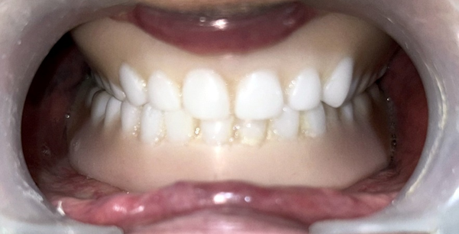
Figure 1: Previous complete dentures - in patient’s mouth.
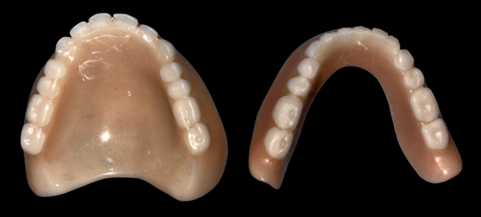
Figure 2: Previous complete dentures - Occlusal view.
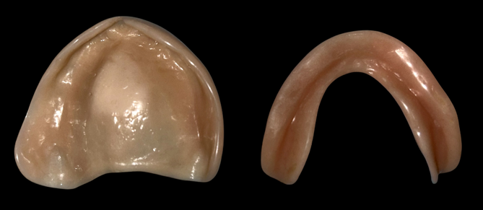
Figure 3: Previous complete dentures - Intaglio view.
Border Molding
Border molding was performed using single-step technique i.e. using putty viscosity elastomeric impression material (Zhermack Elite HD+ Putty Soft, Zhermack SpA, Italy) (Figure 4). Functional movements including smiling, speaking, puckering, cheek manipulation, tongue movements, swallowing, and mouth opening were performed to record functional vestibular extensions.
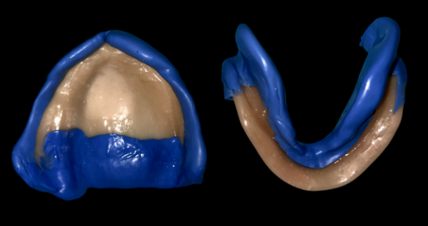
Figure 4: Border molding procedure - Maxillary and mandibular.
The putty border molding procedure enabled accurate recording of the peripheral tissues while preserving the favorable contour of the existing dentures.
Final Impression
Following border molding, a light-body addition silicone wash impression was made inside the existing dentures using the light-bodied material (Zhermack Elite Hd+ Light Body, Zhermack SpA, Italy) to ensure optimal detail reproduction and dimensional stability (Figure 5). The dentures were seated intraorally under controlled pressure, and the patient was instructed to perform functional movements.
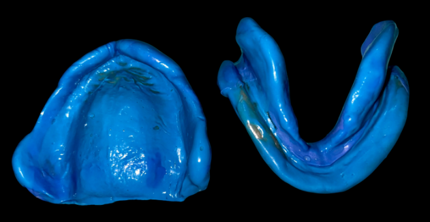
The final impressions demonstrated:
- Accurate peripheral seal.
- Uniform tissue adaptation.
- Well-defined vestibular extensions.
- Detailed recording of denture-bearing tissues.
Jaw Relation Records
Master casts were obtained, and record bases with occlusion rims were fabricated. Vertical dimension of occlusion was established using facial measurements, phonetics, esthetics, and physiologic rest position. Centric relation was recorded and verified (Figure 6). The patient's previous denture parameters were evaluated and modified to achieve improved esthetics and functional efficiency.
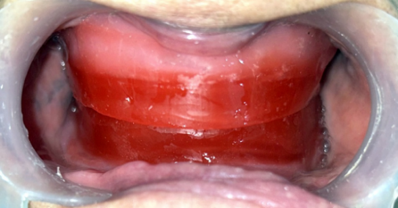
Figure 6: Jaw relation record.
Teeth Arrangement and Try-In
Artificial teeth were selected according to age, gender, facial form, complexion, and patient preferences. Particular attention was directed toward:
- Incisal display.
- Midline orientation.
- Smile line.
- Buccal corridor support.
- Lip support.
A trial denture evaluation was performed (Figure 7). The patient expressed satisfaction regarding appearance, phonetics, and comfort.
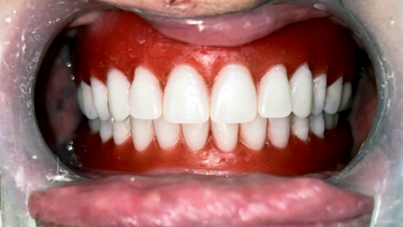
Figure 7: Wax try-in.
Denture Processing and Delivery
The dentures were processed using heat-polymerized acrylic resin following conventional laboratory procedures. Finishing and polishing were completed, and the dentures were inserted.
Clinical evaluation demonstrated:
- Improved retention and stability.
- Enhanced facial support.
- Balanced occlusion.
- Improved phonetics.
- Superior esthetics compared with the previous prosthesis.
Post-insertion instructions regarding hygiene, maintenance, and adaptation were provided. Follow-up visits were scheduled at 24 hours, one week, and one month.
Treatment Outcome
The patient reported substantial improvement in:
- Comfort.
- Mastication.
- Speech.
- Facial appearance.
- Overall confidence.
No significant sore spots or occlusal discrepancies were observed during follow-up appointments (Fig 8).
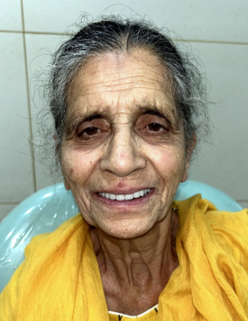
Figure 8: Postoperative smile - Happy and satisfied patient.
Discussion
The successful rehabilitation of edentulous patients depends upon accurate impression procedures, proper jaw relation records, balanced occlusion, and appropriate esthetic considerations [1,7]. Residual ridge resorption is a chronic, progressive, and irreversible condition that continues throughout life after tooth loss [3]. Consequently, dentures fabricated decades earlier often become ill-fitting due to changes in the supporting tissues. Studies have shown that prolonged use of old dentures may negatively affect oral function and quality of life [4]. The existing denture impression technique has been advocated as a practical approach for replacement dentures because it preserves the favorable characteristics of the old prosthesis while correcting deficiencies in adaptation and tissue support [5]. Schiesser described the concept of utilizing existing dentures as impression trays to maintain established neuromuscular patterns and facilitate patient adaptation to new prostheses [6]. Functional border molding remains critical for achieving peripheral seal and denture retention [7]. The use of addition silicone putty offers dimensional stability, ease of manipulation, and accurate recording of dynamic soft tissue movements. Furthermore, light-body elastomeric wash materials provide excellent surface detail reproduction and dimensional accuracy [8]. The esthetic success of complete dentures depends on careful evaluation of facial morphology, lip support, smile characteristics, tooth selection, and arrangement [9]. In the present case, restoration of proper vertical dimension and enhancement of facial support contributed significantly to the improved esthetic outcome. Several authors have reported that duplication or modification of existing dentures can reduce patient anxiety and facilitate acceptance of new prostheses because familiar contours are maintained [5,10]. This concept was particularly relevant in the present patient, who had adapted to the same dentures for 25 years.
The technique employed in this case offers several advantages:
- Reduced chairside time.
- Preservation of successful denture contours.
- Improved patient acceptance.
- Accurate functional impression making.
- Cost-effectiveness.
- Enhanced retention and stability.
However, the technique should only be used when the existing dentures possess acceptable extensions and polished surface anatomy. Severely defective dentures may require conventional impression procedures.
Conclusion
The use of existing complete dentures as custom impression trays represents a predictable and efficient method for fabricating replacement complete dentures in long-term denture wearers. Putty border molding combined with a light-body wash impression enables accurate recording of functional denture-bearing tissues while preserving favorable denture contours. In the present case, the technique facilitated the fabrication of a highly esthetic complete denture with excellent retention, stability, function, and patient satisfaction. The approach may be considered a valuable treatment option for edentulous patients seeking replacement dentures after prolonged prosthesis use.
References
- Zarb GA, Hobkirk J, Eckert S, Jacob R. (2013). Prosthodontic Treatment for Edentulous Patients. 13th ed. St Louis: Mosby.
Publisher | Google Scholor - Carlsson, G. E., Omar, R. (2010). The Future of Complete Dentures in Oral Rehabilitation. A Critical Review. Journal of Oral Rehabilitation, 37(2):143-156.
Publisher | Google Scholor - Atwood, D. A. (1971). Reduction of Residual Ridges: A Major Oral Disease Entity. The Journal of Prosthetic Dentistry, 26(3):266-279.
Publisher | Google Scholor - Fenlon, M. R., Sherriff, M. (2004). Investigation of New Complete Denture Quality and Patients' Satisfaction with And Use of Dentures After Two Years. Journal of Dentistry, 32(4):327-333.
Publisher | Google Scholor - Winkler S. (2025). Essentials of Complete Denture Prosthodontics. 3rd ed. Delhi: AITBS Publishers.
Publisher | Google Scholor - Schiesser FJ. (1964). The Modified Old Denture as A Custom Tray for Complete Denture Impressions. J Prosthet Dent. 14(5):873-876.
Publisher | Google Scholor - Boucher CO. (2004). Boucher's Prosthodontic Treatment for Edentulous Patients. 12th ed. St Louis: Mosby.
Publisher | Google Scholor - Anusavice, K. J., Shen, C., Rawls, H. R. (2012). Phillips' Science of Dental Materials. Elsevier Health Sciences.
Publisher | Google Scholor - Heartwell CM, Rahn AO. (1980). Syllabus of Complete Dentures. 5th ed. Philadelphia: Lea & Febiger.
Publisher | Google Scholor - Basker, R. M., Davenport, J. C., Thomason, J. M. (2011). Prosthetic Treatment of The Edentulous Patient. John Wiley & Sons.
Publisher | Google Scholor