
Research Article
Evaluating Safety and Efficacy Comparison of Different Composition of Eggshell Membrane Vs Nanoparticles Egg Shell Membrane Along with Nanoparticle Extract of Boswellia Serrata and Curcumin for Treatment of Osteoarthritis in Rat Models
- M. Chandramohan *
Managing Director, Microcore Research Labs India, Tamil Nadu, India.
*Corresponding Author: M. Chandramohan, Managing Director, Microcore Research Labs India, Tamil Nadu, India.
Citation: Chandramohan M. (2026). Evaluating Safety and Efficacy Comparison of Different Composition of Eggshell Membrane Vs Nanoparticles Egg Shell Membrane Along with Nanoparticle Extract of Boswellia Serrata and Curcumin for Treatment of Osteoarthritis in Rat Models, Clinical Case Reports and Studies, BioRes Scientia Publishers. 12(4):1-9. DOI: 10.59657/2837-2565.brs.26.320
Copyright: © 2026 M. Chandramohan, this is an open-access article distributed under the terms of the Creative Commons Attribution License, which permits unrestricted use, distribution, and reproduction in any medium, provided the original author and source are credited.
Received: March 09, 2026 | Accepted: March 24, 2026 | Published: March 30, 2026
Abstract
Introduction and Objective: Osteoarthritis is a chronic degenerative joint disease often accompanied by joint deformation, stiffness and chronic pain. Till date it is preferred to treat with NSAIDs, topical analgesics, intra-articular injection of corticosteroids and hyaluronic acid. The components of eggshell membrane, Boswellia serrata and curcumin found to have very good anti-inflammatory property, which is evident through various clinical researches. The main aim of this study is to evaluate the efficacy of different composition of nanoparticles of Boswellia serrata, curcumin added with or without of dry heat pre-treated nano particles of egg shell membrane.
Materials and Methods: A total of 78 white albino rats were used. Carrageenan was used to induce osteoarthritis. Efficacy of the treatment was evaluated using different parameters like animal body weight, gait score, knee joint measurement and C-reactive protein.
Results: This study demonstrated that improvement in the osteoarthritis was observed in the animals treated with components of egg shell membrane, Boswellia serrata and curcumin. The observed changes were primarily the knee joint measurement, gait score and C-reactive protein. This suggests the positive impact of products in the treatment of osteoarthritis.
Conclusion: The inhibitory effect of composition 10 against phlogistic agent carrageenan suggests its potential in treating the symptoms of osteoarthritis. Significant changes in the knee joint measurement, gait score and C-reactive protein refers to the improvement in symptoms of osteoarthritis. These finding provides strong evidence for the potential development of effective therapeutic approaches that could substantially improve the management of osteoarthritis symptoms.
Keywords: osteoarthritis; egg shell membrane; boswellia serrata; curcumin; nanoparticle
Introduction
Osteoarthritis (OA) is a chronic degenerative joint disease is characterized by joint tissue deformation and clinical symptoms. OA is characterized by the breakdown of articular cartilage, leading to joint pain, stiffness, and limited mobility. It primarily affects weight-bearing joints such as the knees, hips, and spine [1]. The patho physiology involves cartilage degradation, bone changes, and inflammation of the surrounding tissues. Although osteoarthritis (OA) is frequently associated with aging, factors such as obesity, joint overuse, misalignment, and genetic predisposition also significantly contribute to its development. The Global Burden of Disease report in 2024 highlighted OA as one of the leading causes of disability, with about 5.6% of the global population affected by musculoskeletal disorders [2]. Osteoarthritis (OA) is commonly managed with non-steroidal anti-inflammatory drugs (NSAIDs), corticosteroid injections, and hyaluronic acid injections. However, these treatments provide only temporary relief, and their long-term use can cause side effects. This has led to growing interest in finding alternative therapies that can more effectively manage or potentially reverse the progression of OA.
As researchers investigate treatments for osteoarthritis (OA), natural and plant-based compounds, such as those derived from Boswellia serrata and Curcumin, are gaining attention for their potential anti-inflammatory and pain-relieving effects. Additionally, novel biomaterials such as egg shell membrane (ESM) are emerging as highly effective treatments for managing inflammation in OA, with increasing evidence of their therapeutic benefits.
The egg shell membrane (ESM) is a natural biomaterial with a well-defined structural profile, unique structure rich in collagen, glycosaminoglycans, and other bioactive compounds that may aid in cartilage repair and regeneration with verified morphological and mechanical properties. ESM has gained considerable attention for its potential therapeutic effects, particularly in managing osteoarthritis (OA) and other musculoskeletal conditions. Due to its abundance and low cost, chicken eggshell membrane is a promising option for continued exploration and clinical development [4]. Research indicates that ESM exhibits anti-inflammatory and analgesic effects, making it beneficial for managing OA symptoms. These properties are linked to bioactive compounds like collagen and elastin, which promote joint cartilage health, as well as hyaluronic acid and chondroitin sulfate, which aid in joint lubrication and tissue repair.
A systematic review and meta-analysis published in Nutrients in the year 2024 evaluated the effectiveness of ESM supplementation in enhancing joint function and alleviating pain in individuals with knee OA. The findings demonstrated that ESM supplementation significantly improved joint function and reduced pain in these individuals [5].
Another study published in The Journal of Medicinal Food in 2020 evaluated the efficacy of a mildly processed natural ESM in alleviating joint pain and stiffness associated with OA. The results demonstrated that ESM significantly alleviated joint pain in a population suffering from OA of the knee [6]. Furthermore, a study published in Nutrients in the year 2024 investigated the time-dependent effects of ESM on monosodium iodoacetate-induced OA in mice and rats. The findings indicated that ESM significantly alleviated joint pain and attenuated articular cartilage destruction in both animal models [7].
Boswellia serrata, commonly known as Indian frankincense, is a plant native to India, and its resin has been used for centuries in traditional medicine to treat inflammatory conditions such as rheumatoid arthritis, asthma, chronic bronchitis, and chronic inflammatory bowel diseases (such as Crohn's disease and ulcerative colitis) [8]. The active compounds in Boswellia serrata are boswellic acids, which have shown potent anti-inflammatory effects by inhibiting pro-inflammatory enzymes such as 5-lipoxygenase. These boswellic acids have been shown to reduce the symptoms of OA, including joint pain and stiffness, by modulating inflammatory pathways [9].
The roots of Curcuma longa L. (turmeric) from the Zingiberaceae family and the bulbous root tuber of Curcuma aromatica Salisb are the primary sources of Curcumin. In India, turmeric is an ancient spice that has been utilized in Ayurveda to treat diseases associated with inflammation [10]. A study published in Arthritis Research & Therapy in 2016 found that Curcumin significantly slowed OA progression and provided palliative effects in an OA mouse model [11].
ESM, Boswellia serrata and Curcumin have been studied individually for their efficacy in OA treatment. However, combining these compounds with ESM in nanoparticle formulations may enhance their therapeutic effects. Nanoparticles may increase the bioavailability and efficacy of these compounds, allowing for more targeted and effective treatment.
Objective
The main aim of this study is to evaluate the efficacy of different compositions of nanoparticles of eggshell membrane and nanoparticles of Boswellia serrata, Curcumins, and in another set have different formulations containing pre-treated dry heated nanoparticles of egg shell membrane of 2000 nm particle size and nanoparticles of Boswellia serrata, Curcumin in treating inflammatory osteoarthritis (Table 2). The treatment efficacy was evaluated using various observational and diagnostic parameters including gait score, knee joint measurement using a vernier caliper, C-reactive protein analysis and animal body weight measurements.
The secondary objective focuses mainly on evaluating any additional or improved efficacy such as improvement in the symptoms by reducing the ailments with the different compositions of pre-treated nanoparticles of egg shell membrane.
Materials and Methods
Animal and Experimental Conditions: All experiments were performed using white Wistar albino rats of both genders weighing 200-225g. All animals were housed in standard polypropylene cages with stainless steel grill top. Sterilized and clean corn cob bedding was used to house the rats. The bedding was changed on every alternate day. Standard pellet feed and commercially available filter water was given ad libitum. The rats had free access to the feed and water under standard housing condition (12-hour light / dark cycle, stable temperature of 22 ± 3ºC for 24 hours). During the acclimatization period, these animals were randomized into 6 animals per treatment group. Animals were separated gender wise and kept in different cages within each group till the end of experimental period. A total of 78 animals were used for the study. These animals were randomized into six animals each for every treatment group. For the naive and negative control groups, three animals were assigned to each (Table. 1). Procedures involving animals and their care were carried out according to CPCSEA guidelines. The experimental procedures and protocols were approved by IAEC of Mass Biotech (registered Lic no:2084/PO/RcBt/S/19/CPCSEA dt 23.10.2019).
Table 1: Animal grouping
| Group | Number of animals | Type of treatment |
| Group- I (Placebo) | 03 | Normal saline (0.02 mL once in 3 days) |
| Group- II (Reference Treatment) | 03 | 1% Carrageenan (0.02 mL once in 3 days) |
| Group- III (Treatment-1) | 06 | Composition 1(50:10:40) Nanoparticles of ESM |
| Group- IV (Treatment-2) | 06 | Composition 2 (60:30:10) Nanoparticles of ESM |
| Group- V (Treatment-3) | 06 | Composition 3 (70:29:1) Nanoparticles of ESM |
| Group- VI (Treatment-4) | 06 | Composition 4 (80:18:2) Nanoparticles of ESM |
| Group- VII (Treatment-5) | 06 | Composition 5 (85:10:5) Nanoparticles of ESM |
| Group- VIII (Treatment-6) | 06 | Composition 6 (95:3:2) Nanoparticles of ESM |
| Group- IX (Treatment-7) | 06 | Composition 7 (50:10:40) Nanoparticles of pre-heated ESM |
| Group-X (Treatment-8) | 06 | Composition 8 (60:38:2) Nanoparticles of pre-heated ESM |
| Group-XI (Treatment-9) | 06 | Composition 9 (70:29:1) Nanoparticles of pre-heated ESM |
| Group- XII (Treatment-10) | 06 | Composition 10 (80:18:2) Nanoparticles of pre-heated ESM |
| Group- XIII (Treatment-11) | 06 | Composition 11 (85:10:5) Nanoparticles of pre-heated ESM |
| Group- XIV (Treatment-12) | 06 | Composition 12 (95:3:2) Nanoparticles of pre-heated ESM |
Drugs: Carrageenan was used to induce osteoarthritis in rats [12]. A total of 11 doses of carrageenan were given as intra-articular injection for all the rats in each group. Rats in the control group were given with 11 doses of intra-articular injections of 0.9% saline [13].
For the treatment groups, test item (IP) was prepared with distilled water for each composition. A total of twelve different compositions of test items were used (Table 2). Compositions 1 to 6 contained natural components of nanoparticles of eggshell membrane, nanoparticles of Boswellia serrata and curcumin in different concentration. Composition 7 to 12 is a complete nanoparticle formulation containing nanoparticles of natural eggshell membrane that is pre-treated and dry heated at a temperature of 50-70ºC for 20-60 minutes with a particle size of less than 2000 nm and are added with nanoparticles of Boswellia serrata and curcumin at different concentration. The key difference between these 2 sets of treatments was the presence of pre-treated, dry heated nanoparticles of natural egg shell membrane.
Table 2: Type of Treatment
| Group | Type of treatment |
| Group- I | Normal saline (0.02 mL once in 3 days) |
| Group- II | 1% Carrageenan (0.02 mL once in 3 days) |
| Group- III | Composition 1(50:10:40) [Nano particles of Egg shell membrane: Nanoparticles of Boswellia serrata: Nanoparticles of curcumin] |
| Group- IV | Composition 2(60:30:10) [Nano particles of Egg shell membrane: Nanoparticles of Boswellia serrata: Nanoparticles of curcumin] |
| Group- V | Composition 3(70:29:1) [Nano particles of Egg shell membrane: Nanoparticles of Boswellia serrata: Nanoparticles of curcumin] |
| Group- VI | Composition 4 (80:18:2) [Nano particles of Egg shell membrane: Nanoparticles of Boswellia serrata: Nanoparticles of curcumin] |
| Group- VII | Composition 5 (85:10:5) [Nano particles of Egg shell membrane: Nanoparticles of Boswellia serrata: Nanoparticles of curcumin] |
| Group- VIII | Composition 6 (95:3:2) [Nano particles of Egg shell membrane: Nanoparticles of Boswellia serrata: Nanoparticles of curcumin] |
| Group- IX | Compositio 7 (50:10:40) [Nanoparticles of pre-heated egg shell membrane: Nanoparticles of Boswellia serrata: Nanoparticles of curcumin] |
| Group – X | Composition 8 (60:38:2) [Nanoparticles of pre-heated egg shell membrane: Nanoparticles of Boswellia serrata: Nanoparticles of curcumn] |
| Group - XI | Composition 9 (70:29:1) [Nanoparticles of pre-heated egg shell membrane: Nanoparticles of Boswellia serrata: Nanoparticles of curcumin] |
| Group - XII | Composition 10 (80:18:2) [Nanoparticles of pre-heated egg shell membrane: Nanoparticles of Boswellia serrata: Nanoparticles of curcumin] |
| Group - XIII | Composition 11 (85:10:5) [Nanoparticles of pre-heated egg shell membrane: Nanoparticles of Boswellia serrata: Nanoparticles of curcumin] |
| Group - XIV | Composition 12 (95:3:2) [Nanoparticles of pre-heated egg shell membrane: Nanoparticles of Boswellia serrata: Nanoparticles of curcumin] |
Some of the practical aspects of experimentation work were shown in Figure 5 Prepared animals for OA induction with carrageenan, Figure.6 Intra-articular injection of Carrageenan Figure 7Measurement of posterior-lateral diameter of the posterior limb and Figure 8 Test IMP Administration.
Measurement of Efficacy: As mentioned above, the efficacy of the treatment was assessed using various observational and diagnostic parameters which included animal weight, gait score analysis, knee joint measurement and C-reactive protein analysis.
Animal Body weight: It was observed that there was an increase in animal body weight after the induction of osteoarthritis [14]. As the disease progressed, the animal’s physical activity was limited. With the lack of physical movement and the inactive nature of the animals, body weight increased compared to the initial body weight (Figure 1).
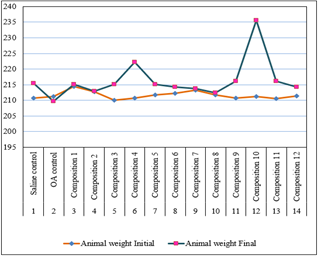
Figure 1: Animal body weight
Gait score analysis: Gait analysis is considered a useful tool to understand the behavioural changes in the preclinical arthritic model. Through observational scoring, the quantitative assessment of the gait pattern and mobility of the animal can be assessed [15,16]. Three-point scoring scale was used for the gait analysis observation [17]. Scoring started with 1(Normal), 2(Staggered gait) and 3(Limping) (Figure 4).
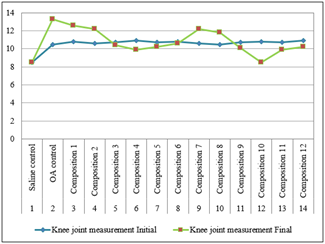
Figure 2: Knee Joint Measurement
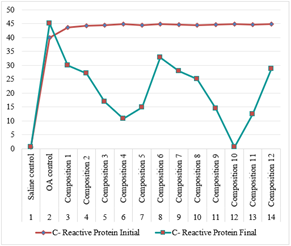
Figure 3: C-reactive protein
Knee Joint Measurement: It was observed that there was an increase in knee joint measurement immediately after the carrageenan injection. This measurement was used as a gold standard tool for analyzing the effect of treatment in preclinical models of osteoarthritis [18,19] (Figure 2).
C-reactive Protein: It is a pentameric protein and its level increases in response to the inflammation. The blood samples for CRP biomarker testing were withdrawn twice during the study period, once after carrageenan administration but prior to test product (IP) administration, and again at the end of the study. Circulatory levels of C-reactive protein increase with osteoarthritis progression [20,21] (Figure 3).
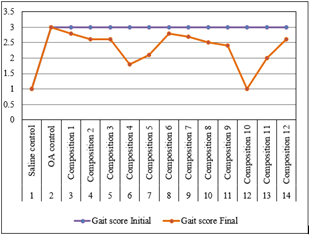
Figure 4: Gait Score
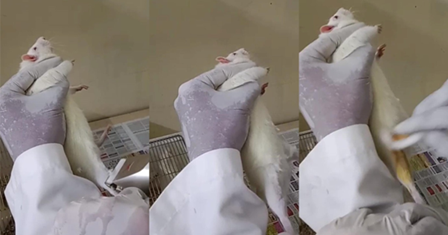
Figure 5: Prepared animals for OA induction with carrageenan
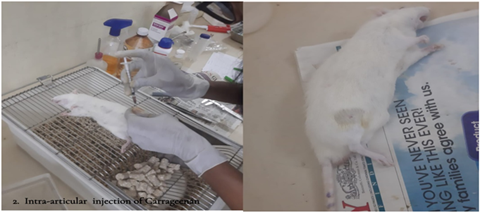
Figure 6: Intra-articular injection of Carrageenan
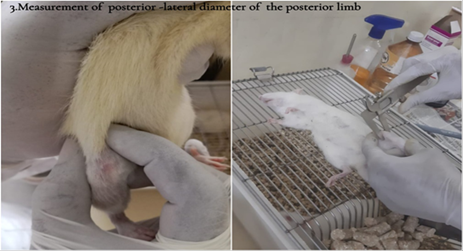
Figure 7: Measurement of posterior – lateral diameter of the posterior limb
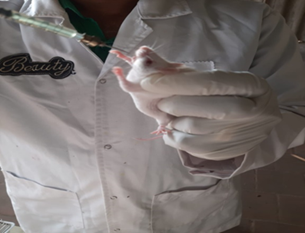
Figure 8: Test IMP Administration
Results
The summary of observations obtained from the study was presented (Table 3). The observed data were also depicted in terms of line graphs animal body weight (Figure 1), knee joint measurement (Figure 2), C-reactive protein (Figure 3) and gait score (Figure 4). Improvement in the ailment was observed with the obtained results. The observed changes primarily were the knee joint measurement, gait score and C-reactive protein. It was concluded from changes portrayed on the line graphs and the summary of data, a decline in initial values was clearly evident.
Table 3: Summary of Results
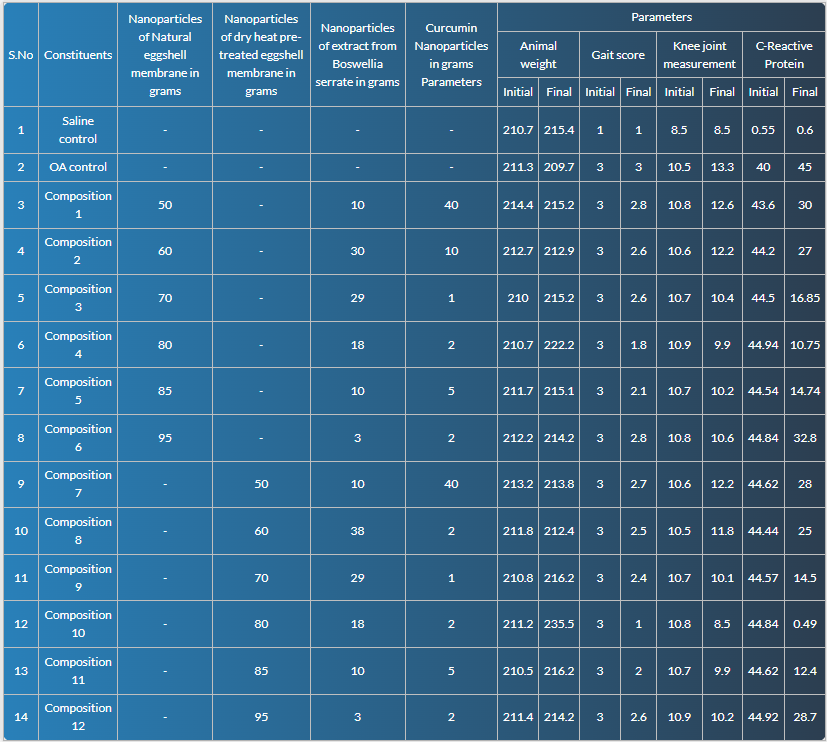
As mentioned above, the final observed value was well lower than the initial values. This suggested the positive impact of products in the treatment of osteoarthritis.
Discussion
The main objective of the study was to determine the efficacy of different compositions of containing nanoparticles of Boswellia serrata, Curcumin with or without pre-treated and dry heated nanoparticles of eggshell membrane. The intra-articular injection of carrageenan resulted in significant osteoarthritis in wistar albino rats. For all treatment groups, the test items (IP) were prepared with distilled water and 6.6 mg of each test products were dosed per kg of the animal body weight to respective group animals, which is equivalent to 500 mg/day human dose of 75kg adult. The test item was administered in a single dose per day by oral gavage using stainless steel ball tipped oral intubation needle at the desired dose level. The test products treatment was initiated on 3rd after the first injection of carrageenan. The measurement of the posterior–lateral diameter of the posterior limb was done and recorded from the commencement of first dose of carrageenan for OA induction to the last dose of carrageenan. The knee joint measurement using a vernier caliper was performed within two hours from the time of carrageenan intra-articular injection.
Osteoarthritis was successfully induced in all groups, except the naive group, and the progression of the condition was monitored through the animal’s movement over a 3-day period. All the animals involved in the study were found to be safe and healthy and no mortality was observed in the study.
The negative control group, which underwent induction of osteoarthritis but received no treatment, showed no improvement in their condition, with persistent signs of joint swelling and limited mobility. In contrast, animals in the treatment groups, which received specific interventions, demonstrated significant improvement in their disease condition. Some of the treated animals even showed complete resolution of osteoarthritis symptoms, with no observable signs of inflammation or pain, despite the repeated carrageenan injections every three days.
C-reactive protein (CRP) biomarker data (Table 3, Figure 3) evidenced that the test product treatment suppresses the formation of osteoarthritis. By comparing the gait score, CRP value and joint measurement, a positive response to the treatment was observed in every test product treated animal.
Final observations obtained in this study suggested that different composition of nanoparticles of Boswellia serrata, Curcumin with or without pre-treated and dry heated nanoparticles of eggshell membrane had effects in improving the Osteoarthiritis disease condition. Notably, animals in the group treated with Composition 10 exhibited the most substantial recovery, with no detectable trace of osteoarthritis, suggesting that Composition 10 containing nanoparticles of pre-treated dry heated eggshell membrane, Boswellia serrata and curcumin in the concentration of 80:18:2 had a profound therapeutic effect in reversing the OA condition. This indicates that the treatments, particularly Composition 10, effectively mitigated the effects of osteoarthritis in the animal model.
Among all the treatments, Composition 10 showed the most promising effects on osteoarthritis, as illustrated by the line graphs (Figure .2, 3 and 4). Significantly, the final knee joint measurements, C-reactive protein values and the gait score in the Composition 10 group were similar to those in the saline control group animals, where in osteoarthritis was not induced, indicating a substantial improvement in joint health.
Conclusion
The inhibitory effects of composition 10 containing nanoparticles of pre-treated dry heated eggshell membrane, Boswellia serrata and curcumin in the concentration of 80:18:2 against the phlogistic agent carrageenan suggested its potential in treating the symptoms of osteoarthritis. The significant changes in the knee joint measurement, gait score and C-reactive protein referred to the improvement in symptoms of osteoarthritis. These findings provided very strong evidence for the potential development of effective therapeutic approaches that could substantially improve the management of osteoarthritis symptom.
Abbreviations
CPCSEA - Committee for the Purpose of Control and Supervision of Experiments on Animals;
CRP - C-Reactive Protein;
DALY - Disability-Adjusted Life Year;
ESM - Egg Shell Membrane;
IAEC - Institutional Animal Ethics Committee;
IP - Investigational Product;
NSAIDs - Non-Steroidal Anti-Inflammatory Drugs;
OA - Osteoarthritis
Acknowledgement
The authors gratefully acknowledge the financial support provided by Microcore Research Private Limited, which made this research and study possible. We extend our appreciation to Ki3 Research Pvt Ltd and Innospecs Bioresearch Private limited for their coordination and support, which significantly contributed to the successful implementation of this project.
References
- Jang, S., Lee, K., & Ju, J. H. (2021). Recent updates of diagnosis, pathophysiology, and treatment on osteoarthritis of the knee. International Journal of Molecular Sciences, 22(5):2619.
Publisher | Google Scholor - World Health Organization. (2025). Osteoarthritis. World Health Organization.
Publisher | Google Scholor - Richard, M. J., Driban, J. B., & McAlindon, T. E. (2023). Pharmaceutical treatment of osteoarthritis. Osteoarthritis and Cartilage, 31(4):458–466.
Publisher | Google Scholor - Mensah, R. A., Salim, K., & Peszko, K. (2023). The chicken eggshell membrane: A versatile, sustainable biological material for translational biomedical applications. Biomedical Materials, 18(4):042001.
Publisher | Google Scholor - Migliore, A., Barba, T., Pippa, L., et al. (2024). Efficacy of ESM supplementation on joint function and pain reduction in knee osteoarthritis: A systematic review and meta-analysis. Nutrients, 16(16):2640.
Publisher | Google Scholor - Khan, M., McCullough, R., Ajuha, S., et al. (2020). Effects of ESM supplementation on joint health: A randomized clinical trial. Journal of Medicinal Food, 23(8):739–746.
Publisher | Google Scholor - Migliore, A., Barba, T., Pippa, L., et al. (2024). Efficacy of ESM supplementation on joint function and pain reduction in knee osteoarthritis: A systematic review and meta-analysis. Nutrients, 16(12):1885.
Publisher | Google Scholor - Yu, G., Xiang, W., & Zhang, T. (2020). Effectiveness of Boswellia and Boswellia extract for osteoarthritis patients: A systematic review and meta-analysis. BMC Complementary Medicine and Therapies, 20(1).
Publisher | Google Scholor - Hunter, D. J., & Bierma-Zeinstra, S. (2014). Osteoarthritis. Osteoarthritis and Cartilage, 22(3):1–6.
Publisher | Google Scholor - Peng, Y., Ao, M., Dong, B., et al. (2021). Anti-inflammatory effects of curcumin in inflammatory diseases: Status, limitations and countermeasures. Drug Design, Development and Therapy, 15, 4503–4525.
Publisher | Google Scholor - Zhang, Z., Leong, D. J., Xu, L., et al. (2016). Curcumin slows osteoarthritis progression and relieves osteoarthritis-associated pain symptoms in a post-traumatic osteoarthritis mouse model. Arthritis Research & Therapy, 18:128.
Publisher | Google Scholor - Hansra, P., Moran, E. L., Fornasier, V. L., et al. (2000). Inflammation. Inflammation, 24(2):141–155.
Publisher | Google Scholor - Hilliquin, P., Natour, J., Aissa, J., et al. (1995). Treatment of carrageenan-induced arthritis by the platelet activating factor antagonist BN 50730. Annals of the Rheumatic Diseases, 54(2):140–143.
Publisher | Google Scholor - Jeong, Y. J., Kim, I., Cho, J. H., et al. (2015). Anti-osteoarthritic effects of Litsea japonica fruit in a rat model of osteoarthritis induced by monosodium iodoacetate. PLoS ONE, 10(8):e0134856.
Publisher | Google Scholor - Lakes, E. H., & Allen, K. D. (2016). Gait analysis methods for rodent models of arthritic disorders: Reviews and recommendations. Osteoarthritis and Cartilage, 24(11):1837–1849.
Publisher | Google Scholor - Chan, K. M., Bowe, M. T., & Allen, K. D. (2023). Recommendations for the analysis of rodent gait data to evaluate osteoarthritis treatments. Osteoarthritis and Cartilage, 31(4):425–434.
Publisher | Google Scholor - Webster, A. B., Fairchild, B. D., Cummings, T. S., Stayer, P. A., et al. (2008). Validation of a three-point gait-scoring system for field assessment of walking ability of commercial broilers. Journal of Applied Poultry Research, 17(4):529–539.
Publisher | Google Scholor - Gurram, S., Anchi, P., & Panda, B. (2022). Amelioration of experimentally induced inflammatory arthritis by intra-articular injection of visnagin. Current Research in Pharmacology and Drug Discovery, 3:100114.
Publisher | Google Scholor - Kaur, G., Patel, D., Sawant, M., et al. (2015). Evaluation of anti-osteoarthritic activity of Vigna mungo in papain-induced osteoarthritis model. Indian Journal of Pharmacology, 47(1):59–63.
Publisher | Google Scholor - Jin, X., Beguerie, J. R., & Zhang, W. (2015). Circulating C-reactive protein in osteoarthritis: A systematic review and meta-analysis. Annals of the Rheumatic Diseases, 74(4):703–710.
Publisher | Google Scholor - Nehring, S. M., Goyal, A., & Patel, B. C. (2025). C-reactive protein. In StatPearls. StatPearls Publishing.
Publisher | Google Scholor