

Research Article
Enhancing High School Students’ Interest and Performance in ICT Lessons Through Powerpoint Presentations: An Action Research Study
- Mathias Adawurah *
- Charles Buabeng Andoh
Department of ICT Education, University of Education, Winneba, Ghana.
*Corresponding Author: Mathias Adawurah, Department of ICT Education, University of Education, Winneba, Ghana.
Citation: Adawurah M., Charles B. Andoh. (2025). Enhancing High School Students’ Interest and Performance in ICT Lessons Through Powerpoint Presentations: An Action Research Study, Journal of BioMed Research and Reports, BioRes Scientia Publishers. 7(6):1-11. DOI: 10.59657/2837-4681.brs.25.163
Copyright: © 2025 Mathias Adawurah, this is an open-access article distributed under the terms of the Creative Commons Attribution License, which permits unrestricted use, distribution, and reproduction in any medium, provided the original author and source are credited.
Received: April 28, 2025 | Accepted: May 13, 2025 | Published: May 20, 2025
Abstract
This study explores the impact of PowerPoint presentations on students' interest and performance in ICT lessons at Synclaire International Junior High School in Ghana. Employing a classroom-based action research methodology, the study assessed students' attitudes, interests, and academic performance before and after implementing PowerPoint as a teaching tool. Findings revealed a significant improvement in students' engagement and test scores, highlighting PowerPoint's effectiveness in fostering a conducive learning environment. This manuscript emphasizes the need for integrating multimedia tools into pedagogy to enhance learning outcomes.
Keywords: ICT education; powerpoint presentations; student performance; teaching strategies; multimedia tools
Introduction
The integration of Information and Communication Technology (ICT) into education has been identified as a transformative tool for enhancing teaching and learning processes (UNESCO, 2019). However, despite the recognized importance of ICT education in preparing students for a digitalized world, there remains a significant challenge in sustaining students' interest and improving their performance in ICT lessons (UNESCO, 2019). Research suggests that traditional teaching methods often fail to engage learners in the dynamic and interactive nature of ICT subjects, leading to disinterest and suboptimal academic outcomes (Chai et al., 2020). This underscores the urgent need for innovative pedagogical strategies that align with the technological nature of the subject.
Recent studies suggest that the use of multimedia tools, such as PowerPoint presentations, can significantly enhance students' learning experiences by providing visual aids, interactive content, and a more dynamic learning environment (Abatayo, 2024; Ghavifekr & Rosdy, 2015). PowerPoint, as a multimedia tool, allows educators to incorporate text, images, animations, and videos into their lessons, thereby catering to diverse learning preferences and fostering an engaging learning environment (Mayer, 2021). Studies have shown that visually enriched content can significantly enhance students' understanding and retention of complex concepts (Clark & Lyons, 2011). Despite the potential of PowerPoint presentations to enhance learning, as evidenced by research showing their effectiveness in improving student engagement and comprehension (Levasseur & Sawyer, 2006; Yilmaz, 2017), their application in ICT education, particularly in contexts where students exhibit some attitude, interest levels and performance, remains largely unexplored (Nouri et al., 2005). This underutilization is concerning given that research by Fredricks et al. (2004) has shown that disengaged students often struggle in academic settings and may benefit from more interactive and engaging instructional methods.
Moreover, while some studies highlight the positive impact of multimedia presentations on general student engagement (Yilmaz, 2017), the relationship between the use of PowerPoint presentations and measurable improvements in students' attitude, interest and academic performance in ICT lessons remains under-researched (Bartsch & Cobern, 2003; Blokzijl & Andeweg, 2005; Tufte, 2003). This gap in research limits educators' ability to make informed decisions about the integration of PowerPoint into their teaching practices.
Given the increasing demand for ICT literacy in the global workforce (World Economic Forum, 2020), it is imperative to identify and implement teaching strategies that not only engage students but also enhance their academic performance in ICT. This study seeks to address the existing gap by investigating how PowerPoint presentations can be leveraged to enhance students' attitudes, interests and performance in ICT lessons. By doing so, it aims to provide evidence-based recommendations for educators and policymakers to improve ICT education and better prepare students for the challenges of a digital future.
The study is guided by the following questions:
- How do students' attitudes toward teaching techniques affect their interest and performance in ICT lessons?
- To what extent can PowerPoint presentations help develop and sustain students' interest and performance in ICT lessons?
Literature Review
The study conducted a literature review that explores the relationship between students’ attitudes and their interest and performance in ICT. It examines how attitudes are formed through social learning and how instructional strategies, teacher influence, and technological interventions impact students’ engagement. Additionally, it highlights the role of PowerPoint presentations in classroom discussions, emphasizing their benefits in enhancing student engagement, comprehension, and knowledge retention.
Effects of students’ attitude on their interest and performance in ICT
Attitudes are psychological constructs shaped by experiences, beliefs, and emotions that influence how individuals perceive and respond to situations (Petty & Cacioppo, 1986). According to Langat (2015), instructional design alone cannot bridge the gap between educational objectives and student outcomes without addressing the affective domain, which encompasses attitudes and emotions. Students are not merely cognitive learners but social beings whose attitudes significantly shape their learning processes. Maio and Haddock (2010) describe attitudes as having three interconnected components: emotional (feelings), cognitive (beliefs), and behavior (actions). These components determine how students interact with ICT lessons and influence their overall performance.
Research by Bandura’s social learning theory underscores that attitudes are often acquired through observation, modeling, and imitation of behaviors (Bandura, 1986). Consequently, the attitudes students develop toward ICT education are influenced by their interactions with teachers, peers, and instructional methods. Positive attitudes can foster enthusiasm and persistence, while negative attitudes can result in disinterest and poor performance (Petty & Cacioppo, 1986).
Interest in ICT is closely tied to students' attitudes. Positive attitudes often enhance curiosity, engagement, and the willingness to explore complex ICT concepts, leading to sustained interest (Hidi & Renninger, 2006). Conversely, students with negative attitudes are less likely to engage with ICT, hindering their ability to build a strong foundation in the subject (Hacieminoglu, 2016).
Langat (2015) highlights that attitude act as a bridge between instructional objectives and student outcomes. If students hold positive beliefs about the relevance and applicability of ICT, they are more likely to find the lessons engaging. Tran (2012) further emphasizes the importance of a positive learning environment in shaping students’ attitudes and fostering interest in ICT. Without such an environment, students may develop anxiety or aversion toward the subject, significantly affecting their interest levels.
Students' attitudes are a critical determinant of their performance in ICT education. A positive attitude promotes confidence and reduces anxiety, enabling students to engage more effectively with ICT tools and concepts (Yuen & Ma, 2008). Conversely, negative attitudes can manifest as avoidance behaviors, reduced effort, and lower academic achievement (Rosen & Weil, 1995).
According to Aduma and Max (2017), integrating dynamic and visually engaging tools such as PowerPoint can enhance instruction and motivate students to perform better in ICT lessons. These tools simplify complex content, making it more accessible and enjoyable for students. Similarly, Frydrychova et al. (2014) found that technology-based strategies foster positive attitudes by making learning more interactive and engaging, which in turn leads to better academic performance.
Teachers play a central role in shaping students’ attitudes toward ICT. As noted by Etuk et al. (2014), students are likely to develop negative attitudes toward a subject if they dislike their teacher’s instructional methods or perceive the teacher as uninspiring. Teachers must, therefore, demonstrate competence, enthusiasm, and a commitment to student-centered learning approaches.
Kurniawan et al. (2019) emphasize that teachers should create a conducive learning environment and adopt innovative teaching techniques that align with students' needs and preferences. By fostering a supportive and engaging classroom atmosphere, teachers can encourage students to develop positive attitudes toward ICT, enhancing both their interest and performance.
Gender and socioeconomic status significantly influence students' attitudes toward ICT. Research by Volman and van Eck (2001) indicates that male students often exhibit more positive attitudes toward ICT, which may be attributed to greater exposure and confidence in using technology. Addressing these disparities requires targeted interventions, such as promoting equitable access to ICT resources and creating inclusive learning environments (Cooper, 2006).
Students from low-income backgrounds may also face attitudinal barriers due to limited access to technology (Selwyn, 2004). Teachers can mitigate these challenges by incorporating affordable and universally accessible ICT tools into their lessons, ensuring that all students have the opportunity to develop positive attitudes and excel in ICT education.
Technology plays a transformative role in shaping students' attitudes toward ICT. Innovative tools such as PowerPoint presentations, animations, and interactive applications have been shown to increase student engagement and foster positive attitudes (Thomas & Israel, 2014). These tools make learning more dynamic and personalized, capturing students' attention and stimulating their interest in ICT concepts.
Hacieminoglu (2016) highlights that female student, in particular, benefit from technology-rich instructional methods that reduce anxiety and promote active participation. Similarly, Frydrychova et al. (2014) argue that technology-based strategies, such as gamified learning and collaborative projects, create stimulating and enjoyable learning experiences that foster positive attitudes and improve academic performance.
The impact of PowerPoint presentations in classroom discussions
Slide presentation software such as Microsoft PowerPoint is now commonly used in instructional environments, especially in large classes and courses emphasizing learner participation. Microsoft PowerPoint, a component of Microsoft Office, is widely used by business firms, educators, students, and trainers (Samie, 2014). It enables teachers to create professional-looking presentations and helps in the creation of audio, visual, and audio-visual effects, which are effective in grabbing and maintaining students' attention (Segundo & Salazar, 2011). PowerPoint is extensively used and has become a standard practice in instructional technology (Al-Dersi, 2013).
One of the most cited benefits of PowerPoint presentations is its ability to enhance student engagement. According to Bartsch and Cobern (2003), PowerPoint presentations increase the visual appeal of lectures, capturing students' attention and maintaining their focus throughout the lesson. This aligns with Mayer’s (2005) cognitive theory of multimedia learning, which posits that integrating visual and auditory elements can facilitate better comprehension and retention of information. Exercises have been developed that teach students to use PowerPoint for expressing thoughts in projects or group assignments, engaging visual learners with its ability to combine photos, graphics, animation, sound, and video. This is particularly effective for younger children and adolescents, especially in subjects like ICT, which is still evolving (Al-Dersi, 2013).
PowerPoint presentations enhance instruction and motivate students to learn hard. They serve as a guide for the speaker, the listener/reader, and as a text to be read independently of oral discourse (Aduma & Max, 2017). These features make Junior High School (JHS) classrooms highly interactive and help in making complex ideas simple and easy to comprehend. Using PowerPoint boosts students' learning motivation by providing authentic study materials and fostering teacher-student interaction. Visual elements such as colors, images, and videos incorporated into slides capture students' attention and interest (Ozaslan & Maden, 2013). Training and understanding how PowerPoint works are crucial for effective lesson delivery. Research indicates that students learn better and find content more appealing when presented through visual tools like PowerPoint, which also helps teachers capture students' attention (Segundo & Salazar, 2011; Hossein Nouri, 2015).
PowerPoint presentations improve students' ability to retain information for longer periods, enhancing their academic performance. Creative teachers have utilized PowerPoint to engage students by combining photos, graphics, animation, sound, and video, making lectures more vivid and appealing (Xingeng & Jianxiang, 2012). This is especially effective for teaching abstract or complex topics in subjects like ICT.
Techniques such as running slide shows as students arrive, opening questions, think-pair-share, focusing listing, brainstorming, questions, note checks, and encouraging critical thinking can make PowerPoint presentations more engaging and effective (University of Minnesota, Center of Teaching and Learning, 2006). These methods encourage students to think critically and apply what they have learned.
PowerPoint presentations also aid in improving comprehension and retention of information. Mayer and Moreno (2003) highlight that multimedia presentations, such as PowerPoint slides, reduce cognitive load by presenting information in manageable chunks. This facilitates deeper understanding and long-term retention of complex concepts. Furthermore, the structured nature of PowerPoint slides allows educators to present key points clearly, aiding students in identifying and recalling essential information (Susskind, 2005).
Craig and Amernic (2006) argue that PowerPoint presentations serve as effective scaffolding tools that help students connect new knowledge with prior learning. By organizing content logically and incorporating illustrative examples, educators can foster meaningful discussions and critical thinking among students. These attributes make PowerPoint an invaluable resource in promoting active learning and enhancing the overall quality of classroom discussions.
Active participation in classroom discussions is another area where PowerPoint presentations have demonstrated a significant impact. Research by Hill et al. (2012) suggests that interactive PowerPoint features, such as quizzes, hyperlinks, and embedded multimedia, encourage students to participate actively in discussions. These features provide opportunities for students to engage with the content, ask questions, and share their perspectives, thereby fostering a collaborative learning environment.
Moreover, technology integration through PowerPoint has been shown to bridge communication gaps between instructors and students. Daniels et al. (2010) found that PowerPoint presentations make discussions more inclusive by catering to diverse learning styles. Visual learners, in particular, benefit from the use of diagrams and charts, while auditory learners gain from verbal explanations that accompany the slides.
Despite its advantages, the use of PowerPoint presentations is not without limitations. Tufte (2003) criticizes PowerPoint for oversimplifying complex ideas, potentially leading to a loss of depth in classroom discussions. The rigid structure of slides may constrain instructors’ ability to adapt their teaching to spontaneous questions or emerging topics during discussions. This can hinder the fluidity and organic nature of interactive learning. Additionally, excessive reliance on PowerPoint presentations can lead to passive learning. Jones (2003) warns that students may become overly focused on copying slide content rather than engaging critically with the material. This passive approach undermines the primary goal of classroom discussions, which is to encourage analytical thinking and collaborative problem-solving.
To maximize the benefits of PowerPoint presentations in classroom discussions, educators must adopt best practices that balance structure with flexibility. Levasseur and Sawyer (2006) emphasize the importance of designing slides that are visually appealing yet content-rich, avoiding excessive text or unnecessary animations. They recommend incorporating discussion prompts and open-ended questions within slides to encourage critical thinking and dialogue among students.
Another effective strategy is to integrate PowerPoint with other teaching methods, such as group activities and peer discussions. By combining visual aids with hands-on learning experiences, instructors can create a more holistic and engaging learning environment (Rogers & Swan, 2004). Additionally, educators should use PowerPoint as a supplementary tool rather than a replacement for traditional teaching methods, ensuring that classroom discussions remain dynamic and interactive. Despite mixed results from various studies, the use of PowerPoint presentations in teaching ICT in JHS classrooms has many positive impacts on students' performance and should be encouraged (Othman, 2011; Hill et al., 2012).
Methodology
The research adopted a classroom-based action research design, a method endorsed by Watts (1987) for its systematic examination of educational practices and immediate problem-solving capabilities. Action Research was deemed appropriate as it allowed for a cyclical and iterative process of data collection and analysis. The study was conducted at Synclaire International Junior High School in Ghana, with 138 purposively sampled students from a total population of 300 students. Students were pretested and post tested using a questionnaire, observation and test in the bid to ascertain students' interest, performance and attitude respectively after taken through an ICT lesson for two days before each test. Consent for ethics was received from each participant. In addition, partakers were notified of the intent of the inquiry, guaranteed their privacy and secrecy, and voluntary participation.
Observations
Two stages of classroom observations were conducted. The first stage aimed to observe students' initial attitudes towards traditional teaching methods and their engagement in ICT lessons. The second stage focused on observing students' attitudes and engagement during and after the implementation of PowerPoint presentations.
Questionnaires
A questionnaire was administered to students before (pretest) and after (posttest) the intervention to assess their interest level in ICT lessons.
Tests
A pre-test and post-test were administered to measure students' performance in ICT-related skills and knowledge.
Treatment
After students were taught using the traditional teaching method and pretested, the same lesson was planned using a PowerPoint presentation (with all relevant multimedia elements) serving as the treatment and students retaught the same lesson but this time with the PowerPoint presentation and post-tested.
Data Analysis
The collected data (observations, questionnaire responses, and test scores) were analyzed using both quantitative and qualitative methods. Quantitative data, such as test scores and questionnaire responses, were analyzed using descriptive statistics and inferential statistics to determine the significance of any changes in student interest and performance. Qualitative data, such as observational notes, were analyzed thematically to identify patterns and trends in student attitudes and engagement.
Results
Pre-Intervention Results
Observation: Throughout the observation in the pretest phase, students showed a poor attitude toward the lesson, as evidenced by a lack of engagement and distracted behavior. They appeared disinterested and often engaged in off-task activities. Minimal participation in class discussions and reluctance to respond to questions further highlighted their disengagement. Non-verbal cues like slouched postures, lack of eye contact, and audible signs of dissatisfaction indicated negative attitudes. These observations suggest a disconnection between students and the lesson content, necessitating a reassessment of teaching methods and engagement strategies to better align with student needs.
Questionnaire: A questionnaire was administered to student respondents trying to ascertain their respective interests in the lesson before the pretest. Table 1 below shows the responses given by students concerning their interest in the lesson.
Table 1: Students’ interest in lessons presented.
| Responses | Frequency | Percentage (%) |
| Yes | 46 | 33.3 |
| No | 92 | 66.7 |
| Total | 138 | 100 |
Table 1 above shows that an overwhelming majority of 92 66.7% of the students responded “Yes” to the question of whether they liked the lessons presented. Stating reasons like the lesson aided their understanding, made learning more interesting and made lessons easy for them to follow. 46 students forming 33.3% however chose to differ and said they did not like the lessons presented and stated reasons as the lesson delivery was faster and that it was difficult taking notes on the lesson. From the above results, it was evident to the researchers that the teaching technique used did not arouse the interest of students in the lesson. The researchers also conducted a pre-test to ascertain whether the teaching techniques used by the teachers made an impact on students’ performances in lessons. The result of the pre-test is shown in Table 2.
Table 2: Students’ Performance on Pre-Test.
| Marks | Frequency | Percentage (%) |
| 0-5 | 59 | 42.7 |
| 6-10 | 45 | 32.6 |
| 11-15 | 19 | 13.8 |
| 16-20 | 15 | 10.9 |
| TOTAL | 138 | 100 |
From Table 2 above, it is obvious that the performance of students during the pre-test at the pre-intervention stage was far below average. This was because more than half (104 students), representing 75.3% scored below the pass mark of 11. Only 34 students representing 24.7% made the pass mark of 11 and above. The graph for the above test score is shown in Figure 1 below.
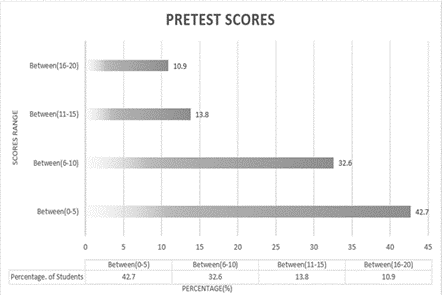
Figure 1: A bar chat for pretest students' score range percentage.
The pretest scores, represented in the horizontal bar chart titled "PRETEST SCORES," provided significant insights into the initial performance levels of the students. The data reveals a clear distribution pattern across various score ranges, highlighting key areas of concern and proficiency. A score range of 0-5 represents the highest concentration of students (42.7%). This high percentage suggests that a substantial number of students faced considerable difficulties with the pretest, indicating potential gaps in foundational knowledge or preparation. The next highest proportion of students (32.6%) scored between 6 and 10. While this is an improvement from the lowest range, it still represents a significant portion of the student population who are struggling to achieve higher scores percentage is below the pass mark which is 11. A smaller group (13.8%) managed to score within this middle range, highlighting moderate proficiency. These students may possess a basic understanding of the material but require further support to reach higher levels of achievement. The smallest group (10.9%) of students scored in the highest range, indicating a minority of high performers.
Post - Intervention Results
Observation: After carefully analyzing the observational notes taken, the observations suggest that during the lesson, students displayed a high level of interest as evidenced by their active participation in class discussions and prompt responses to questions. Many were taking detailed notes and maintaining eye contact, indicating focused attention. Additionally, students engaged enthusiastically in group activities, sharing ideas and collaborating effectively. Positive body language, such as nodding and leaning forward, further reflected their enthusiasm. This suggests that the lesson content and teaching approach successfully captured their interest and aligned with their learning needs.
Questionnaire: The same questionnaire was administered to student respondents after the intervention trying to ascertain their respective interest in the lesson. Table 3 below shows the responses given by students concerning their interest in the lesson.
Table 3: Students’ interest in lessons presented.
| Responses | Frequency | Percentage (%) |
| Yes | 107 | 77.5 |
| No | 31 | 22.5 |
| Total | 138 | 100 |
The results from the questionnaire provided insightful data regarding students' interest levels. Out of the total 138 respondents, 107 students, representing 77.5%, indicated that they have a genuine interest. This substantial majority suggests a strong inclination towards the subject matter or activity in question. Conversely, 31 students, which accounts for 22.5% of the respondents, expressed that they did not have an interest in the lesson. While this is a smaller proportion, it is still significant and warrants attention.
Test
The researcher also conducted a posttest to ascertain whether the teaching techniques used by the teachers in delivering lessons after the intervention made an impact on students’ performances in lessons. The result of the posttest is shown in Table 4.
Table 4: Students’ Performance on Pre-Test.
| Marks | Frequency | Percentage (%) |
| 0-5 | 7 | 5.1 |
| 6-10 | 35 | 25.4 |
| 11-15 | 21 | 15.2 |
| 16-20 | 75 | 54.3 |
| TOTAL | 138 | 100 |
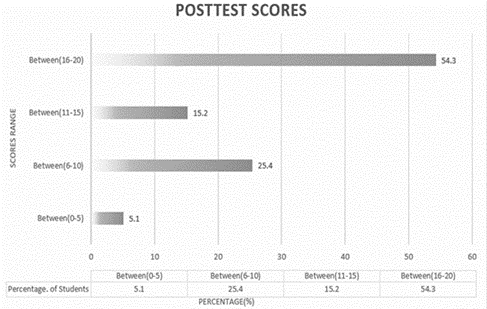
Figure 2: A bar chat for posttest students' score range percentage.
The horizontal bar graph above titled "POSTTEST SCORES" presents a detailed breakdown of student's scores in the posttest. The distribution of scores across different ranges reveals significant insights into student performance and progress, with a pass mark set at 11. The Posttest score from Table 4 and its bar chart in Figure 2 above, are clear evidence that the performance of students at the post-intervention stage was far above average. This was because more than half which is a significant majority, 69.5%, scored within the passing ranges. Specifically, 15.2% scored between 11-15, and a notable 54.3% of students achieved scores in the highest range of 16-20. Low Scores (0-5 and 6-10): A combined total of 30.5% of students scored below the pass mark with 5.1% in the 0-5 range and 25.4% in the 6-10 range. Passing Scores (11-15 and 16-20): A significant majority, 69.5%, scored within the passing ranges. Specifically, 15.2% scored between 11-15, and a notable 54.3% of students achieved scores in the highest range of 16-20. These results demonstrate a substantial number of students have mastered the material assessed in the posttest.
Discussion
The evaluation of students' performance, attitude, and interest in ICT lessons was conducted through various methods, including observations, questionnaires, and tests. The findings reveal significant insights into the impact of teaching techniques on student engagement and academic outcomes. The analysis of pretest and posttest scores reveals a significant improvement in student performance following the intervention. This aligns with findings in educational research that emphasize the benefits of targeted instructional strategies. For example, Hattie (2009), in his influential meta-analysis of educational interventions, found that strategies such as feedback, formative assessment, and clear learning objectives have a strong positive impact on student achievement.
Before the intervention, 75.3% of students scored below the pass mark of 11, reflecting considerable challenges with the material. However, after implementing revised teaching strategies, the post-test results showed a substantial shift, with 69.5% of students achieving scores above the pass mark. These results are consistent with studies demonstrating that tailored pedagogical approaches, such as differentiated instruction and active learning, can significantly enhance student understanding and proficiency, particularly in ICT-related subjects. Marzano (2007), in his research on effective instruction, highlights the importance of using a variety of instructional strategies, including cooperative learning, questioning techniques, and the use of technology, to cater to diverse learning needs and enhance student engagement and achievement. Hattie (2009) also emphasizes the importance of student engagement and active learning in promoting deep learning and improving student outcomes.
Observational data from the pre-intervention phase indicated a poor student attitude towards ICT lessons, characterized by disengagement, lack of participation, distracted behavior, and negative nonverbal cues such as slouched postures and lack of eye contact. These findings are consistent with research by Fredricks et al. (2004) who found that student disengagement is often associated with traditional, teacher-centered instructional approaches that fail to capture student interest and motivation. In contrast, post-intervention observations showed a significant shift in student attitudes. Students actively participated, responded promptly, and displayed positive body language, suggesting that the revised teaching method in the use of PowerPoint presentations effectively captured their interest and met their learning needs. This finding is supported by research from Hidi and Renninger (2006), who emphasize the importance of creating lessons that are engaging, relevant, and supportive of student interests to foster intrinsic motivation and enhance learning outcomes.
The questionnaire results provided valuable insights into students' interest in ICT lessons. Before the intervention, only 33.3% of students expressed interest in the lessons, while the majority (66.7%) indicated a lack of interest. Reasons cited included the fast-paced delivery of lessons and difficulty in taking notes. However, after the intervention, the questionnaire results showed a significant increase in student interest, with 77.5% of students indicating that they found the lessons engaging and beneficial.
This change underscores the importance of adapting teaching techniques to foster a more engaging and accessible learning environment. These findings align with research by Hidi and Renninger (2006), who suggest that developing situational interest through varied teaching methods can lead to sustained individual interest. Additionally, Fredricks et al. (2004) emphasize the role of engagement in enhancing academic outcomes. Moreover, research by Prince (2004) highlights the benefits of active learning strategies in improving student interest and understanding. These alignments with existing literature validate the observed improvements in student interest following the intervention.
In conclusion, the results of this study demonstrate that employing interactive, engaging, and student-centered teaching techniques can significantly improve students' performance, attitude, and interest in ICT lessons. These findings reinforce the value of adapting instructional methods to meet the diverse needs of students and create a more effective learning environment.
Conclusion
As discussed above, there is a strong correlation between students’ attitudes toward teaching techniques and their interests and academic performances or achievements. According to Maio & Haddock (2010), changing one’s attitude leads to a change in their behavior. The researcher observed from the results of the post-test conducted that there was a significant improvement in the general performance of students. This was attributed to the reason that after the implementation of the intervention, students’ attitudes towards the teaching and learning of ICT changed significantly. Students no longer showed low interest but rather showed a sense of commitment to ICT as a subject.
According to Alkash and Al-Dersi (2013), slide presentation software such as PowerPoint has become an integral part of many instructional settings. This is particularly true in large classes. He observed that PowerPoint can be a highly effective tool to aid learning, but if not used carefully and correctly, it may instead disengage students and hinder learning. From the results obtained after intervention through observation, students’ interest levels were boosted when PowerPoint presentations were used. This was evident from their class participation and their general performances.
As concluded by Aduma and Max (2017), the use of multimedia presentations such as PowerPoint improves students’ learning and performance. They also asserted that multimedia presentations could improve students’ test scores significantly. Consistent with the above authors, the use of PowerPoint as an intervention strategy proved very important. Students’ post-test scores were greatly improved over their pre-test scores owing to the use of PowerPoint as a presentation method and as a visual aid. In comparing the results at the pre- and post-intervention stages, it is obvious that the students’ performances had improved greatly during the post-intervention.
Implications of Practice
The findings of this study highlight several key implications for educational practice, particularly in the teaching of ICT and other technical subjects.
- Integration of Multimedia Tools for Enhanced Learning: The success of PowerPoint presentations in capturing student interest suggests that multimedia resources should be more widely integrated into ICT education. Teachers should use visual aids, animations, and interactive content to make abstract or complex topics more accessible and engaging for students.
- Continuous Assessment and Feedback for Improvement: The study highlights the effectiveness of using pre-test and post-test assessments to track progress. Educators should regularly use formative assessments and feedback mechanisms to identify learning gaps and adjust teaching strategies accordingly.
Suggestions for Further Studies
Based on the findings of this study, several important areas warrant further investigation to deepen our understanding of effective ICT instruction and student engagement:
- Long-Term Impact of PowerPoint Presentations on Learning Retention: Future research could examine whether the positive effects of PowerPoint presentations on student interest and performance are sustained over time. A longitudinal study could track students’ knowledge retention and ICT skills development beyond the immediate post-test phase.
- Comparative Analysis of Multimedia Teaching Tools: While PowerPoint presentations were effective in this study, other multimedia tools (e.g., interactive videos, gamified learning, augmented reality) may have different or greater impacts on student engagement. Future studies could compare PowerPoint against other digital instructional methods to determine the most effective approach.
- Impact of PowerPoint Design and Delivery Style: Research could investigate how different design elements (e.g., text density, animation, color schemes) and delivery styles (e.g., teacher narration, student-led presentations) affect student cognitive load, comprehension, and engagement.
Declarations
Acknowledgements
This study owes its success to several people who assisted us in various ways and needed to be acknowledged. First, we wish to thank the Almighty God for his abundant grace and favor bestowed on us throughout our education. We wish to thank our families for their support and encouragement. Our profound gratitude also goes to at Synclaire International Junior High School in Ghana who used the study, and time off their tight schedules to help in making the experiment a success.
Funding Information
No funding was received for this study.
Availability of Data and Materials
The datasets used and/or analyzed during the current study are available from the corresponding author upon reasonable request.
References
- Abatayo, J. O. (2024). The Use of ICT Through PowerPoint Presentations in Enhancing Students' Performance Level in English 8. International Journal of Advanced Multidisciplinary Studies, 4(5):955-961.
Publisher | Google Scholor - Aduma, A. T., Max, E. (2017). Effects of PowerPoint Presentation as a Teaching Method in Public Administration and the Teaching Style of Lecturers. International Digital Organization for Scientific Research Journal of Arts and Management, 55-63.
Publisher | Google Scholor - Al-Dersi, K. A. (2013). Advantages of Using PowerPoint Presentation in EFL Classroom. International Journal of English Language and Translation Studies, 3:16.
Publisher | Google Scholor - Alkash, K., Al-Dersi, Z. (2013). Advantages of Using PowerPoint Presentation in EFL Classroom & the Status of Its Use in Sebha University. International Refereed & Indexed Journal of English Language & Translation Studies, 88-111.
Publisher | Google Scholor - Bandura, A. (1986). Social foundations of thought and action: A social cognitive theory. Prentice Hall.
Publisher | Google Scholor - Bartsch, R. A., Cobern, K. M. (2003). Effectiveness of PowerPoint presentations in lectures. Computers & Education, 41(1):77-86.
Publisher | Google Scholor - Blokzijl, W., Andeweg, B. (2005). The effects of text slide format and presentation quality on learning in college lectures. Computers & Education, 45(1):29-42.
Publisher | Google Scholor - Chai, C. S., Koh, J. H. L., Teo, Y. H. (2020). Enhancing ICT integration in education: Insights from teacher education. Educational Technology Research and Development, 68(5):2341-2362.
Publisher | Google Scholor - Clark, R. C., Lyons, C. (2011). Graphics for learning: Proven guidelines for planning, designing, and evaluating visuals in training materials. Wiley.
Publisher | Google Scholor - Cooper, J. M. (2006). Gender and ICT: Issues for educators. Journal of Educational Computing Research, 34(1):1-18.
Publisher | Google Scholor - Craig, R. C., Amernic, J. H. (2006). Using PowerPoint effectively in the classroom. Teaching of Psychology, 33(3):186-189.
Publisher | Google Scholor - Daniels, R., Tysinger, J., Cornelius, E. (2010). The impact of PowerPoint presentations on student learning: A review of the literature. Education, 38(1):1-12.
Publisher | Google Scholor - Etuk, E. N., Afangideh, M. E., Uya, A. O. (2014). Student perception of teachers’ teaching effectiveness and their academic performance in social studies. Asian Social Science, 10(21):35-41.
Publisher | Google Scholor - Fredricks, J. A., Blumenfeld, P. C., Paris, A. H. (2004). School engagement: Potential of the concept, state of the evidence. Review of Educational Research, 74(1):59-109.
Publisher | Google Scholor - Frydrychova Klimova, B., Poulova, P. (2014). ICT as a motivational tool in the learning of foreign languages. Procedia - Social and Behavioral Sciences, 116:4162-4166.
Publisher | Google Scholor - Ghavifekr, N., Rosdy, A. (2015). The influence of multimedia on students' achievement in an online learning environment. Journal of Educational Technology & Society, 18(1):162-171.
Publisher | Google Scholor - Hacieminoglu, E. (2016). Students' attitudes toward science and their interest in technology. Journal of Science Education and Technology, 25(6):861-874.
Publisher | Google Scholor - Hacieminoglu, E. (2016). The effect of technology integration on students' attitudes toward science and technology education. International Journal of Technology in Education, 19(3):207-225.
Publisher | Google Scholor - Hattie, J. (2009). Visible learning: A synthesis of over 800 meta-analyses relating to achievement. Routledge.
Publisher | Google Scholor - Hidi, S., Renninger, K. A. (2006). The four-phase model of interest development: Theoretical and methodological implications. Educational Psychologist, 41(2):111-127.
Publisher | Google Scholor - Hill, A., Arford, T., Lubitow, A., Smollin, L. (2012). I’m Ambivalent about It: The Dilemmas of PowerPoint. Teaching Sociology, 40(3):242-256.
Publisher | Google Scholor - Hill, J. R., Corbett, A. T., Zhang, J. (2012). Effects of instructional animations on learning: A meta-analysis. Review of Educational Research, 82(4):489-522.
Publisher | Google Scholor - Hossein Nouri, J. (2015). The impact of using PowerPoint presentations on students’ learning outcomes: A review of literature. International Journal of Academic Research in Business and Social Sciences, 5(6):204-213.
Publisher | Google Scholor - Jones, M. G. (2003). The impact of PowerPoint presentations on student learning: A review of the literature. Journal of Educational Technology Systems, 31(2):117-128.
Publisher | Google Scholor - Kurniawan, D. A., Astalini, A., Darmaji, D., Melsayanti, R. (2019). The influence of attitude toward physics and technology on the interest and performance of high school students. International Journal of Educational Research, 23(3):215-227.
Publisher | Google Scholor - Langat, D. K. (2015). The role of affective factors in educational design. International Journal of Education, 5(1):18-29.
Publisher | Google Scholor - Langat, J. K. (2015). The influence of teachers’ pedagogical practices on students’ attitudes and performance in secondary school physics in Kenya. Journal of Education and Practice, 6(1):18-27.
Publisher | Google Scholor - Levasseur, K., Sawyer, R. K. (2006). The impact of PowerPoint presentations on student learning: A meta-analysis. Computers & Education, 46(1):26-39.
Publisher | Google Scholor - Maio, R., Haddock, G. (2012). Psychology of attitudes and attitude change. New York: SAGE Publications Ltd.
Publisher | Google Scholor - Marzano, R. J. (2007). The art and science of teaching: The basics. ASCD.
Publisher | Google Scholor - Mayer, R. E. (2005). The Cambridge handbook of multimedia learning. Cambridge University Press.
Publisher | Google Scholor - Mayer, R. E. (2021). Multimedia learning (3rd ed.). Cambridge University Press.
Publisher | Google Scholor - Mayer, R. E., Moreno, R. (2003). Multimedia learning: Principles and guidelines. Instructional Science, 31(1):79-101.
Publisher | Google Scholor - Nouri, H., Shahid, A. (2005). The effect of PowerPoint presentations on student learning and attitudes. Global Perspectives on Accounting Education, 2(1):5.
Publisher | Google Scholor - Othman, A. O. (2011). Effectiveness of powerpoint presentations in Saudi Arabian girls' middle school classes (Unpublished master's thesis). Edinburgh Napier University.
Publisher | Google Scholor - Othman, R. (2011). The impact of PowerPoint presentation on students' learning outcomes: A review of the literature. International Journal of Academic Research, 3(4):197-204.
Publisher | Google Scholor - Ozaslan, E. N., Maden, Z. (2013). The use of power point presentations at in the department of foreign language education at middle east technical university. Middle Eastern & African Journal of Educational Research, 2.
Publisher | Google Scholor - Petty, R. E., Cacioppo, J. T. (1986). The elaboration likelihood model of persuasion. Advances in Experimental Social Psychology, 19:123-205.
Publisher | Google Scholor - Prince, M. (2004). Does active learning work? A review of the research. Journal of Engineering Education, 93(3):223-231.
Publisher | Google Scholor - Rogers, P., Swan, K. (2004). The use of interactive whiteboards in education. Springer.
Publisher | Google Scholor - Rosen, L. D., Weil, M. M. (1995). Computer anxiety and computer use among college students. Journal of Educational Computing Research, 12(1):63-79.
Publisher | Google Scholor - Samie, F. (2014). The impact of PowerPoint presentations on students' learning outcomes: A review of literature. International Journal of Education and Research, 2(10):1-10.
Publisher | Google Scholor - Segundo, E., Salazar, D. (2011). The efficacy of using power point presentations to improve grammar and vocabulary learning among students of the intermediate II level (Regular program) of El Cultural Centro Peruano Americano in Trujillo, Peru. Repositorio institucional PIRHUA-Universided de Piura.
Publisher | Google Scholor - Segundo, M. L., Salazar, M. J. (2011). The impact of PowerPoint presentations on student learning: A review of the literature. Education Research International, 1-11.
Publisher | Google Scholor - Selwyn, N. (2004). Technology and equity in higher education: The digital divide and the lifeworld’s of students. Higher Education Research & Development, 23(3):281-292.
Publisher | Google Scholor - Susskind, J. E. (2005). Using PowerPoint effectively in the classroom. Teaching of Psychology, 32(2):118-121.
Publisher | Google Scholor - Thomas, O. O., Israel, O. O. (2014). Effectiveness of Animation and Multimedia Teaching on Students’ Performance in Science Subjects. British Journal of Education, Society & Behavioural Science, 201-210.
Publisher | Google Scholor - Tran, V. D. (2012). Predicting the attitudes and self-esteem of the grade 9th lower secondary school students towards mathematics from their perceptions of the classroom learning environment. World Journal of Education, 32-34.
Publisher | Google Scholor - Tufte, E. R. (2003). The cognitive style of PowerPoint: Pitching out corrupts within. Graphics Press.
Publisher | Google Scholor - UNESCO. (2019). Information and communication technology in education: A curriculum for schools and programme of teacher development. United Nations Educational, Scientific and Cultural Organization.
Publisher | Google Scholor - University of Minnesota, Center for Teaching and Learning. (2006). Making PowerPoint presentations more effective.
Publisher | Google Scholor - Volman, M., van Eck, R. (2001). Gender differences in attitudes towards and use of computers: A review of current research. Computers & Education, 36(1):1-18.
Publisher | Google Scholor - Watts, M. D. (1987). More than the sum of the parts: research methods in group interviewing. British Educational Research Journal, 13(1):25-34.
Publisher | Google Scholor - World Economic Forum. (2020). The future of jobs report 2020.
Publisher | Google Scholor - Xingeng, D., Jianxiang, L. (2012). Advantages and Disadvantages of PowerPoint in Lectures to Science Students. I.J. Education and Management Engineering, 9:61-65.
Publisher | Google Scholor - Xingeng, Z., Jianxiang, Z. (2012). The impact of using PowerPoint presentation on students’ learning outcomes: A review of literature. International Journal of Humanities and Social Science, 2(16):232-238.
Publisher | Google Scholor - Yilmaz, R. M. (2017). The effects of multimedia learning material on students’ academic achievement and attitudes towards science courses. European Journal of Educational Research, 6(2):123-132.
Publisher | Google Scholor - Yuen, A. H. K., Ma, C. (2008). Factors affecting students' attitudes towards learning English as a foreign language. System, 36(4):577-592.
Publisher | Google Scholor