

Research Article
Effects of Potash on The Body Weight and Histopathological Architecture of The Pancreas of Albino Rats
1Department of Histopathology and Cytopathology, Faculty of Medical Laboratory Science, College of Medical Sciences, Ambrose Alli University, Ekpoma, Edo, Nigeria.
2Department of Histopathology and Cytopathology, Faculty of Medical Laboratory Sciences, College of Health Sciences and Technology, Nnamdi Azikiwe University, Nnewi, Anambra, Nigeria.
3Department of Clinical Chemistry, Faculty of Medical Laboratory Sciences, Nnamdi Azikiwe University, Awka, Nigeria.
*Corresponding Author: Julius Kayode Bankole, Department of Histopathology and Cytopathology, Faculty of Medical Laboratory Science, College of Medical Sciences, Ambrose Alli University, Ekpoma, Edo, Nigeria.
Citation: Bankole JK, Asibor E, Ogenyi SI, Obi E. (2026). Effects of Potash on The Body Weight and Histopathological Architecture of The Pancreas of Albino Rats, International Journal of Biomedical and Clinical Research, BioRes Scientia Publishers. 7(3):1-7. DOI: 10.59657/2997-6103.brs.26.151
Copyright: © 2026 Julius Kayode Bankole, this is an open-access article distributed under the terms of the Creative Commons Attribution License, which permits unrestricted use, distribution, and reproduction in any medium, provided the original author and source are credited.
Received: July 22, 2026 | Accepted: August 17, 2026 | Published: August 25, 2026
Abstract
Potash refers to potassium compounds and potassium-bearing materials, the most common being potassium chloride (KCl). Potash is extracted from buried ancient evaporites by underground or solution mining. This accounts for most of the potassium produced. Due to its use as cooking pulse, we found it necessary to assess the effect of potash on the pancreas histology of adult albino rats. Thirty (30) Albino rat were used. They were divided into five equal groups of six rats each. Group A served as the control and Group B, C, D and E rats were given, 0.4g/ml, 0.6g/ml, 0.8g/ml and 1.0g/ml of potash respectively and served as test groups. The substance administration was given daily for 21 days (3 weeks) and the weights of both the test animals and control animals were monitored before and after administration of potash. After the administration, the rats were put under light chloroform anaesthetic and blood samples were collected for estimation Effect of potash on some hematological parameters of albino rats. The mean weights and standard deviation before the administration of potash for control group, Normal 1, Normal 2, Overdose 1 and Overdose 2 were recorded as 141.66±20.412, 200.00±0.00, 200.00±0.00, 208.33±20.41, 225.00±27.38 respectively. The mean weights and standard deviation after the administration of potash for control group, Normal 1, Normal 2, Overdose 1 and Overdose 2 were recorded as 200.00±0.00, 208.33±20.41, 225.00±27.38, 261.66±19.40 and 253.33±5.16 respectively. Statistical analysis of the weights before the administration of potash when compared with control showed a significant increase which is indicated with ‘w’. The weights after the administration of potash when compared with control showed a significant increase which is indicated with ‘x’. Comparison of the different groups before and after potash administration showed a significant increase in the control and overdose 1 while Normal 1, Normal 2 and Overdose 2 showed a non-significant increase. Following the varying dosage of potash administered, it was revealed that there was no alteration or abnormality on the pancreas of the experimental animals when compared with the control group. Also, no cell degeneration was recorded in any group. Although there was an increase in the weight, but it was not statistically significant. Conclusively, Potash did not show any significant change or abnormality on the pancreas of albino rats with the dosage used. Following the results of this study, further research on the effect of potash on the pancreas histology is recommended, possibly higher doses of potash should be administered and the research i.e. potash administration should last for a longer period of time.
Keywords: potash; kanwa; pancreas; brine; albino rat
Introduction
The term "potash" describes potassium-containing substances and chemicals, the most prevalent of which is potassium chloride (KCl). The Middle Dutch word potash (pot ashes, 16th century) is where the name "potash" originates. Potassium carbonate (K2CO3) was formerly made by gathering or generating wood ash (a task performed by ash burners), dissolving the ashes, and then evaporating the resultant solution in big iron pots, leaving behind a white residue known as pot ash (Hrynewich, 1983). Approximately 10% by weight of common wood ash can be recovered as pot ash. Later, potash became the term widely applied to naturally occurring potassium salts and the commercial product derived from them (Stephen, 2010). The word potash is said to be conventionally derived from potash the ash residue after combustion of organic material (Plant materials) (Wikipedia, 2007) and sometimes, it is so-called because potasium is the main alkali metal in the ash. However, current researches have shown that only a fraction of ash is potash (Ankrah, 1974; Ogundare et al., 2022).
Potash is extracted from buried ancient evaporites by underground or solution mining. This accounts for most of the potassium produced. Another important source is brine from landlocked water bodies, such as the Dead Sea, Salar de Atacama or Great Salt Lake. About 95% of potash produced worldwide is used in agriculture. The rest is found in several other industrial uses, including glass manufacturing, soaps, plastics and pharmaceuticals (Banks, 1979; Ogundare et al., 2022). Potash (Kaun), which is edible, is typically used to boil pulses such as beans, fiofio (cowpea beans), akidi (black Mexican beans), etc. so that the pulses are easily tenderised. During the cooking of ewedu and okro soup, akanwu is also added to improve the viscosity, greenness, and texture of the vegetables (Ankrah, 1974).
Potash is now used both domestically and internationally in the pulp, paper, chemical, and flat glass industries (MCS, 1996). Additionally, it is traditionally used as a washing agent and is utilised to make local soap (Onyegbado et al., 2002). Ash-derived potash has a bright future as a sustainable source of raw materials for potash-based businesses due to the straightforward chemistry of potash and the readily accessible local and improved potash production technologies (Babayemi et al., 2010). The potash contents of various plant materials have been reported (Nwoko, 1980; Afrane, 1992; Kevin, 2002). The alkali contents of the ash-derived potash were said to be hydroxides of potassium and sodium (Onyekwere 1996) or carbonates of potassium and sodium as reported by Taiwo & Osinowo (2001).
Just because potash is "natural" and can be extracted from wood ashes, doesn't mean they are safe. Just because they are chemicals with chemical names and formulas doesn't make them dangerous. The chemical hazards, of potash is always consider based on the amount and concentration of the potash in question. Only a little portion of wood ashes, which are not very dangerous, contain potash. However, the potash becomes more worthy of care when it is extracted, concentrated, and purified (Perucca and Cormode, 1999). In comparison to non-potash mine workers, research found that over 94% of potash workers had superior lung function but a higher prevalence of cough, dyspnoea, and chronic bronchitis. As an air pollutant, potash dust may also have an irritating effect that raises the incidence of cough and chronic bronchitis. However, it has also been discovered that the environment of potash mines has no negative impact on lung function (Arsentiev & Leja, 1977; Ogundare et al., 2022).
Potash (Kaun), which is edible, is typically used to boil pulses such as beans, fiofio (cowpea beans), akidi (black Mexican beans), etc. so that the pulses are easily tenderised. In order to improve the viscosity, greenness, and texture of the vegetables, akanwu is also added to ewedu and okro soup during preparation (Ankrah, 1974; Ogundare et al., 2022). We were compelled to evaluate the impact of potash on the pancreatic histopathology of adult albino rats because of its use as a cooking pulse.
Materials and Methods
Area of Study
This study was carried out in Ekpoma. Ekpoma is the capital of Esan West Local Government Area in Edo State which falls within the rain forest/savannah transitional zone of south western Nigeria. The area lies between latitudes 60 43I and 60 45I North of the equator and longitudes 60 5’ and 60 8’ East of the Greenwich Median. Ekpoma has a land area of 923 square kilometers with a population of 170, 123 people as at the 2006 census (World Gazzetter Nigeria, 2007). The town has an official post office and it is the home of Ambrose Alli University. Majority of people in Ekpoma are students, Lecturers/Teachers, civil servants, farmers, traders, business men/women, doctors, lawyers and self-employed. Ekpoma is made up of many communities, including Eguare, Iruekpen, Emaudo, Ujoelen, Ihumudumu, Illeh, Uke, Uhiele, Ujemen, Ukpenu, Egoro, Emuhi, Igor and Idumebo. The inhabitants are mainly Christians, few Muslims and pagans scattered within the area (Ogundare et al., 2022). The samples were examined in the Research Diagnostic Laboratory, of the Department of Histopathology, Faculty of Medical Laboratory Science, College of Medicine, Ambrose Alli University, Ekpoma.
Research Design
In this study, a total of Thirty (30) Albino rat was used. They were divided into five equal groups of six rats each. Group A served as the control and Group B, C, D and E rats were given, 0.4g/ml, 0.6g/ml, 0.8g/ml and 1.0g/ml of potash respectively and served as test groups. The substance administration was given daily for 21 days (3 weeks) and the weights of both the test animals and control animals were monitored before and after administration of potash. After the administration, the rats were put under light chloroform anaesthetic and blood samples were collected for estimation Effect of potash on some haematological parameters of albino rats.
Ethical Approval
Approval for the study was obtained from the Health Research Ethics Committee of Ambrose Alli University, Ekpoma, Edo State, Nigeria and was carried out in strict accordance with the guideline for the care and use of animals for research committee which is in line with that set by WHO.
Sample Size
The reasonable estimate of the key proportion to be studied will show no pilot proportion prevalence study published in the location of research. Using the exact method, the upper limit to provide a 95% level of confidence at an anticipated prevalence of roughly 2% dictated the number of albino rat samples needed for this study:

Where N= the desired sample size (when population is greater than 10,000); z= is a constant given as 1.96 (or more simply at 2.0) which corresponds to the 95% confidence level; P= expected prevalence; q= 1.0-p; d= acceptable error 5%.

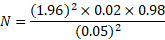
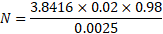
N= 30; Therefore thirty (30) albino rats were used
Experimental Animal Housing Condition
The number of samples studied was guided by the upper limit required, and gave 95% level of confidence at an expected prevalence of about 55% pilot study, after using the precise prevalence formula. Thirty (30) Adult Albino rats of comparable sizes and weights ranging from 141-225g were procured from the Animal Farm, College of Medicine, Ambrose Alli University Ekpoma, Edo State and transferred to the Histology Laboratory where they were allowed one (1) week of acclimatization. They were kept in wire mesh cages with tripod that separates the animal from its faeces to prevent contamination. During this period of acclimatization, the rats were maintained in accordance with the standard guide for the care and use of Laboratory animals.
Animal Grouping
The experimental animals were separated into five groups A-E. Group A served as the control, while groups B-E served as test groups
Group A: Consists of six (6) rats.
Group B: Consists of six (6) rats.
Group C: Consists of six (6) rats.
Group D: Consists of six (6) rats.
Group E: Consists of six (6) rats.
Substance of Study
Considerable quantities of Potash were purchased from common Market in Ekpoma, Edo State.
Substance Preparation
The potash solution which was administered to respective groups were obtained by grinding the potash and mixing with distilled water to get varying concentrations for respective groups.
Substance Administration
The administration of potash was as follows;
Group A (Control): Received 100g of feed with distilled water daily for 21 days.
Group B: Received 100g of feed with distilled water daily and 0.4g/ml of potash solution for 21 days.
Group C: Received 100g of feed with distilled water daily and 0.6g/ml of potash solution for 21 days.
Group D: Received 100g of feed with distilled water daily and 0.8g/ml of potash solution for 21 days.
Group E: Received 100g of feed with distilled water daily and 1.0g/ml of potash solution for 21 days.
Sample Collection
Tissue Preparation
At the end of each experimental period, the animals were euthanized by cervical dislocation. The pancreas was quickly removed, rinsed with saline solution (0.9%), and fixed in formalin 10%. The longitudinal section of the pancreas was obtained and processed (in the Histo-pathology laboratory, Department of Medical Laboratry Science, Ambrose Alli University, Ekpoma). The processed tissues were embedded in paraffin, sectioned at 4 μm thickness, and were placed on frosted glass slides for further evaluation. The tissue macroscopic alterations will also be analyzed. The samples were stained using hematoxylin and eosin (H&E) stains, which will demonstrate general tissue architecture including necrosis and further degenerative changes.
Staining Procedure (Haematoxylin and Eosin Staining Technique)
Principle: Haematoxylin containing alum stains the nucleus light blue, and alum serves as a mordant. This appears red when acid is present because the tissue is treated with an acidic solution to produce differentiation. The initial soluble red colour within the nucleus is changed to an insoluble blue colour during the bluing stage. Eosin is used for the counterstaining, giving the cytoplasm a pink hue.
Procedure
To deparaffinize the segment, place the slide in the xylene after flaming it on a burner. Treat the patient again. Hydration: Use water and alcohol baths at progressively lower concentrations (100%, 90%, 80%, and 70%) to hydrate the tissue segment. For three to five minutes, stain with haematoxylin. Rinse under running water for no more than five minutes, or until sections “blue.” In 1 percentage acid alcohol (1% HCl in 70% alcohol), differentiate for five minutes. After dipping in an alkaline solution (such as ammonia water), wash the parts in running tap water until they are once again blue. Use 1% Eosin Y to stain for ten minutes. Spend one to five minutes washing in tap water. Dehydrate when alcohol concentration rises and become transparent in xylene. Use mounting media. Use a microscope to observe.
Photomicrography
The sections were examined under a light microscope and photomicrographs of each group was taken. The photomicrographs were used to interpret the results of all the groups.
Results
Table 1 above shows the mean ± standard deviation (SD) of body weights of albino rats administered with varying doses of potash. The mean weights and standard deviation before the administration of potash for control group, Normal 1, Normal 2, Overdose 1 and Overdose 2 were recorded as 141.66±20.412, 200.00±0.00, 200.00±0.00, 208.33±20.41, 225.00±27.38 respectively.
The mean weights and standard deviation after the administration of potash for control group, Normal 1, Normal 2, Overdose 1 and Overdose 2 were recorded as 200.00±0.00, 208.33±20.41, 225.00±27.38, 261.66±19.40 and 253.33±5.16 respectively.
Statistical analysis of the weights before the administration of potash when compared with control showed a significant increase which is indicated with ‘w’. The weights after the administration of potash when compared with control showed a significant increase which is indicated with ‘x’. Comparison of the different groups before and after potash administration showed a significant increase in the control and overdose 1 while Normal 1, Normal 2 and Overdose 2 showed a non-significant increase.
Table 1: Body Weights of Albino Rats Administered with Varying Doses of Potash.
| Before Admin | After Admin | T-Value | P-Value | |
| Control | 141.66±20.412 | 200.00±0.00 | -7.000 | 0.001 |
| Normal 1 | 200.00±0.00 (w) | 208.33±20.41 | -1.000 | 0.363 (NS) |
| Normal 2 | 200.00±0.00 (w) | 225.00±27.38 (x) | -2.236 | 0.760 (NS) |
| Overdose 1 | 208.33±20.41 (w) | 261.66±19.40 (x) | -4.630 | 0.001 (S) |
| Overdose 2 | 225.00±27.38 (w) | 253.33±5.16 (x) | -2.490 | 0.052 (NS) |
KEY: w - Significant when compared with control before potash administration; x - Significant when compared with control after potash administration; S - Significant; NS - non-significant
Table 2 above shows the histological effects of potash (kaun) on the pancreas of albino rats. From the photo micrographs, the histological changes were observed in all the groups (Normal 1, Normal 2, Overdose 1 and Overdose 2). It was noticed that there were normal tissue architecture and presence of Exocrine gland (A), Interlobular duct (B) and Endocrine gland (C) in all the groups. There was no cell degeneration in any group.
Table 2: Histological Effect of Potash on the Pancreas of Albino Rats.
| Histological Observations | Control | Normal 1 | Normal 2 | Overdose 1 | Overdose 2 |
| Exocrine Glands A | + | + | + | + | + |
| Interlobular Ducts B | + | + | + | + | + |
| Endocrine Glands C | + | + | + | + | + |
| Tissue Architecture | + | + | + | + | + |
| Cell Degeneration | - | - | - | - | - |
KEY: + = Normal (present); - = Absent
Histological Observations
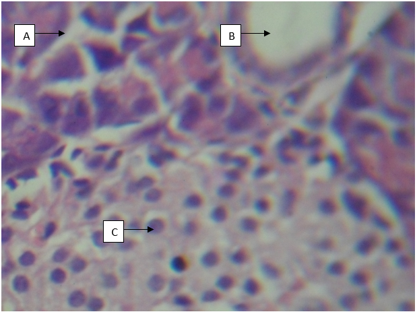
Group A: Control: Photomicrography of Rat Pancreas composed of exocrine glands A, interlobular ducts B and endocrine glands (islets of Langerhans) C.
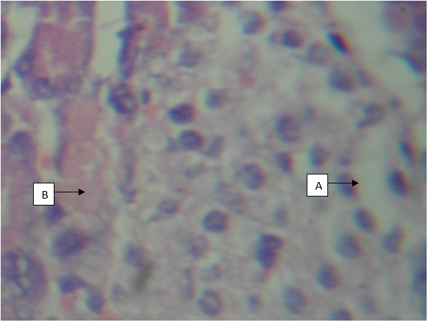
Group B: Photomicrography of Rat Pancreas fed with 0.4mls of kaun showing normal tissue architecture.
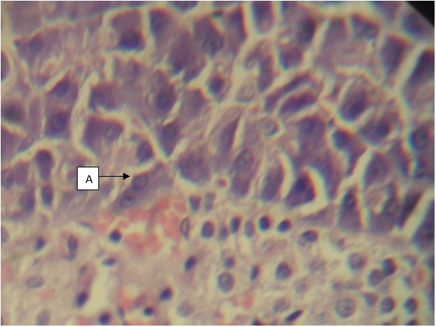
Group C: Photomicrography of Rat Pancreas fed with 0.6mls of kaun showing normal tissue architecture.
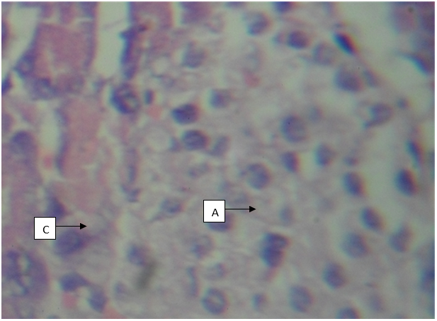
Group D: Photomicrography of Rat Pancreas fed with 0.8mls of kaun showing normal tissue architecture.
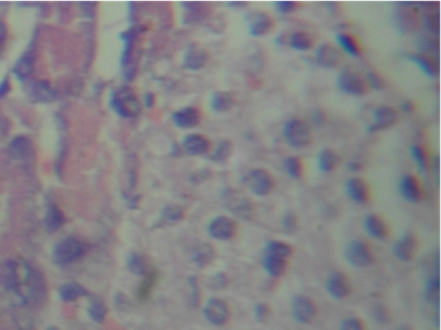
Group E: Photomicrography of rat Pancreas fed with 1.0mls of kaun showing normal tissue architecture.
Discussion
The pancreas is a glandular organ in the digestive system and endocrine system of vertebrates. In humans, it is located in the abdominal cavity behind the stomach. It is an endocrine gland producing several important hormones, including insulin, glucagon, somatostatin, and pancreatic polypeptide which circulate in the blood (Ionescu-Tirgoviste et al., 2015). In addition to being a digestive organ, the pancreas secretes digestive enzymes that help the small intestine break down and absorb nutrients, as well as pancreatic juice that contains bicarbonate to counteract the acidity of chyme entering from the stomach.
When comparing the mean and standard deviation of the experimental rats' weight before and after potash was administered, it was found that there was a significant increase in weight, even though some of the differences were not statistically significant. This means that we can add potash to our food as a regular nutrient.
The results of the study showed that potash consumption did not induce any marked abnormalities on the pancreas. The exocrine gland, interlobular duct, endocrine gland and tissue architecture were normal in all the groups (normal1, normal 2, overdose 1 and overdose 2 fed with 0.4g/ml, 0.6g/ml, 0.8g/ml and 1.0g/ml of potash solution respectively for 21 days). It was also noticed that there was no cell degeneration recorded in any of the groups. It indicates that potash on the pancreas is not dosage dependent due to the dosage used.
Conclusion
Following the varying dosage of potash administered, it was revealed that there was no alteration or abnormality on the pancreas of the experimental animals when compared with the control group. Also, no cell degeneration was recorded in any group. Although there was an increase in the weight, but it was not statistically significant. Conclusively, Potash did not show any significant change or abnormality on the pancreas of albino rats with the dosage used. Following the results of this study, further research on the effect of potash on the pancreas histology is recommended, possibly higher doses of potash should be administered and the research i.e. potash administration should last for a longer period of time.
Declarations
Acknowledgments
We acknowledged the support and assistance of staff of the department of Histopathology and Cytopathology, Faculty of Medical Laboratory Science, Ambrose Alli University, Ekpoma, Edo State and all the technical staff of St Kenny Research Consult, Ekpoma, Edo State, Nigeria for their excellent assistance and for providing medical writing/editorial support in accordance with Good Publication Practice (GPP3) guidelines.
Author Contributions
Julius Kayode Bankole: Conceptualization, Methodology, Formal analysis, Writing - original draft, Writing - review & editing.
Ernest Asibor: Methodology, Formal analysis.
Samuel Ifedioranma Ogenyi: Data curation.
Ejeatuluchukwu Obi: Data curation, Writing - review & editing, Supervision.
Funding / Financial Support
The authors received no external funding.
Conflict of Interest
The authors declare no competing interests.
Ethical Approval
The study was approved by the Ambrose Alli University Health and Ethics Committee.
References
- Afrane, G. (1992). Leaching of Caustic Potash from Cocoa Husk Ash. Bioresource Technology, 41(2):101-104.
Publisher | Google Scholor - Ankrah, E. K. (1974). Chemical Studies of Some Plant Wastes from Ghana. Journal of the Science of Food and Agriculture, 25(10):1229-1232.
Publisher | Google Scholor - Arsentiev, V. A., Leja, J. (1977). Problems in Potash Flotation Common to Ores in Canada and The Soviet Union.
Publisher | Google Scholor - Babayemi, J. O., Adewuyi, G. O. (2010). Assessment of Combustion and Potash Production as Options for Management of Wood Waste, Journal of Applied Sciences and Environmental Management. 14(1):73-75.
Publisher | Google Scholor - Banks, A. F. (1979). Selective Flocculation-Flotation of Slimes from A Sylvinite Ore. Beneficiation of Mineral Fines, 269-276.
Publisher | Google Scholor - Hrynewich, W. (1983). Processing Practice at Central Canada Potash. In Canadian Mineral Processors Meeting, Ottawa, Paper 16. 68(4):410-421.
Publisher | Google Scholor - Ionescu-Tirgoviste, C., Gagniuc, P. A., Gubceac, E., Mardare, L., Popescu, I., et al. (2015). A 3D Map of The Islet Routes Throughout the Healthy Human Pancreas. Scientific Reports, 5(1):14634.
Publisher | Google Scholor - Kevin, M. D. (2002): Potash. Caveman Chemistry, 3(1):34-37.
Publisher | Google Scholor - Mineral Commodity Summaries (MCS), (1996). Potash. 155-156.
Publisher | Google Scholor - Ogundare, S. O., Sirajuddin, M., Iyevhobu, K. O., Ogundare, E. I. (2020). Histopathological Effects of Potash on The Hearts of Adult Wistar Rats. Asian Journal of Cardiology Research, 6(3):23-30.
Publisher | Google Scholor - Onyekwere, C. (1996). Cassava Peels Ash: An Alternative Source of Alkali in Soap Production. BEng Thesis, 1-33.
Publisher | Google Scholor - Perucca, C. F., Cormode, D. A. (1999). Update on Insols Flotation at Agrium’s Vanscoy Potash Plant. In XXXI CMP Meeting, Ottawa, 183-197.
Publisher | Google Scholor - Potash Plant. Presented to the XXXI CMP Meeting, Ottawa. 3:183-197.
Publisher | Google Scholor - Stephen, M. J. (2010). Potash. USGS. 19(6):297-306.
Publisher | Google Scholor - Taiwo, O. E., Osinowo, F. A. O. (2001). Evaluation of Various Agro-Wastes for Traditional Black Soap Production. Bioresource Technology, 79(1):95-97.
Publisher | Google Scholor - Wikipedia, (2007), Combustion of Organic Material. Industrial & Engineering Chemistry. American Chemical Society. 26(11):1224-1225.
Publisher | Google Scholor - World Gazetteer Nigeria, (2007). Largest Cities and Towns Statistics Populations.
Publisher | Google Scholor