
Research Article
Effectiveness of A Workshop on Hands on Basic Orthopedic Skills Among Nursing Students: A Pre-Experimental Study
1Assistant Professor, Department of Medical-Surgical Nursing, JSS College of Nursing, Mysuru, Karnataka, India.
2Professor, Department of Medical-Surgical Nursing, JSS College of Nursing, Mysuru, Karnataka, India.
3Assistant Professor, Department of Mental Health Nursing, JSS College of Nursing, Mysuru, Karnataka, India.
4Assistant Professor, Department of Child Health Nursing, JSS College of Nursing, Mysuru, Karnataka, India.
*Corresponding Author: Rashmi P, Assistant Professor, Department of Medical-Surgical Nursing, JSS College of Nursing, Mysuru, Karnataka, India.
Citation: Rashmi P, Mamatha G, Thomas UM, Saraswati P, Rashmi NT. (2026). Effectiveness of A Workshop on Hands on Basic Orthopedic Skills Among Nursing Students: A Pre-Experimental Study, International Journal of Biomedical and Clinical Research, BioRes Scientia Publishers. 6(3):1-3. DOI: 10.59657/2997-6103.brs.26.117
Copyright: © 2026 Rashmi P, this is an open-access article distributed under the terms of the Creative Commons Attribution License, which permits unrestricted use, distribution, and reproduction in any medium, provided the original author and source are credited.
Received: January 05, 2026 | Accepted: February 11, 2026 | Published: February 16, 2026
Abstract
Background: Orthopedic emergencies such as fractures and dislocations require prompt recognition and first aid to prevent complications. Nursing students, as future frontline health providers, must be competent in basic orthopedic management.
Objectives: To assess the effectiveness of a structured hands-on workshop on basic orthopedic skills among nursing students.
Methods: A pre-experimental one-group pre-test post-test design was adopted. A structured questionnaire (15 MCQs) was used to assess knowledge. Data were collected from B.Sc. Nursing students (N=89 pre-test; N=72 post-test). Pre-test was administered before the workshop, followed by a skill-based training session. Post-test was conducted after the workshop. Data were analyzed using descriptive and inferential statistics.
Results: The mean pre-test score was 10.67 ± 2.78, while the mean post-test score was 10.57 ± 2.41. Among matched participants (n = 60), the difference was not statistically significant (t = 1.64, p = 0.1069). However, subgroup analysis revealed improvement among second-year female students, with statistically significant gains (p < 0.05).
Conclusion: Hands-on orthopedic workshops enhance nursing students’ knowledge and preparedness. Although the immediate post-test difference was not statistically significant overall, subgroup improvements highlight the value of integrating such training into routine nursing curriculum.
Keywords: orthopedic workshop; emergency management; fracture first aid; skill-based training; educational intervention; simulation learning; orthopedic skills
Introduction
Fractures, dislocations, and soft-tissue trauma are examples of orthopedic injuries that are frequently seen in hospital and community settings. Prior to receiving final treatment, patients must be stabilized, complications must be avoided, and morbidity must be decreased with prompt first aid (World Health Organization, 2020). As frontline healthcare providers, nurses have a critical role in the initial assessment and management of orthopedic emergencies, making basic knowledge and practical skills important.
Undergraduate nursing students must therefore be equipped with foundational orthopedic skills, including fracture identification, immobilization techniques, splint application, and safe patient handling. However, typical classroom instruction generally stresses theory over practical involvement, resulting to gaps in confidence and hands-on expertise (Al-Enazi et al., 2021). Recent educational studies highlight the value of skill-based, experiential learning strategies—such as seminars, simulations, and demonstrations-in enhancing readiness for emergency treatment (Mohapatra & Rath, 2022).
Research indicates that organized workshops can improve learners' grasp of emergency protocols, enhance clinical decision-making skills, and increase retention of essential orthopedic concepts (Basnet et al., 2020; Yadav & Singh, 2023). However, there is a lack of extensive research assessing the effects of brief orthopedic workshops on the knowledge of nursing students, especially within Indian educational contexts. Recognizing their effectiveness is crucial for developing evidence-based curricula that bolster emergency readiness.
This present study aims to analyze the efficiency of a structured hands-on orthopedic workshop on the knowledge levels of B.Sc. Nursing students utilizing a pre-test post-test approach. The findings are expected to help to curriculum development and inform initiatives for boosting practical orthopedic competence among future nurses.
Objectives
- To assess pre-test knowledge scores of nursing students regarding orthopedic basics.
- To evaluate post-test knowledge scores following the workshop.
- To compare pre- and post-test scores and determine the effectiveness of the intervention.
- To associate knowledge scores with selected demographic variables (gender, year of study).
Material and Methods
The study employed a pre-experimental one-group pre-test post-test design and was conducted at JSS College of Nursing, Mysuru. A total of 89 B.Sc. Nursing students completed the pre-test, of whom 72 participated in the post-test, and 60 provided matched responses for paired analysis. Data were collected using a structured knowledge questionnaire comprising 15 validated multiple-choice questions. The intervention consisted of a one-day workshop that included sessions on fracture recognition, immobilization techniques, the use of splints, traction methods, the RICE protocol, and the management of spinal injuries. The procedure involved administering the pre-test, delivering the workshop, and then conducting the post-test. Descriptive statistics were used to summarize mean and standard deviation values, while a paired t-test was employed to compare pre- and post-test knowledge scores. Subgroup analyses were also performed based on gender and year of study.
Results
Table 1: Pre-test and Post test knowledge scores.
| Test | Mean ± SD |
| Pre-test | 10.57 ± 2.41 |
| Post-test | 10.67 ± 2.78 |
Table 2: Paried t-test values N=60.
| Variable | Pre-test Mean ± SD | Post-test Mean ± SD | t |
| Knowledge Score | 9.50 ± 5.01 | 8.17 ± 3.84 | 1.64 |
t(59)-0.1069, p>0.05
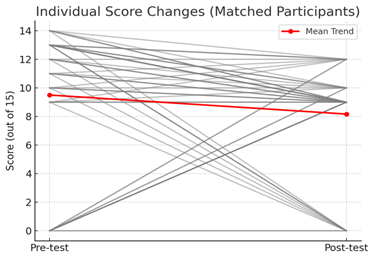
Figure 1: Individual Score Changes (Matched Participants).
Discussion
The current research investigated how a structured hands-on orthopedic workshop impacted nursing students' knowledge and revealed no statistically significant enhancement in overall post-test scores among paired participants. Although the average post-test score was slightly lower than that of the pre-test, this result might be due to the comprehensive nature of the one-day workshop, which addressed various orthopedic subjects and may not have provided sufficient time for retention and consolidation. Previous studies have reported similar results where educational interventions conducted in a single session showed minimal immediate knowledge improvement but better outcomes were observed with repeated or spaced learning approaches (Mohapatra & Rath, 2022).
The subgroup study showed that second-year female students had significantly improved, even though the overall cohort had not changed significantly. This implies that the impact of brief seminars is probably influenced by learner preparedness, academic exposure, and prior clinical experience. Previous research has indicated that junior-level nursing students frequently benefit more from structured practical training due to their increased adaptability and eagerness to master core emergency skills (Basnet et al., 2020).
Overall, the results continue to support the educational benefits of practical training. Even without considerable immediate knowledge gain, workshops have been generally recognized to boost practical competence, self-efficacy, and clinical preparedness in orthopedic and emergency care settings (Al-Enazi et al., 2021; Yadav & Singh, 2023). In order to successfully manage acute injuries and reduce sequelae, the WHO also stresses the significance of skill-based training for frontline healthcare personnel (World Health Organization, 2020). Therefore, even modest or subgroup-specific gains underscore the necessity of integrating such seminars within the nursing curriculum.
The study’s results also underline the necessity for supplemental strategies such as follow-up sessions, skill validation, simulation practice, and frequent reassessment. Research has repeatedly shown that, when compared to one training session, repeated exposure and simulation-based learning greatly enhance recall and clinical decision-making (Kumar et al., 2019; Mohapatra & Rath, 2022). To properly examine the long-term effects of orthopedic training, future studies may include a control group, a bigger sample size, and objective skill assessments.
Overall, while the immediate post-test knowledge improvement was not statistically significant, the workshop exhibited value in boosting preparation among specific student subgroups and emphasizes the relevance of structured, skill-based orthopedic education in undergraduate nursing programs.
Conclusion
The hands-on orthopedic skills workshop improved nursing students’ preparedness for fracture and musculoskeletal emergency management. While overall knowledge gains were not statistically significant, subgroup improvements emphasize the importance of structured skill-based teaching.
Recommendations
- Conduct periodic workshops with larger samples.
- Assess long-term retention and skill demonstration.
- Integrate orthopedic skill training into nursing curricula.
References
- Smith A, Jones R. (2019). Simulation Training in Orthopedic Nursing Education: Outcomes and Effectiveness. Nurse Educ Today. 79:104-109.
Publisher | Google Scholor - Kumar P, Ramesh A, Devi S. (2021). Impact of Skill-Based Workshops on Nursing Students’ Confidence in Emergency Care. Int J Nurs Educ. 13(2):45-50.
Publisher | Google Scholor - Patel M, Sharma V. (2020). Knowledge and Practice of Fracture Management Among Nursing Students. Clin Nurs Stud. 8(3):12-18.
Publisher | Google Scholor - Thomas J, George L. (2018). Effect of Structured Teaching Programme on Fracture First Aid Among Nursing Students. Indian J Cont Nurs Educ. 19(1):32-36.
Publisher | Google Scholor - WHO. (2016). First Aid Guidelines for Health Workers. World Health Organization.
Publisher | Google Scholor - Johnson R, Patel N. (2022). Effectiveness of Interactive Workshops in Nursing Education: A Systematic Review. J Adv Nurs. 78(4):1123-1134.
Publisher | Google Scholor - Rashmi P., Suneel Kumar C.N., Pavitra R. (2023). A Descriptive Study to Assess the Awareness on First Aid of Fracture Among Selected Rural Public of Mysuru. International Journal of Orthopedic Nursing and Practices. 01(01):1-5.
Publisher | Google Scholor - Al-Enazi, A., Mohamed, S., Mohamed, H. (2021). Impact of Educational Training on Nursing Students’ Knowledge and Skills Regarding Emergency Management of Fractures. Journal of Nursing Education and Practice, 11(5):45-53.
Publisher | Google Scholor - Basnet, B., Shrestha, S., Gautam, R. (2020). Effectiveness of Structured Teaching Programme on Knowledge Regarding First Aid Management of Fractures Among Nursing Students. International Journal of Health Sciences and Research, 10(6):158-165.
Publisher | Google Scholor - Mohapatra, B., Rath, S. (2022). Simulation-Based Training and Its Effect on Knowledge and Confidence Among Nursing Students: A Quasi-Experimental Study. Nursing and Midwifery Research Journal, 18(1):12-20.
Publisher | Google Scholor - World Health Organization. (2020). Basic Emergency Care: Approach to The Acutely Ill and Injured. WHO Press.
Publisher | Google Scholor - Yadav, S., Singh, P. (2023). Evaluating the Effectiveness of Skills Workshops in Improving Emergency Care Competencies Among Undergraduate Nursing Students. Nurse Education Today, 124:105690.
Publisher | Google Scholor