

Case Report
Case Reports in Psychiatry: Continued Relevance, Implications for Psychiatrists
- Evaristus Chino Ezema MD, MSc, DrHA 1*
- Amir Meftah MD 1
- Ogochukwu Agazie MD, MPH 2
- Sabiha Akter MD 1
- Nnenna Bessie Emejuru MD 3
- Prasanth Nemani MD4 4
- Chinwe Okeke-Moffatt MD, PharmD 5
- Linda Keke MD 6
- Ebere E. Obasi MD, MBA 7
- Justus I. Ugwu MBBS 8
- Chiamaka Uma B.Pharm, RPEBC, FPGEC 9
- Nkem O. Nkwonta MD, MHA, MSN 10
- Gideon O. Idoko MBBS, MHM 11
- Christabel A Dike MD 12
- Joseph C. Ikekwere MD, MPH 13
1 Department of Psychiatry, Interfaith Medical Center, Brooklyn, New York, United States.
2 College of Medicine, University of Lagos, Nigeria.
3 College of Medicine, Imo State University, Orlu, Nigeria.
4 School of Medicine, All Saints School of Medicine, Dominica.
5 Washington University of Health and Science, San Pedro, Belize.
6 Department of Internal Medicine, Abia State University, Abia, Nigeria.
7 A-I Health/SPS/Georgetown Behavioral Health Institute, Texas, United States.
8 Emergency Medicine Department, ESUT Teaching Hospital, Parklane, Enugu State, Nigeria.
9 Alberta College of Pharmacy, Alberta, Canada. 10Duke University, NC, United States.
11 Public Health, Fanshawe College Ontario, Canada.
12 My Medical PC, Bayside, New York, United States.
13 A-I Health/SPS/ University of Illinois, Chicago, IL, United States.
*Corresponding Author: Evaristus Chino Ezema, Department of Psychiatry, Interfaith Medical Center, Brooklyn, New York, United States.
Citation: Evaristus C. Ezema, Amir Meftah, Agazie O., Akter S., Nnenna B. Emejuru., et al. (2026). Case Reports in Psychiatry: Continued Relevance, Implications for Psychiatrists, Journal of BioMed Research and Reports, BioRes Scientia Publishers. 10(5):1-4. DOI: 10.59657/2837-4681.brs.26.254
Copyright: © 2026 Evaristus Chino Ezema, this is an open-access article distributed under the terms of the Creative Commons Attribution License, which permits unrestricted use, distribution, and reproduction in any medium, provided the original author and source are credited.
Received: May 22, 2026 | Accepted: June 03, 2026 | Published: June 10, 2026
Abstract
Case reports in the medical field are an age-old tradition. It is rated as low-level evidence in research. However, it continues to document uncommon clinical trajectories and rare adverse effects of medications. We aimed to present the various points of view regarding the relevance of case reports in psychiatry. They remain significant in detecting novelties, generating hypotheses, employing narrative aspects in writing, and providing educational value. Despite the limitations such as lack of generalizability, limited potential in establishing cause-and-effect relationships, and retrospective design, case reports will continue to play a significant role in psychiatric research and clinical practice, especially in an era of personalized care.
Keywords: case; continued; psychiatry; relevance; reports
Introduction
A case report in the medical discipline is a thorough and peer-reviewed professional article that documents the unique diagnosis, treatment, and follow-up of a single patient with a rare or previously unreported medical condition [1]. Further, it is also used to document new responses to a new medication. It is rated as a low-level evidence resource in research. However, it highlights new insights—such as unexpected effects or uncommon disease presentations. These are often ignored in larger studies. In doing so, case reports aid in directing future research and enhancing clinical excellence. Despite the increasing focus on large-scale studies, randomized controlled trials, and evidence hierarchies in modern medicine, the significance of individual case reports continues to be a topic of active discussion.
Historically, case reports have played a pivotal role in the evolution of psychiatry, acting as some of the earliest means by which clinicians recorded, analyzed, and communicated their observations regarding mental illness [2]. From the extensive psychoanalytic case histories of the late 19th and early 20th centuries to modern reports explaining rare presentations, unexpected treatment outcomes, and new psychopathological phenomena, case reports have made relatively huge contributions to clinical understanding and the formulation of hypotheses [3].
In the field of psychiatry, where diagnostic classifications often display variability and are profoundly influenced by individual, cultural, and contextual factors, case reports offer a level of detail that quantitative approaches may overlook [4]. Case reports provide in-depth, clinically relevant insights into patient experiences, highlighting atypical conditions. They can reflect early indicators of treatment effects or adverse reactions. Historically, numerous significant psychiatric concepts and syndromes have been initially identified through individual cases or as case series, emphasizing the vital importance of case-based observation in the progression of the field [2].
Historical Perspectives
In the late nineteenth and early twentieth centuries, case reports played a prominent role in the endeavors of prominent individuals such as Sigmund Freud and Emil Kraepelin [5]. Freud’s psychoanalytic case reports, notably those involving "Anna O." and "Dora," were very important in developing early concepts related to the unconscious, hysteria, and defense mechanisms [5].
In like manner, Kraepelin’s meticulous documentation of case reports helped in the categorization of mental disorders, especially in differentiating dementia praecox (later known as schizophrenia) from manic-depressive illness, currently recognized as bipolar disorder [6].
These case-oriented methodologies established the foundation for contemporary diagnostic frameworks and underscore the relevance of case reports within the field of psychiatry [7].
Numerous psychiatric disorders were initially identified through meticulous documentation of individual cases or case series, revealing patterns that would subsequently be confirmed through extensive research [6]. These include Autistic Disorder, Alzheimer’s Disease, Dissociative Identity Disorder, Tourette Syndrome, Capgras Delusion, and Factitious Disorder. In this manner, case reports served as a crucial instrument for discovery, enabling clinicians to formulate hypotheses and broaden the horizons of psychiatric understanding [4].
Role in Modern Evidence-Based Medicine
Case reports in contemporary Evidence-Based Medicine (EBM) play a vital role as primary evidence for identifying novel occurrences, including rare diseases, unforeseen adverse events, and groundbreaking treatments. While they are ranked lower in the conventional evidence hierarchy because of their limited generalizability, they function as "torchbearers" for generating hypotheses and as a form of "post-marketing surveillance" for new therapies, thereby directly influencing clinical practice [8].
Case reports indicate new discoveries. They are particularly effective in identifying new syndromes, uncommon side effects, or rare drug reactions.
Additionally, they can provide comprehensive details on patient-specific outcomes and innovative therapeutic strategies that may not be included in large-scale studies. They are essential educational resources that enhance clinical reasoning, diagnostic abilities, and pattern recognition for medical trainees and professionals [9]. In the era of personalized medicine, they provide insights into unique patient situations that do not conform to standard clinical trial criteria.
Recently, systematic reviews of case reports have been conducted [10]. These high-quality, aggregated case reports can strengthen the preliminary evidence base for rare conditions.
Discussion
Critics contend that case reports are not generalizable and are susceptible to bias, which restricts their role within evidence-based practice frameworks [7]. Nevertheless, instead of being outdated, case reports can be viewed as supplementary to larger studies, especially in fields where empirical data is scarce or changing quickly. This paper explores the ongoing significance of case reports in psychiatry, asserting that they continue to be vital instruments for clinical understanding, innovation, and the development of new avenues for scientific research.
Furthermore, the inherently subjective aspect of psychiatric evaluation adds complexity to the interpretation of case reports. Differences in clinician viewpoints, patient disclosures, and situational elements can affect the narrative, which may restrict reproducibility. In light of contemporary research criteria that emphasize statistical strength and replicability, these constraints have prompted some to doubt the scientific significance of case-based evidence [11].
Notwithstanding these critiques, there is a growing acknowledgment that case reports ought not to be disregarded; instead, they should be viewed as a valuable complement to other types of evidence. They hold a unique and significant position within psychiatric research, especially in the areas of hypothesis generation, early signal detection, and enhancement of clinical reasoning. When utilized in conjunction with more stringent methodologies, case reports can significantly enrich the overall comprehension of mental health disorders.
Future Directions and the Continuing Roles
One of the most important consistent roles in the past and present is the early identification of novel psychiatric conditions. The role must be futuristic in binding. Topics like “Artificial Intelligence Hallucination” have been documented as a case report [12]. Internet Scam/Fraud-induced Psychosis” is also recently documented as a case report [13]. In so doing, nosological forms are introduced. As seen in Figure I, hypotheses are often generated from case reports, which lead to larger studies. Clinical guidelines have been documented from larger studies.
Psychiatry is a constantly evolving field greatly influenced by social, technological, biological, and environmental changes. New psychoactive substances, digital media exposure, and shifting sociocultural stressors create psychiatric presentations that may not fit neatly within existing diagnostic frameworks. Case reports continue to provide the first evidence of these emerging patterns.
Case reports hold considerable educational significance in psychiatric training [9]. Case reports provide trainees with exposure to the depth and complexity of psychiatric practice in ways that textbooks and statistical analyses frequently fail to achieve. Through clinical narratives, learners enhance their diagnostic reasoning abilities while recognizing the social and emotional contexts that accompany mental illness.
Moreover, the process of writing case reports motivates trainees to engage in critical thinking, meticulously review relevant literature, and make academic contributions to the field early in their professional journeys [9].
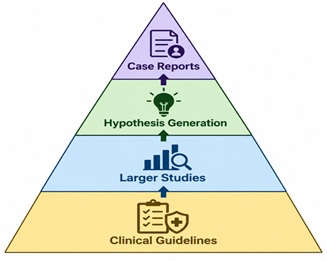
Figure 1: Role of Case Reports in Evidence-Based Psychiatry
Conclusion
In summary, although case reports possess intrinsic limitations regarding generalizability and methodological rigor, their capacity to offer detailed, contextually rich insights guarantees their ongoing significance in the field of psychiatry.
The future of case reports in psychiatry is expected to be influenced by advancing research standards, technological innovations, and an increasing focus on personalized care. Although traditional issues related to their limited generalizability persist, new trends indicate that case reports will maintain a significant and possibly expanding role in psychiatric research and clinical practice.
Declarations
Acknowledgements
None.
Funding
None.
Conflict of Interest
The authors affirm that they do not have any financial affiliations presently or within the preceding three years with any organizations that could potentially influence the submitted work. They further assert that no other associations or engagements might give rise to perceived influences on the submitted work. The authors confirm the absence of any conflicts of interest. All authors provide their consent for the publication of this manuscript.
References
- Alsaywid, B. S., & Abdulhaq, N. M. (2019). Guideline on writing a case report. Urology annals, 11(2):126–131.
Publisher | Google Scholor - Dattilio, F. M. (2006). Does the case study have a future in the psychiatric literature? International Journal of Psychiatry in Clinical Practice, 10(3):195–203.
Publisher | Google Scholor - Cherry, K. (2026). How psychoanalysis influenced the field of psychology. Verywell Mind.
Publisher | Google Scholor - Stein, D. J., Shoptaw, S. J., Vigo, D. V. et al. (2022). Psychiatric diagnosis and treatment in the 21st century: paradigm shifts versus incremental integration. World psychiatry : official journal of the World Psychiatric Association (WPA):21(3):393–414.
Publisher | Google Scholor - Ebert, A., & Bär, K. J. (2010). Emil Kraepelin: A pioneer of scientific understanding of psychiatry and psychopharmacology. Indian journal of psychiatry, 52(2):191–192.
Publisher | Google Scholor - Rybakowski J. K. (2019). 120th Anniversary of the Kraepelinian Dichotomy of Psychiatric Disorders. Current psychiatry reports, 21(8):65.
Publisher | Google Scholor - Nissen, T., & Wynn, R. (2014). The clinical case report: a review of its merits and limitations. BMC research notes, 7:264.
Publisher | Google Scholor - Matheny, M. E., Yang, J., Smith, J. C.et al. (2024). Enhancing Postmarketing Surveillance of Medical Products With Large Language Models. JAMA network open, 7(8):e2428276.
Publisher | Google Scholor - Florek, A. G., & Dellavalle, R. P. (2016). Case reports in medical education: a platform for training medical students, residents, and fellows in scientific writing and critical thinking. Journal of medical case reports, 10:86.
Publisher | Google Scholor - Taha, M. J. J., & Abuawwad, M. T. (2025). Integrating case reports into systematic reviews: methodological strategies and challenges. Systematic reviews, 14(1):208.
Publisher | Google Scholor - Resnik, D. B., & Shamoo, A. E. (2017). Reproducibility and Research Integrity. Accountability in research, 24(2):116–123.
Publisher | Google Scholor - Hatem, R., Simmons, B., Thornton, J. E. (2023). A Call to Address AI Hallucinations and How Healthcare Professionals Can Mitigate Their Risks. Cureus, 15(9):e44720.
Publisher | Google Scholor - Bai J, Ho M-H, Sung H-T, Hung C-S and Tsai J-H (2026) Mental health and psychosocial sequelae of fraud victimization: a systematic review. Front. Psychol. 17:1805536.
Publisher | Google Scholor