

Research Article
Artificial Intelligence and Machine Learning in Healthcare
- Mayank Pal Singh *
Assistant Professor, Department of Radiological and Imaging Techniques, UPUMS, Saifai, Etawah, Uttar Pradesh, India.
*Corresponding Author: Mayank Pal Singh, Assistant Professor, Department of Radiological and Imaging Techniques, UPUMS, Saifai, Etawah, Uttar Pradesh, India.
Citation: Mayank P. Singh. (2026). Artificial Intelligence and Machine Learning in Healthcare, Journal of BioMed Research and Reports, BioRes Scientia Publishers. 11(1):1-8. DOI: 10.59657/2837-4681.brs.26.262
Copyright: © 2026 Mayank Pal Singh, this is an open-access article distributed under the terms of the Creative Commons Attribution License, which permits unrestricted use, distribution, and reproduction in any medium, provided the original author and source are credited.
Received: July 30, 2026 | Accepted: August 13, 2026 | Published: August 20, 2026
Abstract
Artificial Intelligence is rapidly transforming the healthcare sector by introducing innovative approaches to disease diagnosis, treatment planning, and patient care. This study explores recent advancements in AI and examines how these technologies are changing modern healthcare practices. A comprehensive review of existing literature was conducted to understand the real-world applications of AI and Machine Learning (ML) in disease prediction, medical diagnosis, treatment optimization, and clinical decision-making.
The study highlights that AI and ML are increasingly being integrated into healthcare systems to improve the quality, accuracy, and efficiency of healthcare services. These technologies enable healthcare professionals to make faster and more informed decisions, support personalized treatment strategies, and enhance patient outcomes. At the same time, their adoption presents new opportunities for innovation while also introducing challenges related to data privacy, ethical considerations, algorithmic bias, and regulatory compliance.
This study discusses the technologies driving AI in healthcare, their working principles, current limitations, and future prospects as they continue to evolve. It also examines the broader social and ethical implications of AI adoption within healthcare systems. Overall, the findings indicate that the continuous advancement of Artificial Intelligence and Machine Learning has the potential to significantly improve operational efficiency, optimize healthcare delivery, and strengthen the capabilities of healthcare professionals and allied healthcare providers in the years ahead.
Keywords: artificial intelligence (AI); machine learning (ML); healthcare; disease diagnosis; disease prediction; personalized medicine; telemedicine; healthcare operations
Introduction
The rapid development of Artificial Intelligence (AI) and Machine Learning (ML) has greatly transformed the healthcare industry by offering smarter, faster, and more efficient approaches to delivering medical care [1]. Hospitals and healthcare organizations are increasingly adopting advanced technologies such as AI, machine learning, smart sensors, robotics, big data analytics, and the Internet of Things (IoT) to improve patient care, optimize clinical workflows, and enhance operational efficiency [1].
Artificial intelligence has enabled technologies such as machine learning algorithms, natural language processing (NLP), and intelligent robotic systems to create new opportunities for innovation in healthcare [1]. These technologies assist healthcare professionals in disease diagnosis, treatment planning, medical image interpretation, patient monitoring, and clinical decision-making, leading to improved diagnostic accuracy, personalized treatment, and better patient outcomes [1]. Consequently, AI has attracted significant attention from researchers, clinicians, software developers, and healthcare policymakers due to its transformative potential in both individual patient care and public health systems [1].
This review examines the practical applications of AI in healthcare and evaluates their impact on clinical services, healthcare management, and patient outcomes [1]. It also discusses strategies for successfully integrating AI into routine clinical practice to improve the quality, safety, and efficiency of healthcare delivery [1].
Although AI adoption offers numerous benefits, several challenges remain, including concerns related to data privacy, cybersecurity, data ownership, ethical issues, and the reliability of AI systems [1,3]. Addressing these challenges is essential for the safe, responsible, and effective implementation of AI in healthcare. With appropriate safeguards, AI and ML have the potential to enhance clinical decision-making, improve healthcare efficiency, and promote more personalized, patient-centred care [1].
Literature Review
Artificial Intelligence (AI) and Machine Learning (ML) have emerged as transformative technologies in healthcare, significantly improving patient care, clinical decision-making, and operational efficiency [1,2]. Recent studies have demonstrated that AI-driven analytical models can process large volumes of healthcare data to support disease diagnosis, predict patient outcomes, optimize resource utilization, and enhance treatment planning. The integration of AI with Electronic Health Records (EHRs), medical imaging, and real-time patient monitoring has further strengthened the quality, accuracy, and efficiency of healthcare delivery [1,2].
One of the most significant applications of AI is in Intensive Care Units (ICUs), where rapid and accurate clinical decisions are critical. AI-powered predictive models assist healthcare professionals in identifying high-risk patients, forecasting disease progression, estimating mortality risk, and supporting early clinical interventions. Clinical severity scoring systems such as the Sequential Organ Failure Assessment (SOFA) and the Acute Physiology and Chronic Health Evaluation (APACHE) have demonstrated considerable effectiveness in assessing disease severity, guiding ICU admissions, and improving the utilization of healthcare resources [2].
Several studies have also highlighted the growing role of AI in clinical decision support systems (CDSS). By analysing patient demographics, laboratory investigations, vital signs, electronic medical records, and medical imaging, AI can assist clinicians in developing personalized treatment strategies and making faster, evidence-based decisions [1,2]. In addition, AI-enabled early warning systems continuously monitor patients and identify subtle signs of clinical deterioration before serious complications occur, thereby improving patient safety and reducing mortality [2].
Beyond direct patient care, AI has demonstrated substantial potential in improving hospital operations and healthcare management. Predictive analytics supports efficient ICU bed management, resource allocation, patient flow optimization, and discharge planning. These AI-driven approaches help healthcare administrators anticipate resource requirements, reduce overcrowding, improve workflow efficiency, and minimize operational costs while maintaining high-quality patient care [1,2].
Despite these promising advancements, the widespread adoption of AI in healthcare continues to face several challenges. Researchers have identified patient privacy, data security, algorithmic bias, ethical concerns, transparency, and accountability as major barriers to the successful implementation of AI technologies in clinical practice [1,3]. Addressing these issues through robust regulatory frameworks, ethical guidelines, and secure data governance is essential for ensuring responsible and trustworthy AI adoption in healthcare [1,3].
Overall, the available literature indicates that AI and ML have the potential to revolutionize healthcare by enhancing diagnostic accuracy, strengthening evidence-based clinical decision-making, improving operational efficiency, and delivering more personalized, patient-centred care. However, realizing these benefits requires overcoming existing technical, ethical, legal, and infrastructural challenges to enable the safe and sustainable integration of AI into routine healthcare practice [1-3].
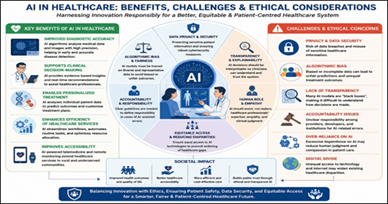
Figure 1: Balancing innovation and ethics in AI-driven healthcare
Understanding the Social and Ethical Impact of Artificial Intelligence in Healthcare
Artificial Intelligence (AI) is transforming healthcare by improving diagnostic accuracy, supporting clinical decision-making, enabling personalized treatment, and enhancing the efficiency of healthcare services. Despite these benefits, its growing adoption also presents several social and ethical challenges that must be addressed to ensure its responsible and equitable use [1,3]. The major social and ethical considerations associated with the adoption of AI in healthcare are illustrated in Figure-01 [3].
One of the primary concerns is the protection of patient privacy and the security of sensitive medical data. AI systems rely on large amounts of healthcare information, making robust data protection measures essential to prevent unauthorized access and maintain patient confidentiality. Another major challenge is algorithmic bias. If AI models are trained using incomplete or unrepresentative datasets, they may produce unfair or inaccurate outcomes, potentially affecting the quality of care provided to different patient populations. Therefore, developing unbiased and transparent AI systems is critical for ensuring fairness in healthcare [3].
Transparency and accountability are equally important. Healthcare professionals should understand how AI systems generate their recommendations so that clinical decisions remain evidence-based and trustworthy. In cases of AI-assisted medical errors, clear guidelines are needed to define responsibility among healthcare providers, developers, and healthcare institutions. Furthermore, the increasing use of AI should complement rather than replace the expertise, empathy, and clinical judgment of healthcare professionals [3].
From a societal perspective, AI has the potential to improve healthcare accessibility through telemedicine and remote monitoring, particularly for rural and underserved communities. However, unequal access to digital technologies and internet connectivity may widen existing healthcare disparities if not addressed. Building public trust through ethical practices, transparent policies, and responsible implementation is therefore essential [1,3].
Overall, the successful integration of AI into healthcare depends on balancing technological innovation with ethical principles, patient safety, data security, and equitable access. By addressing these challenges through appropriate regulations and ethical frameworks, AI can contribute to a more efficient, reliable, and patient-centred healthcare system [1,3].
Analytical Models for Developing Robust Triage Protocols
Artificial Intelligence (AI) and Machine Learning (ML) have become valuable tools for improving patient triage and clinical decision-making, particularly in critical care settings. AI-powered analytical models can process large volumes of patient data, including medical history, vital signs, laboratory findings, and electronic health records, to identify high-risk patients and support timely, evidence-based clinical decisions [2].
Clinical severity scoring systems such as the Acute Physiology and Chronic Health Evaluation (APACHE II) and the Sequential Organ Failure Assessment (SOFA) are widely used in Intensive Care Units (ICUs) to assess disease severity, predict patient outcomes, and prioritize treatment. These standardized scoring systems assist clinicians in estimating mortality risk, optimizing healthcare resource allocation, and improving patient management [2]. Studies have demonstrated that both APACHE II and SOFA are effective predictors of mortality among critically ill patients; however, the SOFA score has shown superior discriminatory ability in predicting ICU mortality, particularly in patients with sepsis, making it a preferred tool for AI-assisted risk stratification and clinical decision-making [2].
Machine learning algorithms further enhance triage by integrating clinical, demographic, physiological, and laboratory data to predict adverse events, disease progression, and the need for intensive care. These predictive models enable healthcare professionals to identify high-risk patients at an early stage, facilitating timely interventions and improving patient outcomes [2].
Recent advances in AI have also improved emergency department triage through technologies such as Natural Language Processing (NLP), Speech-to-Text (STT) systems, and real-time electronic medical record analysis. These tools reduce documentation time, improve workflow efficiency, and assist clinicians in making faster and more accurate triage decisions. Additionally, AI-assisted interpretation of chest X-rays, electrocardiograms (ECGs), and ultrasound images has enhanced diagnostic accuracy and expedited emergency care [2].
Overall, AI-driven analytical models are transforming critical care by enabling objective risk assessment, improving resource utilization, and supporting evidence-based clinical decision-making. Table-01. As these technologies continue to evolve, they are expected to become an integral component of modern triage systems and critical care practice [2].
Table 1: AI-Based Analytical Models Used in Critical Care and Triage
| AI Model/Tool | Clinical Application | Outcome |
| SOFA | Organ failure assessment | Predicts ICU mortality |
| APACHE II | Disease severity scoring | Risk stratification |
| Machine Learning | Mortality prediction | Early intervention |
| NLP & STT | Clinical documentation | Faster triage |
| AI-assisted ECG | Emergency screening | Rapid diagnosis |
| AI-enhanced Ultrasound | Imaging support | Improved diagnostic accuracy |
Significant Role of Artificial Intelligence and Machine Learning
Artificial Intelligence (AI) and Machine Learning (ML) have become indispensable tools in modern healthcare, particularly in critical care, where timely and accurate clinical decisions are essential. By analysing large volumes of Electronic Medical Records (EMRs), laboratory findings, physiological parameters, and real-time patient data, AI systems can predict important clinical outcomes such as patient mortality, disease progression, and length of Intensive Care Unit (ICU) stay. These predictive capabilities enable healthcare professionals to identify high-risk patients early, prioritize interventions, and improve overall patient management [2]. Beyond predictive analytics, AI is advancing toward continuous real-time patient monitoring through intelligent machine learning systems. These technologies can detect subtle physiological changes, generate early warning alerts, and support clinicians in preventing complications before they become life-threatening. Such AI-driven monitoring systems have the potential to facilitate semi-autonomous ICUs, where intelligent technologies assist healthcare professionals in delivering safer, more efficient, and personalized patient care [2] The major applications, benefits, and challenges of AI and Machine Learning in critical care are illustrated in Figure-2 [2].
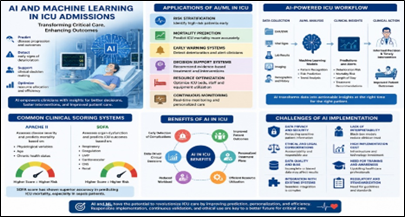
Figure 2: AI and Machine Learning in critical care: Applications, benefits, and challenges
Rather than replacing healthcare professionals, AI is designed to function as a clinical decision-support system that complements human expertise. By automating routine data analysis and continuous patient monitoring, AI enables clinicians to devote more time to complex clinical decision-making, patient communication, and compassionate care. Although challenges related to data privacy, ethical considerations, cybersecurity, and system reliability remain, ongoing advances in AI and ML are expected to significantly improve the quality, safety, and efficiency of critical care services [2,3]. Overall, the integration of AI into critical care has the potential to transform healthcare by enhancing diagnostic accuracy, optimizing resource utilization, supporting evidence-based decision-making, and improving patient outcomes. Continued research, ethical governance, and rigorous clinical validation will be essential for ensuring the safe and responsible implementation of AI technologies in healthcare [1–3]. The diverse applications of AI in healthcare are summarized in Table-2 [1,2].
Table 2: Applications of AI in Healthcare
| Application Area | Role of AI |
| Disease Diagnosis | Improves diagnostic accuracy and early detection of diseases. |
| Patient Triage | Prioritizes patients based on severity and clinical risk. |
| Clinical Decision Support | Assists clinicians with evidence-based treatment decisions. |
| Medical Imaging | Enhances interpretation of X-rays, CT, MRI, and ultrasound images. |
| Intensive Care | Predicts mortality, disease progression, and length of ICU stay. |
| Drug Discovery | Accelerates drug development and identification of therapeutic targets. |
| Remote Monitoring | Enables continuous monitoring through wearable devices and telemedicine. |
| Hospital Management | Optimizes resource allocation and workflow efficiency. |
Table 3: AI Technologies Used in Healthcare
| Technology | Healthcare Application |
| Machine Learning (ML) | Disease prediction and outcome analysis |
| Artificial Intelligence (AI) | Clinical decision support |
| Natural Language Processing (NLP) | Medical documentation and speech recognition |
| Speech-to-Text (STT) | Real-time patient documentation |
| Big Data Analytics | Analysis of large healthcare datasets |
| Internet of Things (IoT) | Remote patient monitoring |
| Smart Sensors | Continuous patient monitoring |
| Robotics | Surgical assistance and patient care |
Machine Learning and Radiology
Artificial Intelligence (AI) and Machine Learning (ML) have significantly transformed the field of radiology by improving the accuracy, speed, and efficiency of medical image interpretation. Deep learning algorithms, particularly Convolutional Neural Networks (CNNs), have demonstrated remarkable performance in detecting abnormalities in X-rays, Computed Tomography (CT), Magnetic Resonance Imaging (MRI), mammography, and other imaging modalities, thereby supporting radiologists in making faster and more reliable diagnoses [1].
One notable example is the work conducted by researchers at Osaka University, who developed a deep learning-based system capable of accurately identifying neurological disorders, including epilepsy. The algorithm analyses Magnetoencephalography (MEG) images by comparing patient scans with a large database of healthy brain images to detect subtle abnormalities and brain lesions. Since epilepsy often progresses gradually and affects multiple regions of the brain, early identification of these abnormalities can facilitate timely diagnosis and improve treatment outcomes [1].
Deep learning models imitate the structure and function of the human brain through multiple layers of artificial neural networks, enabling automated feature extraction from complex medical images. In radiology, these models can either be trained using predefined expert knowledge provided by radiologists or learn directly from large annotated imaging datasets. This capability allows AI systems to identify hidden imaging patterns associated with tumors, fractures, neurological disorders, and other pathological conditions with high diagnostic accuracy [1].
Another widely adopted approach involves training AI models using normal imaging datasets to establish a baseline representation of healthy anatomy. Any deviation from this learned pattern is subsequently recognized as a potential abnormality. Convolutional Neural Networks have been successfully trained using CT scans with normal cardiac anatomy, while autoencoder-based models have shown promising results in detecting microcalcifications in mammography through reconstruction error analysis. These techniques enhance the early detection of subtle abnormalities that may be overlooked during routine image interpretation [1]. The major AI technologies and their healthcare applications are presented in Table-3 [1].
The integration of Artificial Intelligence into various healthcare services, including medical imaging, clinical decision support, and hospital management, is illustrated in Figure-3 [1].
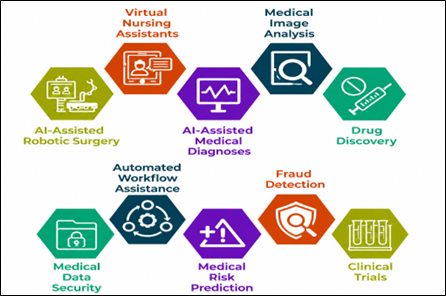
Figure 3: Integration of Artificial Intelligence into Healthcare Delivery
Limitations of AI technologies in healthcare industry
Despite the remarkable advancements of Artificial Intelligence (AI) in healthcare, its widespread implementation in routine clinical practice continues to face several challenges [1,3]. One of the major limitations is the limited generalizability of AI models. Algorithms developed and trained using data from a particular hospital or healthcare system often cannot be directly applied to other institutions because of differences in patient demographics, disease prevalence, clinical workflows, and healthcare infrastructure. Consequently, AI models require rigorous validation, continuous retraining, and periodic recalibration before they can be safely integrated into diverse clinical environments [1]. The major challenges, potential solutions, and future directions for implementing Artificial Intelligence in healthcare are illustrated in Figure-4 [1,3].
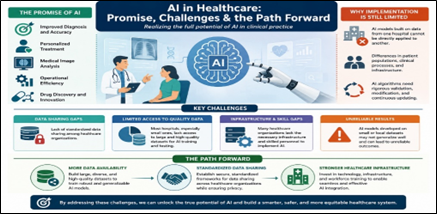
Figure 4: Challenges, solutions, and future prospects of Artificial Intelligence in healthcare.
Another significant barrier is the lack of standardized and interoperable healthcare data. Many healthcare organizations, particularly smaller hospitals and rural healthcare facilities, have limited access to large, high-quality datasets required for training and validating robust AI models. In addition, inadequate digital infrastructure, limited computational resources, and a shortage of skilled professionals further restrict the successful adoption of AI technologies in clinical practice [1].
Ethical and legal concerns also remain critical challenges. Issues related to patient privacy, data security, algorithmic bias, transparency, explainability, and accountability must be carefully addressed before AI systems can be widely adopted. AI algorithms trained on incomplete or unrepresentative datasets may produce biased predictions, potentially leading to disparities in healthcare delivery. Furthermore, the "black-box" nature of many AI models makes it difficult for clinicians to understand how specific recommendations are generated, reducing trust and limiting their acceptance in clinical decision-making [3].
Another important challenge is the absence of comprehensive regulatory frameworks and standardized guidelines governing the development, validation, and clinical deployment of AI systems. Establishing robust regulatory policies, promoting secure data sharing, and implementing standardized evaluation protocols are essential for ensuring the safety, reliability, and ethical use of AI in healthcare [1,3].
Despite these limitations, continuous advances in AI algorithms, cloud computing, healthcare informatics, and data governance are expected to address many of these challenges. Collaborative efforts among healthcare professionals, researchers, policymakers, and technology developers will play a crucial role in ensuring the responsible integration of AI into modern healthcare systems [1–3].
Future prospects of the field as AI technologies in healthcare
Artificial Intelligence (AI) is expected to play an increasingly important role in the future of healthcare by enhancing patient care, supporting healthcare professionals, and improving the efficiency of healthcare systems [1]. AI applications can be broadly categorized into patient-oriented, clinician-oriented, and administrative-oriented systems, each contributing to better healthcare delivery through improved diagnosis, treatment planning, workflow optimization, and patient management [1].
As AI technologies continue to evolve, their applications are expected to extend far beyond routine administrative tasks. Future AI systems will support intelligent patient communication, automated analysis of electronic health records (EHRs), population health surveillance, precision medicine, accelerated drug discovery, and the development of innovative medical devices. AI-powered virtual assistants and conversational agents are also expected to enhance patient engagement by providing continuous health guidance and personalized care recommendations [1].
Medical imaging is anticipated to remain one of the fastest-growing areas of AI adoption. Deep learning algorithms have already demonstrated remarkable accuracy in interpreting radiological and pathological images, enabling earlier disease detection and improved diagnostic confidence. Continued advancements in image analysis, computer vision, and automated reporting are expected to assist radiologists in making faster and more precise clinical decisions while reducing diagnostic errors [1].
Artificial Intelligence is also expected to transform healthcare through the integration of Natural Language Processing (NLP), Speech-to-Text (STT) technologies, wearable devices, the Internet of Things (IoT), and remote patient monitoring systems. These technologies will streamline clinical documentation, facilitate real-time health monitoring, and improve communication between patients and healthcare providers, ultimately leading to more accessible, efficient, and patient-centred healthcare services [1].
Despite these promising developments, the successful integration of AI into healthcare will depend on addressing challenges related to data privacy, cybersecurity, algorithm transparency, regulatory compliance, and ethical governance [1,3]. Strengthening digital infrastructure, promoting secure data sharing, and establishing standardized clinical validation frameworks will be essential to ensure the safe, reliable, and equitable implementation of AI technologies [1,3].
Overall, AI is expected to complement rather than replace healthcare professionals. By automating repetitive tasks, supporting evidence-based clinical decision-making, and enabling personalized healthcare, AI has the potential to reshape the future of medicine and improve healthcare outcomes worldwide [1].
Conclusion
Artificial Intelligence (AI) and Machine Learning (ML) are transforming modern healthcare by enhancing diagnostic accuracy, supporting clinical decision-making, optimizing treatment strategies, and improving operational efficiency across healthcare systems [1,2]. Their integration into areas such as medical imaging, critical care, disease prediction, personalized medicine, and hospital management has demonstrated significant potential to improve patient outcomes and healthcare quality.
Despite these advancements, several challenges continue to limit the widespread adoption of AI in routine clinical practice. Concerns related to data privacy, cybersecurity, algorithmic bias, transparency, interoperability, ethical governance, and regulatory compliance must be effectively addressed to ensure the safe and responsible implementation of AI technologies [1,3]. In addition, the availability of high-quality healthcare data, robust digital infrastructure, and continuous validation of AI models are essential for maintaining their reliability and clinical applicability.
Rather than replacing healthcare professionals, AI should be viewed as an intelligent clinical decision-support tool that complements human expertise. By automating repetitive tasks, analysing complex datasets, and providing evidence-based insights, AI enables clinicians to focus on patient-centred care, critical thinking, and informed decision-making [1,2].
Looking ahead, continued research, interdisciplinary collaboration, ethical governance, and the development of transparent and explainable AI systems will be crucial for realizing the full potential of AI in healthcare. With responsible implementation and appropriate regulatory oversight, AI is expected to play a pivotal role in building a more efficient, accessible, equitable, and patient-centred healthcare system in the future [1–3].
References
- Ogaga, D., & Zhao, H. (2023). The rise of artificial intelligence and machine learning in healthcare industry. International Journal of Research and Innovation in Applied Science, 8(4):250–253.
Publisher | Google Scholor - Charan, G. S., Charan, A. S., Khurana, M. S., & Narang, G. S. (2023). Impact of analytics applying artificial intelligence and machine learning on enhancing intensive care unit: A narrative review. Galician Medical Journal, 30(4).
Publisher | Google Scholor - Elendu, C., Amaechi, D. C., Elendu, T. C., Jingwa, K. A., Okoye, O. K., et al. (2023). Ethical implications of AI and robotics in healthcare: A review. Medicine, 102(50):e36671.
Publisher | Google Scholor